

Buying an Accessible Home on the Southern Costa Blanca
Buying an Accessible Home on the Southern Costa Blanca
Are you looking to buy an accessible home on the Costa Blanca South? If so, there’s much more to consider than just a home without stairs. A house can be entirely on one level and still be difficult to access due to a steep driveway, high thresholds, a narrow bathroom, or a pool that’s only accessible via several steps.
For homebuyers who want to plan now or in the future for limited mobility, the use of a walker or wheelchair, or simply aging comfortably, it is therefore important to consider the entire route through and around the home.
On the southern Costa Blanca in particular, there are several types of homes that might be a good fit: an apartment with an elevator, a ground-floor home, a bungalow, a single-story villa, or a modern new-construction home. But some homes are much more practical than others, even when, on paper, they’re both “single-story.”
Be sure to check out our current listings, our existing homes, the available new homes, and current new construction projects.
Accessible living starts outside the front door
A home may be completely on one level inside, even though you have to go up a flight of stairs from the street.
That is why you should always assess accessibility from the very beginning: from the parking lot or street to the entrance, then to the living room, bedroom, bathroom, patio, and any common areas.
The surroundings also play a role. Even a flat home in a hilly neighborhood can still make every walk a challenge.
"Ground floor" is not the same as "accessible"
This difference is often underestimated.
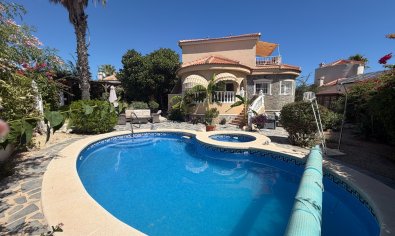
A villa may have only one story, but it might also have, for example, a raised front door, steps leading to the pool, and a steep driveway.
In contrast, an apartment on the third floor can still be much more accessible if the building has a spacious elevator, a level entrance, and a direct connection to the garage.
So don't just look at the number of floors.
Apartment with an elevator
An apartment with an elevator can be a very practical choice for future-oriented living.
The most important thing is that the elevator is actually part of a barrier-free route.
Check to see if you can access the elevator from street level without having to use stairs, and if the elevator goes directly to the parking garage.
A building with an elevator but three steps at the entrance is still difficult for some residents.
Elevator size
When it comes to an apartment, the size of the elevator is also important.
A compact elevator may be fine for everyday use, but it is less suitable when a wheelchair, walker, or larger mobility aid is needed.
In existing buildings, it is therefore a good idea to physically inspect the elevator and, if necessary, measure it.
Ground-floor apartment
A ground-floor apartment can be an attractive option if you prefer not to use an elevator.
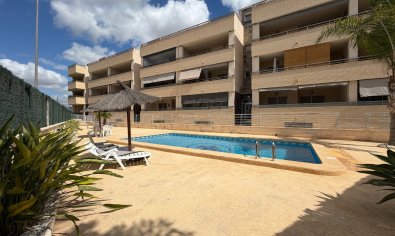
Many modern residential buildings offer ground-floor apartments with a terrace or garden.
Be sure to check the actual route from the street and the parking lot. Some ground-floor apartments are located within a raised complex, which means you’ll still have to navigate a slope or stairs.
Private terrace with no change in elevation
A patio that's directly accessible from the living room can be very comfortable.
Pay special attention to the threshold of the sliding door.
In some homes, the patio is almost level with the floor, while in others you have to step up a noticeable rise.
When mobility is important, even a small detail like that can make a big difference every day.
Ground-floor home with a garden
A larger outdoor space can be appealing if you spend a lot of time at home.
But a garden is only truly accessible when the paths are wide enough and there aren't constant changes in elevation.
So don't just check whether there's a yard, but also how that yard can actually be used.
Single-story villa
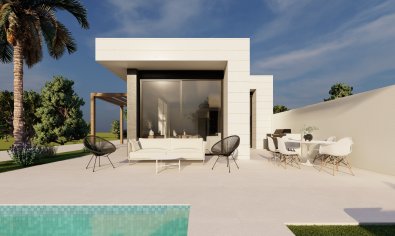
A single-story detached villa can be ideal for those who want to combine space, privacy, and accessibility.
You can have the bedroom, bathroom, kitchen, and living room all on the same level.
However, it’s important to consider the outdoor space. The layout leading to the parking area, garden, and pool ultimately determines how practical the home really is.
Villa on a Sloping Lot
This happens regularly on the Costa Blanca.
The house itself may be entirely on one level, but it may be situated on a sloping lot.
For example, you may have to climb several steps from street level before you reach the front door.
Anyone looking to buy with an eye toward the future should therefore always consider the entire lot.
Swimming Pool and Accessibility
A private pool can be appealing, but it requires extra care.
In many existing villas, the pool is one level lower or higher than the house.
That doesn't have to be a problem right now, but it might become less practical later on.
A home where the living room, patio, and pool are all on the same level can be much more comfortable.
Pool entrance
Access to the pool can also be important.
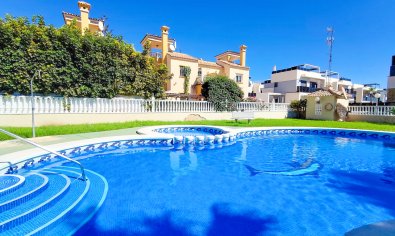
A traditional pool ladder with vertical metal rungs isn't easy for everyone to use.
Some swimming pools have wide built-in steps, which may be more practical.
When accessible swimming is important, this must be assessed on a case-by-case basis.
Parking space near the front door
This is one of the most practical features for comfortable living.
Having your own parking space or driveway right near the entrance means you won't have to carry groceries or luggage a long way.
For apartments, a garage with direct elevator access can offer a similar level of convenience.
Oprit
Having your own driveway sounds practical, but take a close look at the slope.
A short but very steep ramp can be difficult for pedestrians or wheelchair users.
Also, make sure there is enough flat space to get in and out of the car safely.
Garage and elevator
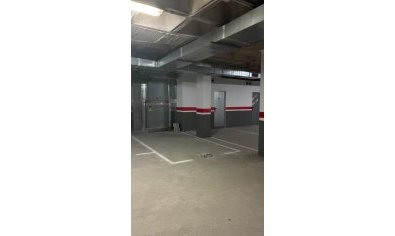
For apartments, an underground garage can work very well if the elevator goes directly from that level to the apartment.
For permanent residents, this can be much more convenient than parking on the street.
Also check how far the parking lot is from the elevator.
Wide front door
A wide, easy-to-open front door can be important.
This applies not only to a wheelchair, but also to a walker, a stroller, or a large grocery haul.
Older homes may have narrower doorways than modern homes.
Interior Doors
It's not just the front door that matters.
Doors to the bedroom and bathroom can also be a deciding factor.
If you have an existing home, you can easily measure it.
A bathroom may seem large enough, but a narrow doorway can still make it less practical.
Sliding Doors
Sliding doors can be practical because they don't require a swing radius.
This is especially true in bathrooms and small bedrooms.
During a renovation, a sliding door can sometimes be a relatively simple way to improve functionality.
Thresholds
Small differences in floor level are easily overlooked during a viewing.
Consider:
- front door;
- bathroom;
- patio;
- shower;
- and access to common areas.
In fact, it’s often the accumulation of many small obstacles that can become a daily nuisance.
Bathroom
The bathroom is one of the most important rooms when it comes to accessible living.
A large bathroom isn't necessarily practical.
Be sure to pay special attention to the amount of space to move around, access to the shower, the floor, the doorway, and the location of the toilet and sink.
Walk-in shower
A walk-in shower with a flat floor is often more practical than a shower stall with a high threshold or a bathtub.
Be sure to check that the drain is working properly and that the floor is sufficiently slip-resistant.
When buying a new home, you should look at the actual standard finishes and not just the renderings.
Bath vs. Shower
Taking a bath can be enjoyable, but for many people it becomes more difficult as their mobility declines.
If you're buying with the future in mind, you should therefore consider including at least one easily accessible shower.
Of course, a second bathroom can still have a bathtub.
Restroom
It is important to have enough space to move around the toilet.
In compact Spanish bathrooms, the toilet may be placed right between the sink and the shower.
It's not a problem for normal use, but it can be impractical when it comes to assistance or mobility.
Bedroom
An accessible bedroom must offer more than just enough square meters.
Also consider the space next to the bed, the path to the bathroom, and the location of the built-in closets.
A bedroom with a lot of built-in furniture may actually be less flexible.
Bedroom next to the bathroom
For future-oriented living, a master bedroom located near a spacious bathroom can be appealing.
This prevents having to walk long distances through the house.
In the case of villas and new construction, this may be a deliberate feature of the floor plan.
Built-in cabinets
Built-in cabinets save space, but the layout must be practical.
Tall upper cabinets are less practical if you can't reach them easily.
During a renovation, the interior layout can often be adjusted with relative ease.
Kitchen
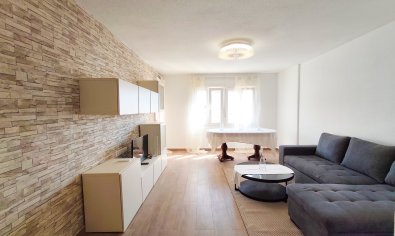
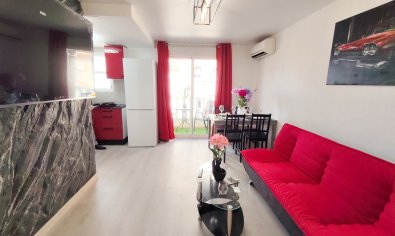
A modern open kitchen can be more inviting than a small, enclosed kitchen.
You generally have more room to move around and fewer narrow passageways.
However, you should also consider countertop height, storage space, and ease of access to appliances.
Open kitchen
An open kitchen has another advantage: the living room and kitchen form one larger living space.
That can be more comfortable if you spend a lot of time at home or if someone needs support.
You'll also avoid unnecessary doors and narrow hallways.
The Wide Hallway
A home can be large but still have narrow hallways.
Older apartments and traditional village homes sometimes have long, relatively narrow hallways.
In a modern open-concept layout, this is often less pronounced.
Internal staircases
A duplex, townhouse, or multi-story home can be beautiful, but it’s less future-proof when all the bedrooms are upstairs.
If you do decide to choose a multi-story home, it may be important to have a bedroom and a full bathroom on the ground floor.
That way, the home can largely be used on one level later on.
Downstairs bedroom in a townhouse
This is an interesting interim solution.
You can use the entire house now and, if you wish, live only on the ground floor later.
The floor above can then serve as a guest room.
Be sure to check that the kitchen, living room, bedroom, bathroom, and outdoor area are all on the same level.
Stairlift
An existing home can sometimes be retrofitted with a stairlift.
But don't automatically assume that's the case.
The staircase must be suitable for this, and the installation takes up space.
When accessibility is a strict requirement, a home that is accessible on one level from the start is often simpler.
New Construction and Accessible Housing
New construction can be an attractive option if you're looking to buy with an eye toward the future.
Newer homes often feature more modern floor plans, more spacious shower areas, elevators in apartment buildings, and fewer significant changes in floor level.
But even with new construction, it’s important to inspect the specific home and the project.
“New” does not automatically mean fully wheelchair-accessible.
Buying off-plan with accessibility in mind
If you buy a home before it is built, it may sometimes be possible to discuss certain finishing touches in advance.
That varies by developer and construction phase.
For example, ask if modifications can be made to the shower, doors, or kitchen before everything is finalized.
Never assume this automatically; make sure agreements are confirmed in writing.
Review the floor plan
When buying off-plan, the floor plan is especially important.
Don't just focus on the number of bedrooms and square meters; pay special attention to the layout of the home.
Consider door widths, hallways, the bathroom, the patio, and the location of the elevator or parking space.
A good floor plan can prevent many future modifications.
Specifications
For new construction, always check the memoria de calidades.
This document specifies what is actually being delivered.
Factors relevant to accessible housing include:
- shower floor;
- types of doors;
- lift;
- patio finishing;
- parking lot;
- lighting;
- and HVAC system.
Turnkey new construction
A newly built home that’s already been completed has one major advantage: you can test everything yourself.
Literally walk the route from the parking lot to the front door, bathroom, patio, pool, and other amenities.
This way, you'll quickly notice which small obstacles are hard to spot in drawings.
Final Inspection
For new construction, it is a good idea to have a technical inspection upon completion.
To ensure your home is accessible, pay special attention to thresholds, door operation, drainage, patio transitions, and bathroom finishes.
Have any defects or discrepancies documented in writing.
Modifying Existing Buildings
Existing buildings can also be an excellent choice.
One advantage of an existing home is that you can see the entire property.
In addition, relatively simple renovations can sometimes make a big difference.
Consider replacing a bathtub with a shower, widening a doorway, removing a threshold, or rearranging the kitchen layout.
Renovation Before Moving
If you are moving to Spain permanently, it may be practical to make any necessary accessibility modifications before the move.
Then you'll start right away in a home that's in good condition.
Have the work reviewed in advance to determine which tasks are technically feasible and, if applicable, require a permit.
Old apartment in a central location
An older apartment in the heart of the city center may be more appealing than a modern new-construction home on the outskirts if you plan to drive less in the future.
In that case, renovating the bathroom or the doors might be the better solution.
When it comes to future-oriented living, location is often just as important as the year of construction.
Accessible Living Without a Car
People with limited mobility can actually benefit more from having stores and healthcare facilities within walking distance.
A fully accessible villa located five kilometers from all amenities may, in the future, result in less independent living than an apartment with an elevator in the city center.
That is why the surrounding area should also be a factor in choosing a home.
Flat terrain
A level living environment can be important for walking, using a walker, or using a wheelchair.
Some areas along the southern Costa Blanca are, for the most part, flatter than others.
However, there can be significant differences even within a single location.
Therefore, always check the specific street and route.
Guardamar del Segura
Guardamar del Segura may be of interest to homebuyers looking for a relatively compact coastal town.
In central areas, you can enjoy the beach, shopping, and other amenities all in one place.
An apartment with an elevator can therefore be attractive from a future-oriented perspective.
Be sure to check the route and any elevation changes for each street.
Old Tower
Torrevieja offers many apartments and urban amenities.
This may be appealing to those who want to keep healthcare, shops, and everyday services close by.
However, the wide range of options means that buildings vary greatly in age and accessibility.
Saint Paul
Santa Pola combines the coast with a true city center.
A centrally located apartment with an elevator might be a good option if you want to have easy access to the beach, shops, and everyday amenities.
The exact street remains the determining factor.
Benijófar
Benijófar is more compact and relatively flat in many areas.
Here you'll find both traditional homes and newer villas and residences.
This might be of interest to those who prefer low-rise buildings but still want amenities nearby.
The Montesinos
Los Montesinos has a compact village layout and is predominantly made up of low-rise buildings.
It's not by the sea, but it might be of interest to those who value everyday village amenities more than a beach within walking distance.
Ciudad Quesada
Ciudad Quesada has many single-story villas and bungalows.
But the area is large and, in places, hilly.
A single-story villa can therefore be perfectly accessible inside, while stores may only be accessible via a steep slope.
Be sure to pay close attention to the exact residential zone here.
The Marchioness
There are noticeable differences in elevation around La Marquesa Golf.
This can offer beautiful views, but may be less suitable when running on flat terrain is a top priority.
For accessible living, another area within Ciudad Quesada might be more practical.
Pilar de la Horadada
Pilar de la Horadada may be of interest because of its town center and various new construction projects.
If you're looking for accessible housing, you can compare apartments with elevators, ground-floor units, or modern single-story villas here.
La Horadada Tower
The coastal area has many apartments, bungalows, and new developments.
That might be appealing if you want to stay relatively close to the beach.
Be sure to check whether the route to the beach is flat and convenient.
Orihuela Costa
Orihuela Costa offers many modern residences with elevators and ground-floor apartments.
But the area is spread out, and dependence on cars can be high.
That's why, in addition to the home itself, you should also consider supermarkets, healthcare, and everyday amenities.
An apartment or a villa for accessible living?
An apartment with a good elevator can be practical if you value low maintenance and a central location.
A single-story villa offers more privacy and outdoor space, but it can also mean more maintenance and a greater reliance on a car.
So there isn't one type of home that's always better.
Future-oriented living before it becomes necessary
More and more buyers are consciously choosing homes that will remain practical even ten or twenty years from now.
That doesn't mean you have to face restrictions now.
A home without unnecessary stairs, with a spacious shower, convenient parking, and nearby amenities is simply comfortable for just about everyone.
Retirement Home
For people who want to spend their retirement in Spain, buying with an eye toward the future is especially important.
A home that’s ideal for you at age 60 should ideally remain suitable for you later on as well.
So don't just think about the pool and the view—think about your daily independence, too.
Health Care Close by
When it comes to future-oriented living, proximity to healthcare may become important.
How you gain access to the public Spanish healthcare system depends on your personal situation and coverage.
Learn more about health care in Spain and about hospitals and clinics on the Costa Blanca.
Pharmacy within walking distance
A small, practical detail can become very important later on.
A pharmacy within walking distance, along with a supermarket and a family doctor, can provide a great deal of independence.
So, during a viewing, be sure to take a look at the immediate surroundings as well.
Wheelchair-accessible beach
If the beach is important to you, don't just look at the house.
The route to the boardwalk or beach also counts.
Beach access and amenities may vary by beach and season, so please check the current situation at the specific location you are considering.
Ocean view or a flat location?
This is an important consideration.
Homes with panoramic ocean views are often located at higher elevations.
That can offer beautiful views, but also steep slopes.
Anyone who values accessibility can therefore consciously choose a home on flatter ground, even if it doesn't have a spectacular view.
A large terrace or an easily accessible terrace?
A huge tanning salon sounds appealing.
But if you have to climb a flight of stairs every time, a smaller patio right off the living room might be more practical.
When it comes to future-oriented living, ease of use is often more important than maximum floor space.
Private pool or communal pool?
A private pool offers a lot of freedom, but it requires maintenance and must be accessible.
A communal pool may be easier to maintain, but it may be farther from the home and often has steps or other barriers to access.
So check how you actually get to the pool.
Community
In apartment buildings and residential complexes, the community association is important.
Ask about elevator maintenance, common-area access, swimming pools, lighting, and any planned construction work.
Decisions regarding entrances, ramps, or elevators may also be relevant to accessible housing.
Special Assessments
A future major renovation of the elevator or entrance could result in an additional contribution, a derrama.
Therefore, before making a purchase, ask to see recent meeting minutes and approved work orders.
Accessibility and New Construction Complexes
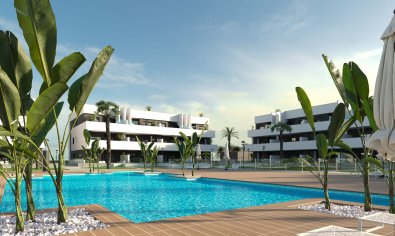
Modern residential complexes may offer attractive amenities such as a swimming pool, a fitness center, and green spaces.
But make sure these facilities are also accessible without stairs.
A home itself may be fully accessible, while the pool may only be accessible via a staircase.
Parking space for extra room
When you need extra space to get in and out of your car, it's not just the availability of a parking space that matters.
Width and position also matter.
A space squeezed tightly between two walls or pillars may be less practical.
Wheelchairs and electric charging stations
If you drive an electric car, access to charging stations may be important.
When purchasing an apartment, it is important to consider the technical and legal options available in the garage.
For a villa, installation usually depends on the property's electrical setup.
Scooter or mobility scooter
A storage room or a spacious parking space can be useful for a mobility scooter.
Also, make sure you can charge it easily and take it outside without having to use stairs.
Salvage
A storage room is sometimes more important than expected when it comes to accessible living.
You can store assistive devices, a walker, or other items there without cluttering up your home.
Ideally, a storage room should be on the same level as the garage or entrance.
Climate Comfort
For people who spend a lot of time at home, temperature and ventilation are important.
Check the air conditioning, heating, insulation, and sunshades.
A home that is easily accessible should also be comfortable in both summer and winter.
Air Conditioning
For new construction, it must be verified whether the air conditioning system has been fully installed or is only pre-wired.
For existing buildings, you need to consider the age and capacity of the system.
Don't let the presence of a single wall unit be your only guide.
Winter Comfort
Anyone who spends the winter there or lives there year-round should also consider heating.
Newer homes may offer advantages in terms of insulation, but existing homes can also be very comfortable after renovation.
Orientation also plays a role.
Accessible home as a second home
Accessibility can also be a good idea for a second home.
You may be bringing parents or other family members with you and want to easily bring your suitcases inside.
A home that is easily accessible to everyone therefore offers practical benefits, even if you are fully mobile yourself.
Accessibility and Rentals
A home that is easily accessible can be suitable for a wider range of tenants.
Of course, that does not guarantee a rental return.
If you plan to rent out your property for tourism purposes, always check the applicable regional, municipal, zoning, and community regulations in advance.
How much does an accessible home cost?
Quoting a general amount is of little value.
An accessible apartment in the city center, a new ground-floor unit, a single-story villa, and a modified existing home are completely different types of properties.
The price depends mainly on the location, type of home, year built, outdoor space, parking, and condition.
So be sure to check out our current listings for the latest asking prices.
Is new construction necessary?
Nee.
An existing home may already be very accessible or can be made accessible with relatively minor modifications.
New construction can offer advantages in terms of floor plans and modern amenities.
The best choice depends mainly on the combination of the home and its location.
Costs of modifications
Changes can range from simple to extensive.
Replacing a bathtub with a shower is different from widening doors or moving an entire bathroom.
Therefore, before making a purchase, have someone assess which modifications are actually possible and how much they are expected to cost.
Renovate first, then move
If you already know that adjustments are needed, it may be wise to make them before the system is put into service.
This will prevent you from having to renovate again later while you're living there.
For major changes, technical or municipal approval may be required.
Legal Review
Even in the case of an accessible home, standard legal review remains necessary.
Have the following items, among others, inspected: ownership, encumbrances, the Property Registry (Registro de la Propiedad), the Land Registry (Catastro), parking spaces, storage rooms, the swimming pool, and any renovations.
An accessible bathroom or ramp usually isn't a legal issue, but major structural changes must be handled properly.
Purchase Costs
When buying a house in Spain, there are additional costs on top of the purchase price.
New construction and existing buildings are treated differently for tax purposes.
In addition, there may be costs associated with a notary, the property registry, independent legal counsel, and any financing.
Therefore, have a separate, comprehensive calculation prepared for each specific home.
Mortgage
Dutch and Belgian buyers can apply for a Spanish mortgage under certain conditions.
The options depend on factors such as income, financial obligations, age, appraisal, home value, and residency status.
Learn more about a mortgage in Spain.
NIE number
To buy real estate in Spain, you'll need a NIE number for the purchase process.
An NIE is not the same as a residencia.
Learn more about NIE and residency in Spain.
Practical Checklist for Accessible Housing
When accessibility is important, be sure to check at least the following:
- the route from the street or parking lot to the home;
- any steps, ramps, and thresholds;
- elevator size and connection to the garage;
- width of doors and hallways;
- walk-in shower and ample space in the bathroom;
- accessibility of the patio and pool;
- levelness of the garden and lot;
- distance to stores, pharmacies, and healthcare facilities;
- parking space and room to get in and out of the car;
- and how many changes can still be made later.
Dutch real estate agent specializing in accessible housing
Are you looking for a Dutch real estate agent to help you find an accessible home on the Southern Costa Blanca?
Casas Palmeras can help you narrow down your search for a home beyond just “ground floor.”
For example, we can take into account a completely stair-free route, an elevator from the garage, a spacious bathroom, wide doors, a bedroom and bathroom on the ground floor, a flat lot, a parking space near the entrance, and amenities within walking distance.
Read more about Casas Palmeras as a Dutch real estate agency on the Costa Blanca and about our approach.
First, determine what "accessible" means to you
Not everyone has the same requirements.
For some buyers, accessible living means, above all, no stairs. For others, wheelchair space is essential. Still others want, above all, a home that can be easily adapted later on.
The more specific those preferences are from the outset, the more targeted the home selection process can be.
Apartment, bungalow, or villa?
An apartment with a good elevator can be ideal when amenities and low maintenance are important. A ground-floor apartment offers immediate access to outdoor space. A single-story villa offers maximum privacy and space, but often requires more maintenance and may be farther from amenities.
So there is no single “best” type of home. The right choice depends on how you want to live your daily life.
View accessible homes on the Southern Costa Blanca
Would you like to search specifically for a home where a single-story layout and practical accessibility are important criteria?
Then take a look at our current listings, our existing homes, the available new-construction homes, and current new-construction projects.
Would you like us to search specifically for, for example, an apartment with an elevator and barrier-free access, a ground-floor apartment with a garden, a single-story villa, a home with a bedroom and bathroom on the ground floor, or a house that can be further modified in the future? If so, please fill out the questionnaire for your home search or feel free to contact Casas Palmeras.
Buying an accessible home on the Southern Costa Blanca requires, above all, that you look beyond the term “ground floor.” The entire route matters: from the parking spot and front door to the bedroom, bathroom, terrace, and pool. The surroundings are also important. An apartment with an elevator in a flat downtown area can ultimately offer much more independence than a ground-floor villa in a steeply sloped residential complex. By considering doors, thresholds, the bathroom, the elevator, the parking spot, and daily amenities from the start, you’ll not only choose a home that’s comfortable today but also one that will remain practical for much longer.