

Buying a Home on the Southern Costa Blanca Without a Car
Buying a Home on the Southern Costa Blanca Without a Car
Would you like to buy a home on the Southern Costa Blanca without having to rely on a car? If so, the location is just as important as the home itself.
There are many attractive residential areas along the southern Costa Blanca, but they vary greatly in terms of practical accessibility. In some coastal towns, you can easily reach the supermarket, beach, restaurants, pharmacy, and other everyday amenities on foot. In other areas, you’ll enjoy more spacious and peaceful living, but you’ll need a car for almost every errand.
That difference is often underestimated during an initial viewing.
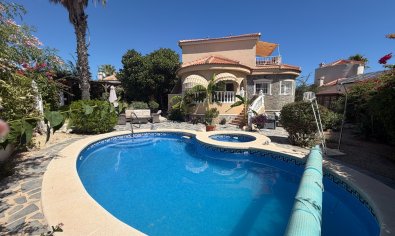
A villa with a private pool may seem perfect on paper, but if you’re looking for:
- supermarket;
- family doctor;
- beach;
- restaurant;
- bus;
- and stores
If you have to drive all the time, your lifestyle is very different from that of someone living in a centrally located apartment where virtually everything is within walking distance.
Anyone who already knows that they want to live in Spain without a car, or who wants to be less dependent on driving in the long run, would therefore be wise to approach their search differently from the start.
Be sure to check out our current listings, our existing homes, and the available new-construction homes.
Is it possible to live on the southern Costa Blanca without a car?
Yes, but it's not equally easy everywhere.
It works especially well when you choose a home in or near a real town with plenty of everyday amenities.
For example:
- Old Tower
- Guardamar del Segura;
- Saint Polia
- Pilar de la Horadada;
- Alicante;
- Almoradis;
- Downtown Rojales;
- Benijófar;
- or certain parts of La Mata.
In sprawling suburban neighborhoods, a car is usually much more practical.
Living without a car starts with choosing the right street
The place name alone isn't enough.
A home may officially be located in Guardamar, yet still be quite far from shops or the beach.
Another home could be located right in the center of Guardamar, which means:
- supermarket;
- hills;
- pharmacy;
- hospitality industry;
- beach;
- bus;
- and market
within walking distance.
Therefore, always check the exact street and daily routes.
Walking distance is not the same as the distance shown on Google Maps
On the map, a home may be located 800 meters from a supermarket.
But the actual route may consist of:
- steep slopes;
- busy roads;
- poor sidewalks;
- roundabouts
- underpasses;
- or hardly any shade.
So, during a viewing, be sure to literally test the route.
What should you be able to reach on foot without a car?
For most permanent residents, the following amenities are particularly important:
- supermarket;
- pharmacy;
- family doctor or health center;
- daily food service;
- bank or ATM;
- bus stop;
- hills;
- and, if applicable, school.
For a second home, the following are often added:
- beach;
- restaurants;
- taxi;
- and good access to the airport.
Living permanently without a car
Someone who moves to Spain permanently has different needs than someone who comes there on vacation for three weeks a year.
If you plan to live there permanently, you should consider:
- running errands in the rain or heat;
- medical appointments;
- major purchases;
- hospital visit;
- receive a visit;
- transportation to the airport;
- and how you'll get around in ten or twenty years.
As a result, a central location can be much more important than a larger lot.
Second home without a rental car
For second-home owners, a home without a rental car can actually be particularly practical.
Suppose you're traveling from the airport by:
- bus;
- taxi;
- of transfer
to your home.
And then, during your stay, you can walk to:
- beach;
- supermarket;
- restaurants;
- market;
- and stores.
In that case, you may not need a rental car for the entire duration of your stay.
That can make a big practical difference every year
A home that isn't dependent on a car can mean:
- Do not reserve a rental car;
- no deposit;
- no parking problems;
- no refueling;
- No pick-up or return;
- and less hassle for short stays.
For people who regularly visit Spain for a few days, this can be appealing.
But not having a car doesn't mean you'll never use one
Even if you don't own a car, you can still use the following from time to time:
- taxi;
- rental car;
- bus;
- train;
- friends;
- of transfer.
So the goal doesn't have to be that you literally never get into a car again.
What's much more important is that you don't have to rely on your own car for every trip to the store or doctor's appointment.
Torrevieja Without a Car
Torrevieja is one of the best choices on the southern Costa Blanca for those who want to live a lifestyle that is less dependent on a car.
The city has:
- stores;
- supermarkets;
- hospitality industry;
- the beach;
- health care;
- bus routes;
- and many different residential neighborhoods.
Especially in or around the city center, you can take care of many everyday errands on foot.
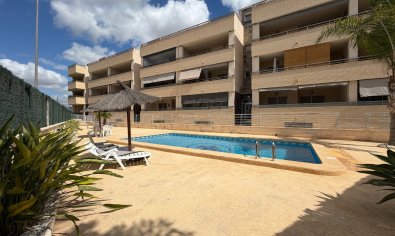
Apartment in downtown Torrevieja
A centrally located apartment may be appealing if you:
- doesn't need a garden;
- considers the elevator important;
- want a beach nearby;
- want to visit restaurants;
- and want to reduce your reliance on cars.
On the other hand, you usually have less outdoor space than you would in a villa.
Playa del Cura
There are many apartments and amenities around Playa del Cura.
This can be practical for a second home because:
- beach;
- hospitality industry;
- stores;
- and daily necessities
are relatively close to one another.
Be sure to check parking availability, noise levels, and year-round crowds.
Playa de los Locos
You'll also find plenty of apartments around Playa de los Locos.
This area is a bit different from the heart of downtown, but it may still be of interest to homebuyers looking to combine beach access with amenities.
La Mata Without a Car
La Mata might also be worth a visit.
The central section has:
- beach;
- hospitality industry;
- stores;
- supermarket;
- pharmacy;
- and local amenities
relatively close together.
If you're mainly looking for a second home by the sea, there's plenty you can do on foot here.
Be aware of elevation changes around La Mata
Not every property listed as “La Mata” is located right in the center.
Toward Torreblanca and the surrounding residential areas, elevation changes may become more pronounced.
As a result, an apartment with a beautiful view may actually be less practical without a car.
Guardamar del Segura Without a Car
Guardamar del Segura is another interesting option.
The center is compact and combines:
- stores;
- hospitality industry;
- market;
- beach;
- pine grove;
- and everyday necessities.
For permanent residence, that can be a nice combination.
Downtown Guardamar
A home in or around the city center can be appealing if you are primarily:
- want to walk a lot;
- want a beach nearby;
- want to do your grocery shopping every day;
- and doesn't need a big villa.
Apartments are the most logical type of housing here.
Penthouse in Guardamar
Would you like plenty of outdoor space but not to be dependent on a car?
In that case, a penthouse in Guardamar might be of interest.
You may then combine:
- large terrace;
- central location;
- lift;
- and a beach nearby.
Be sure to check the parking lot, elevator, and wind conditions.
El Raso without a car?
El Raso is part of the municipality of Guardamar but has a completely different character.
It is more residential, more international, and more spread out.
A car can be much more practical in that situation.
This clearly illustrates why the name of the municipality alone doesn't mean much.
Santa Pola Without a Car
Santa Pola is also a good fit for homebuyers who want to get around on foot.
Especially in:
- center;
- around the harbor;
- Stand up;
- Gran Playa;
- and certain central residential areas
Many everyday amenities are relatively close by.
Downtown or the beach area?
In Santa Pola, you can choose between:
- a true city center;
- port;
- or more beach-oriented residential areas.
A centrally located apartment is often more practical for permanent residence.
A beachfront apartment might be a better fit for a second home.
Gran Alacant without a car?
Gran Alacant is also located in the municipality of Santa Pola, but is much more spread out.
Many areas consist of residential developments with varying elevations.
A car is often more practical in that situation.
There are commercial areas and bus routes, but be sure to inspect the specific property very carefully if car-free living is important to you.
Pilar de la Horadada Without a Car
Pilar de la Horadada has a relatively compact town center featuring:
- stores;
- hospitality industry;
- schools;
- health care facilities;
- sport;
- and daily services.
For permanent residence, Pilar Center may therefore be more attractive than a scattered coastal development.
Torre de la Horadada Without a Car
Torre de la Horadada might be a good choice if you're primarily looking for a beach and vacation destination.
Depending on the specific property, you can reach the beach and restaurants on foot.
For your everyday life in general, you may find yourself using the Pilar Center more often.
Downtown or the coast?
That is an important decision within the municipality of Pilar.
Pilar Downtown
Better for:
- permanent residence;
- daily necessities;
- schools;
- sport;
- groceries.
La Horadada Tower
Better for:
- beach;
- that vacation feeling;
- where;
- and a second home.
So anyone who wants to live without a car should focus primarily on their own usage.
Alicante Without a Car
If you're looking for a truly urban lifestyle, you might want to consider Alicante.
Of all the places mentioned, Alicante offers the most comprehensive alternative to a car.
Among other things, you have:
- train;
- TRAM;
- city buses;
- stores;
- culture;
- hospital facilities;
- hospitality industry;
- port;
- and the beach.
Apartment in Downtown Alicante
A centrally located apartment can be very practical if you:
- don't want to own a car;
- flies often;
- want to live in the city;
- and want everything to be close by.
On the other hand, you'll have fewer of the typical villa and resort amenities.
Playa de San Juan Without a Car
Playa de San Juan might also be worth visiting because of:
- beach;
- TRAM;
- stores;
- hospitality industry;
- and residential complexes.
In that case, you'll be living less in the historic center and more in a spacious beach neighborhood.
Car-Free Downtown Rojales
Rojales has a traditional town center with local amenities.
People who live in the city center can get to places they need to go on a daily basis relatively easily.
That's a different kind of residential area than Ciudad Quesada.
Ciudad Quesada Without a Car
Ciudad Quesada is large and sprawling.
Some of the sections are nearby:
- Avenida de las Naciones;
- stores;
- restaurants;
- supermarket;
- of La Marquesa.
Other parts are much farther away.
As a result, living without a car depends heavily on the specific neighborhood.
Mrs. Pepa
Certain parts of Doña Pepa can be convenient if you're relatively close by:
- supermarket;
- hospitality industry;
- pharmacy;
- and other facilities
lives.
But always check the actual route.
The Marchioness
There are restaurants and golf courses around La Marquesa, but the terrain is hilly.
A home may appear to be close to amenities on the map, but the difference in elevation may make it less pleasant to walk to.
That's important for car-free living.
Lo Pepín and the higher-elevation areas
In the quieter, higher-elevation areas of Quesada, a car is usually much more practical.
There, you'll often find:
- view;
- larger villas;
- peace;
- and more space.
But there are fewer everyday amenities within walking distance.
Benijófar Without a Car
Benijófar is compact and relatively flat.
This may be of interest to permanent residents who:
- want to do their grocery shopping locally;
- want restaurants and bars nearby;
- don't want to live in a big city;
- and enjoy living in a smaller Spanish town.
A car, taxi, or other form of transportation is still the most practical option for getting to the beach.
Good morning
Benimar is located between Benijófar and Rojales and has many restaurants and shops.
For some homes, this can be an attractive combination of:
- villa of townhouse;
- amenities nearby;
- and relatively flat terrain.
Be sure to always check the exact city and street.
Formentera del Segura
Formentera del Segura is also fairly compact.
You can access various local amenities here, but for extensive shopping or trips to the coast, additional transportation is still convenient.
It's especially well-suited for people who don't necessarily need to go to the beach every day.
Almoradí Without a Car
Almoradí is an interesting inland option.
It is larger than many of the surrounding villages and offers:
- stores;
- hospitality industry;
- market;
- services;
- and many apartments.
The city center is also relatively flat.
This could be an attractive option for those looking for a permanent place to live without having to rely on a car every day.
The countryside may seem more car-friendly, but it can actually be more practical
Many buyers think that living without a car automatically means you have to live by the coast.
That's not right.
An apartment in a compact inland Spanish city can actually be more practical than a villa in a coastal residential development.
You might not have a beach within walking distance, but you do have:
- supermarket;
- family doctor;
- stores;
- hospitality industry;
- and local services.
The beach is just one part of daily life
If you live there permanently, you might go to the beach less often than you might think.
On the other hand, you do the following almost every day:
- groceries;
- hiking;
- drink coffee;
- medical appointments;
- banking;
- and other practical matters.
For permanent residents, therefore, proximity to the city center may be more important than proximity to the beach.
A house or apartment without a car?
It's usually easier to find an apartment in a car-friendly location.
That's because apartments are more often found in:
- center;
- kustkern;
- or a compact urban neighborhood
are.
Villas are more commonly found in scattered residential areas.
A villa without a car, after all?
That's possible, but it requires a targeted search.
A villa, for example, might be a good option if it:
- is located on the outskirts of downtown;
- is located near a supermarket;
- has flat terrain;
- and has stores within walking distance.
Benijófar and certain parts of Ciudad Quesada may be more appealing for this purpose than remote residential neighborhoods.
A Bungalow as a Compromise
A bungalow or townhouse might be a good compromise.
You may receive:
- separate entrance;
- patio;
- more space than an apartment;
- and yet it's located close to amenities.
This can be appealing in coastal towns and densely populated residential areas.
New Construction Without a Car
When it comes to new construction, it's important to look beyond just the home itself.
New projects are often built where there is still land available for development.
That could be outside the existing city center.
As a result, a modern home can:
- further from the supermarket;
- further from the beach;
- further from the bus stop;
- and other hospitality businesses
are more expensive than an older apartment.
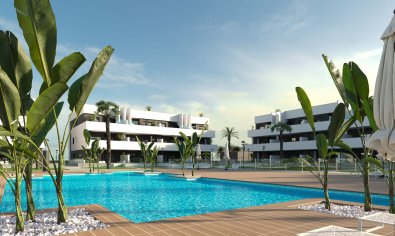
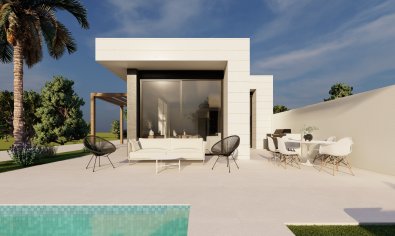
Renders don't tell you anything about walking distance
A new-construction brochure can showcase a beautiful pool, a lush garden, and a sunny patio.
But check for yourself:
- where the supermarket is located;
- where you buy bread;
- how to walk to the beach;
- and what the route is like in August.
The project location is just as important as the home itself.
New construction on the outskirts of town
A project may officially be located “in Benijófar,” “in Guardamar,” or “in Pilar,” but it may actually be situated on the very outskirts of the built-up area.
That is why the exact location on the map is crucial.
Existing buildings benefit from car-free living
With existing homes, you can immediately assess how the neighborhood functions.
As you can see:
- existing stores;
- sidewalks;
- traffic;
- hospitality industry;
- bus;
- shadow;
- and real everyday life.
That makes location assessment easier.
Supermarket within walking distance
“A nearby supermarket” doesn’t mean the same thing to everyone.
For a 35-year-old, 1.5 kilometers might be just fine.
For a 75-year-old doing grocery shopping in August, that's a different story.
So, determine your own maximum walking distance.
Grocery Cart
A simple shopping cart can be surprisingly practical in Spain.
Many people who live in the city center use a trolley like this for:
- supermarket;
- market;
- hills;
- and local stores.
This makes carrying heavier groceries much easier.
Market nearby
For many residents, local markets are a part of daily life.
Be sure to check out our information on markets on the Costa Blanca.
A home near a market can be convenient, but you should also check:
- market day;
- road closure;
- sound;
- and parking.
Pharmacy
For future-oriented living, it's nice to have a pharmacy within a reasonable walking distance.
This is especially true if you live there permanently and take medication regularly.
Check not only the distance, but also:
- sidewalks;
- slopes;
- and safe crossings.
Health Center
Anyone who wants to live without a car must definitely take medical care into account.
A health center two kilometers away may be close in theory, but it can still be impractical if you're sick or have limited mobility.
Therefore, please check the following:
- local primary care services;
- taxi;
- bus;
- and hospital route.
Health Care in Spain
How you gain access to public health care depends on your personal situation and coverage.
Learn more about health care in Spain and our information on hospitals and clinics on the Costa Blanca.
Without a Car After Retirement
For people who want to spend their retirement in Spain, this is an important consideration.
Maybe you enjoy driving now.
But do you really want to still need to drive everywhere for every little errand fifteen years from now?
A home in a compact downtown area can provide greater independence in the long run.
Future-Proof Living
So take a look at the combination of:
- lift;
- few stairs;
- supermarket;
- pharmacy;
- family doctor;
- hospitality industry;
- bus;
- and flat terrain.
A large villa isn't necessarily the most future-proof home.
All on one level and without a car
If you want to combine both, you'll have to search more specifically.
Examples of interesting types of housing include:
- ground-floor apartment;
- ground-floor bungalow;
- single-story village house;
- apartment with an elevator;
- or a centrally located single-story villa.
Be sure to check out our current listings.
Public Transportation
Public transportation can be an important supplement.
But check for each location:
- road;
- frequency;
- evening rides;
- weekend shift;
- seasonal variations;
- and distance to the stop.
A bus stop right outside your door isn't much help if the bus only runs sporadically when you need it.
Taxi
In larger towns, taxis are often more readily available than in small residential developments.
For someone who walks every day but only occasionally:
- hospital;
- airport;
- shopping center;
- or larger grocery runs
If you want to do that, a taxi can be a great option.
Car-Free Airport
This is especially important for second-home owners.
A centrally located home featuring:
- bus service;
- taxi;
- airporttransfer;
- and explore everything locally on foot
can be very comfortable.
Be sure to check out our information on a home near Alicante Airport in our current listings, and let us help you find a property based on accessibility.
Use your own car only for longer trips
An interim solution is also possible.
You can own a car, but you can only use it for:
- outings;
- grocery shopping;
- hospital;
- family visit;
- and longer trips.
Your daily life will then continue on foot.
That's very different from living in a way that's completely dependent on a car.
Parking will remain important
Even if you don't drive much, the car still has to be parked somewhere.
Having your own parking space or garage can therefore be nice.
Especially in coastal towns during the summer.
Cycling as an Alternative
The flat terrain of parts of the Vega Baja makes cycling an attractive option.
Places such as:
- Benijófar;
- Formentera del Segura;
- Almoradis;
- Daya Nueva;
- Daya Vieja;
- in San Fulgencio
are located in relatively flat terrain.
But not every road has good bicycle infrastructure.
Electric bike
An e-bike can significantly increase your range.
This makes it easier for you to:
- surrounding villages;
- supermarket;
- hospitality industry;
- and sometimes kisses
achieve.
Be sure to check where you can safely store it.
Bicycle Storage
In an apartment, a storage room is important.
Carrying a heavy electric bike through the elevator and living room every day isn't ideal.
Therefore, please check the following:
- storage room;
- garage;
- bicycle parking;
- and a power outlet for charging.
Hilly areas
Anyone who wants to live without a car should be careful in areas with significant elevation changes.
Consider, for example, parts of:
- The Marchioness
- Ciudad Quesada;
- San Miguel de Salinas;
- Great Alicante
- and some coastal developments.
A beautiful view can make daily walks much more challenging.
Views vs. Practical Living
This is a classic trade-off.
A home high on a hill may offer:
- ocean view;
- mountain view;
- peace;
- and privacy.
A ground-floor apartment is more likely to offer:
- supermarket;
- restaurants;
- bus;
- and run on flat ground.
When it comes to permanent housing, practical convenience may ultimately be more important.
Beach within walking distance
If the beach is a major reason for living without a car, actually test out the route.
Please note:
- slope;
- stairs to the beach;
- busy road;
- sidewalk;
- shadow;
- and how you walk back after a hot day at the beach.
“500 meters from the beach” doesn’t tell the whole story.
Walking with beach gear
A route that’s easy without luggage feels different with:
- beach chairs;
- umbrella;
- towels;
- cool box;
- children;
- or grandchildren.
This is surprisingly important when it comes to second homes.
Restaurants within walking distance
Many buyers appreciate this.
You can go out to eat without:
- arrange for a driver;
- taxi;
- or parking lot.
But being too close to the nightlife district can also cause noise.
So be sure to visit a home both during the day and in the evening.
A supermarket underneath the apartment?
That can be extremely practical.
But also check:
- loading and unloading times;
- refrigeration systems;
- shopping carts;
- garbage containers;
- and sound.
Close by is good; right above isn't always ideal.
Car-Free School
Anyone moving with children should give serious consideration to the route to school.
A home within walking distance of school can save a tremendous amount of time every day.
Be sure to also read our information about education in Spain.
School bus
Some schools offer transportation options, but these vary by school and situation.
Don't just assume that.
Be sure to check this before you make your final decision on a home.
Buying a Home Without a Car for Families
Families often have to travel more than retirees.
Consider:
- school;
- sport;
- music lesson;
- friends;
- groceries;
- and medical appointments.
As a result, living in a completely car-free environment can be more difficult.
But living in a compact city center can significantly reduce the number of car trips.
Buying a Home Without a Car for Retirees
For retirees, independence can actually be a key priority.
A home where you can walk to the following every day:
- store;
- coffee;
- pharmacy;
- market;
- and a family doctor
can give you a lot of freedom.
Buying a House Without a Car as a Second Home
This might just be the easiest scenario.
You don't have to go to work or school every day.
In that case, a centrally located apartment nearby would be ideal:
- beach;
- supermarket;
- restaurants;
- top transfer
get by just fine without a car.
Investing in a home with good walkability
Would you like to invest in Spanish real estate?
A home with many amenities within walking distance can be attractive to various target groups.
However, this does not guarantee a return.
See also:
- purchase price;
- housing type;
- lift;
- patio;
- parking space;
- rental rules;
- community;
- and future marketability.
Vacation Rentals
A location where tenants don't need a car can be attractive.
However, before purchasing, check whether tourist rentals are permitted for that specific property.
That may depend on:
- regulations of the Valencian Community;
- municipality;
- urban planning context;
- homeowners' association;
- and registration requirements.
A good location does not automatically mean that rentals are permitted.
Long-Term Rentals
For long-term tenants, a central location can be particularly appealing.
Especially when they:
- not having a car;
- be of advanced age;
- work in the hospitality industry or in retail;
- or who rely on public transportation.
But here, too, overall housing quality remains important.
New construction or existing homes without a car?
When it comes to car-free living, existing buildings often have a locational advantage.
Historic and commercial districts are already developed.
New construction tends to take place on the outskirts.
That doesn't mean that existing buildings are automatically better, but it does mean that location should be given extra weight.
Old apartment in a perfect location
An older apartment right in the heart of downtown may suit your daily life better after renovation than a modern new home located two kilometers outside of town.
Therefore, calculate:
- renovation;
- lift;
- community;
- energy;
- and location
together.
Lift
For those who live without a car and with an eye toward the future, a centrally located apartment on the fourth floor without an elevator won't be much use when climbing stairs becomes difficult later on.
As a result, an elevator may be more important than a better view.
Ground floor or elevator?
Both can work well.
A ground-floor apartment offers:
- direct access;
- no elevator needed;
- often a patio.
An upper-floor apartment with an elevator offers:
- more privacy;
- possible view;
- less time on the streets.
See what works best for you.
Should I buy a parking space or not?
If you really don't want a car, a home without a parking space might be cheaper or more convenient.
But also consider future resale value.
A parking space can be very valuable to a future buyer, especially in coastal towns.
How much does a home cost if you don't rely on a car?
There is no separate price category.
You're mainly paying for:
- location;
- center;
- distance to the beach;
- patio;
- lift;
- parking space;
- ocean view;
- year of manufacture;
- and housing quality.
A smaller apartment in a prime location can be more expensive than a larger home outside the city center.
Square meters aren't everything
This is especially important with this search strategy.
A 75 m² home featuring:
- lift;
- patio;
- supermarket around the corner;
- beach within walking distance;
- and a bus nearby
may be more practical than a 150 m² home that requires you to drive there every day.
Total Budget
Don't just consider the price of the home.
See also:
- car expenses;
- insurance;
- fuel;
- maintenance;
- parking;
- taxi;
- bus;
- and any rental car.
Sometimes, a slightly more expensive home in a central location can make your overall lifestyle more affordable or simpler.
Purchase Costs
When buying a house in Spain, there are additional costs on top of the purchase price.
New construction and existing buildings are treated differently for tax purposes.
In addition, costs may be a factor for:
- notary;
- property registry;
- legal assistance;
- and financing.
For a specific home, always have a customized, comprehensive estimate prepared.
Mortgage
Dutch and Belgian buyers can apply for a Spanish mortgage under certain conditions.
The options depend on factors such as income, financial obligations, age, appraisal, home value, and immigration status.
Learn more about a mortgage in Spain.
NIE number
To buy real estate in Spain, you need an NIE number.
An NIE is not the same as a residencia.
Learn more about NIE and residency in Spain.
Legal review remains the same
Even in a central apartment, routine inspections must be conducted.
Consider:
- ownership;
- children;
- Land Registry;
- Census;
- living space;
- patio;
- parking space;
- salvage;
- community;
- renovations;
- and permits.
Convenience of location is no substitute for legal due diligence.
Dutch real estate agent specializing in car-free living in Spain
Are you looking for a home on the southern Costa Blanca where you’ll need little or no car?
Casas Palmeras assists Dutch and Belgian homebuyers in various coastal towns, villages, and cities.
We can search in a much more targeted way than just by:
- bedrooms;
- swimming pool;
- a budget.
For example, on:
- supermarket within walking distance;
- flat terrain;
- beach on foot;
- health center nearby;
- good bus service;
- lift;
- central location;
- and little reliance on cars in daily life.
Read more about Casas Palmeras as a Dutch real estate agency on the Costa Blanca and about our approach.
First, decide what you want to be able to do without a car
Living completely car-free isn't necessary for everyone.
Perhaps what you're looking for is:
- running errands on foot;
- beach on foot;
- restaurants within walking distance;
- a nearby family doctor;
- and use transportation only for longer trips.
That's often much easier to do.
Four Interesting Housing Profiles
Apartment in downtown Guardamar
This is a great option if you want to combine the beach, shopping, dining, and compact living.
Apartment in Torrevieja
This is a great option if you're looking for plenty of urban amenities, a beach, and a diverse international community.
Apartment in Santa Pola
This is a good option if you value a coastline, a harbor, a Spanish city, and relatively good access to the airport.
House in a small inland village
Benijófar, Almoradí, or a similar town might be a good choice if daily amenities are more important than having a beach within walking distance.
Who is living without a car particularly suited for?
This search strategy can be particularly useful when you:
- does not have a driver's license;
- prefers not to drive every day;
- buys with an eye toward the future;
- moves to Spain permanently;
- want a second home without a rental car;
- walks a lot;
- or if you want to remain independent when driving becomes more difficult later on.
Anyone looking primarily for a large villa, plenty of privacy, and a large lot will usually have to accept that a car remains a practical necessity.
View homes within walking distance of amenities
Would you like to know which homes are currently suitable if you want to live without a car or with as few car trips as possible?
Then take a look at our current listings, our existing homes, the available new-construction homes, and current new-construction projects.
Would you like us to conduct a targeted search for, say, an apartment within walking distance of the beach and a supermarket, a single-story home in a flat village, a home near bus routes, or a centrally located home for permanent residence? If so, please fill out the questionnaire for your home search or feel free to contact Casas Palmeras.
Buying a home on the Southern Costa Blanca without relying on a car starts with the location, not the type of home. Especially in compact towns like Guardamar, Torrevieja, Santa Pola, Pilar de la Horadada, Alicante, and various Spanish village centers, you can reach many everyday amenities on foot. Look beyond the distance on a map: sidewalks, slopes, shade, bus stops, supermarkets, pharmacies, and healthcare facilities determine how practical a home really is. For a second home, this could mean you don’t need a rental car at all; for permanent residents, a location that’s easy to get around on foot can actually provide a great deal of independence in the long run.