

Greetings from Vélez-Málaga: from a Nasrid stronghold to a subtropical coastal municipality

Greetings from Vélez-Málaga: from a Nasrid stronghold to a subtropical coastal municipality
Anyone who thinks of Vélez-Málaga simply as a town a few kilometres inland is missing much of the picture. Vélez-Málaga is the historic and administrative centre of the Axarquía, but the municipality stretches all the way to the Mediterranean. Alongside the old town and surrounding agricultural areas, it includes coastal communities such as Torre del Mar, Caleta de Vélez, Benajarafe, Chilches, Almayate, Mezquitilla and Lagos. Altogether, the municipality has around 22 kilometres of coastline.
That combination is what makes the area so unusual. You can walk through a former Moorish medina in the morning, drive through avocado and mango plantations afterwards and reach the beach only a short time later. For property buyers, it also means that "Vélez-Málaga" can refer to several completely different residential environments.
A history older than the present-day city
The modern city probably originated around the tenth century, but settlement and commerce in the area are far older. The mouth of the River Vélez played a particularly important role. Phoenicians settled along this coast from the eighth century BC, as archaeological sites including Toscanos and Chorreras demonstrate.
Later, the Romans developed agriculture, fishing and trade. The maritime town of Maenoba stood at Cerro del Mar, where fish processing and the production of garum formed part of a prosperous coastal economy. The River Vélez was therefore strategically important centuries before the present city existed.
Ballix and the Moorish city
The name Vélez is associated with the Arabic Ballix, linked to the idea of a valley. The medieval settlement developed around the fortress and what is now the Barrio de La Villa. Its elevated position allowed control over the fertile plain and a large part of the Axarquía.
Between the thirteenth and fifteenth centuries, Vélez-Málaga became one of the important medinas of the Nasrid Kingdom of Granada. It was protected by walls, while population growth eventually produced suburbs beyond them around areas corresponding to today's Arroyo de San Sebastián and the Constitución and San Francisco squares.
The steep lanes, stairs and irregular street pattern of La Villa still reflect this medieval development. They give the neighbourhood considerable charm, although buyers considering permanent residence should pay close attention to vehicle access and parking.
The fortress: partly medieval, partly reconstructed
At the highest point of the city stands the Fortaleza de Vélez-Málaga. Its origins date back to around the tenth century and it became particularly important during the fourteenth and fifteenth centuries. Sections of original medieval walls survive.
What visitors see today, however, is not entirely medieval. After the fortress lost its military purpose it deteriorated badly, and the main tower and entrance gateway were reconstructed in the early 1970s.
The location nevertheless remains impressive. From the hilltop it is immediately clear why it was chosen: the city lies below, the fertile plain opens towards the coast and the Mediterranean is visible beyond.
The conquest of 1487 transformed the city
Vélez-Málaga came under the rule of the Catholic Monarchs in 1487. The change profoundly affected both administration and architecture. Mosques were converted or replaced by churches and a series of convents and Christian institutions reshaped the urban landscape.
The Church of Santa María de la Encarnación was built on the site of the former main mosque. San Juan Bautista and the San Francisco complex are also connected with earlier Islamic religious spaces. At San Francisco, the old Almohad minaret survives as the bell tower, still displaying distinctive sebka decoration.
Vélez-Málaga is therefore a place where historic periods do not sit neatly beside one another. In many cases, one was literally built on top of another.
A surviving Nasrid mihrab
Another remarkable remnant is the Nasrid Mihrab, which belonged to a small fourteenth-century neighbourhood mosque. Much of its original plasterwork and epigraphic decoration survives.
It is one of those details that make exploring Vélez-Málaga more rewarding than simply ticking off major monuments. Christian churches and convents dominate much of the historic centre, yet fragments of the earlier Islamic city remain visible between them.
Did Cervantes really sleep here?
Vélez-Málaga has a Casa Cervantes, although the story attached to it requires some caution. Local tradition maintains that Miguel de Cervantes stayed in the building while working in Andalusia as a royal tax and provisions collector. The municipal audio guide explicitly notes, however, that his stay in this particular house has not been proven.
Cervantes' connection with Vélez-Málaga through his work as a collector is more secure than the story about where he slept. The building itself is still worth seeing: it is a sixteenth-century town house with a Mudéjar-style courtyard and monumental façade.
María Zambrano was born here
There is no such uncertainty about María Zambrano Alarcón, who was born in Vélez-Málaga on 22 April 1904. She became one of Spain's most important twentieth-century philosophers and essayists.
Although her family left the town while she was still young, Vélez-Málaga has made her legacy an important part of its cultural identity. The María Zambrano Foundation is based in the Palacio del Marqués de Beniel and was created in 1987 to preserve, study and promote her work and thought.
The palace itself, built in the early seventeenth century, is one of the city's most important civic buildings.
Semana Santa is part of everyday local culture
Holy Week in Vélez-Málaga is deeply rooted in local community life. Official tourism information lists eighteen Passion brotherhoods taking part in processions from Palm Sunday to Easter Sunday. The celebration is recognised as a Fiesta de Interés Turístico Nacional.
In 2026, the main Holy Week programme ran from 29 March to 5 April. Residents know that during this period the historic centre changes considerably, with road closures, temporary parking restrictions and crowded procession routes.
Santa María Church also houses the municipal Holy Week Museum, allowing visitors to explore the tradition outside Easter itself.
Avocados, mangoes and a subtropical landscape
Leave the historic centre and another defining feature of Vélez-Málaga becomes obvious: agriculture. Vineyards, sugar cane, citrus fruit and dried fruits all played important roles historically, while the Axarquía is now especially associated with subtropical crops.
Avocados, mangoes and custard apples shape both the landscape and local economy. The municipality identifies subtropical agriculture as one of the area's principal economic activities.
For rural-property buyers, the greenery can be extremely attractive, but a finca requires a different type of due diligence from an urban apartment. Legal status, access, utilities and the correspondence between the physical buildings and official documentation all deserve careful checking.
Twenty-two kilometres of Mediterranean coastline
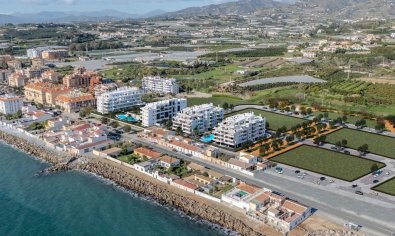
Vélez-Málaga municipality has approximately 22 kilometres of Mediterranean coast.
Torre del Mar is its largest coastal centre, but Caleta de Vélez, Benajarafe, Chilches, Almayate, Valle-Niza, Mezquitilla and Lagos offer very different settings.
For property buyers, Vélez-Málaga can almost be treated as a small region in its own right.
Caleta de Vélez: fishing is still a real industry
Caleta de Vélez is particularly interesting because recreational boating and commercial fishing operate alongside one another. According to the municipal tourism service, its fish market is the most important in Málaga province in terms of landings and is a particularly significant first market for sardines from the Andalusian Mediterranean.
The working fleet remains active, while the same harbour area also contains a marina, beach, restaurants and residential property.
That gives Caleta a very different atmosphere from a marina designed purely around leisure boating.
Vélez-Málaga or Torre del Mar?
Although both belong to the same municipality, everyday life is very different.
Vélez-Málaga city offers Spanish urban life, historic neighbourhoods, administrative services, shops and cultural heritage. The old centre is hilly and the beach is not outside your door.
Torre del Mar is flatter and entirely coastal in character, with a broad urban beach, promenade, restaurants and significantly more tourism.
Neither is automatically the better place for permanent residence. The choice depends on whether you prefer town life with history or daily life centred more directly around the Mediterranean.
Benajarafe, Almayate and the quieter coastline
Benajarafe provides a less urban coastal environment than Torre del Mar. Its beach extends for more than three kilometres and has a promenade and services while retaining a smaller scale.
Around Almayate, agricultural land comes surprisingly close to the Mediterranean and the municipality also has a naturist beach. Valle-Niza and Chilches provide further alternatives for residents looking for a quieter setting and willing to rely somewhat more on a car.
Within a short drive you can therefore move from a busy seaside avenue to a property surrounded by farmland.
Healthcare and year-round services
Vélez-Málaga provides services for a large part of the Axarquía, with schools, shopping, sports facilities and substantial healthcare infrastructure.
Public healthcare includes Vélez-Málaga Norte and Sur health centres and Hospital de La Axarquía, an official regional hospital belonging to the Área de Gestión Sanitaria Este de Málaga-Axarquía.
A notable current development is the planned HM private hospital. The project was officially presented in July 2026 with an investment of more than €40 million. Construction was expected to begin in September 2026, with opening planned for spring 2028. As this is an ongoing development, the timetable may still change.
Good road connections, but no railway
Vélez-Málaga lies on the eastern Costa del Sol and is well connected by the A-7. Málaga Airport is approximately 45 kilometres away according to the official tourism service.
There is no direct rail connection. Buses connect the area with Málaga, but anyone living in the countryside or an outlying residential development will generally find having a car considerably more practical.
Very different residential choices
The historic centre contains traditional town houses and apartments in buildings from different periods. Character is one of its strengths, but access, steep streets and parking need consideration.
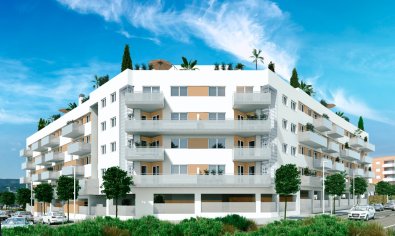
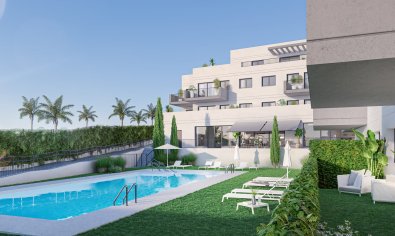
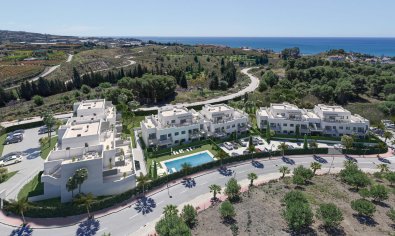
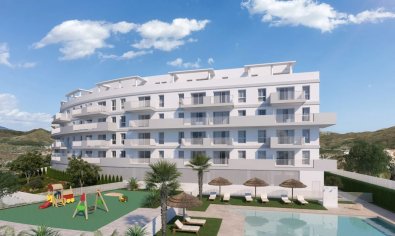
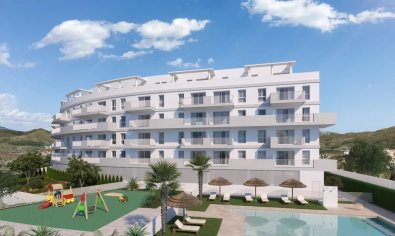
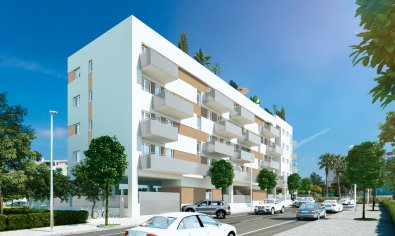
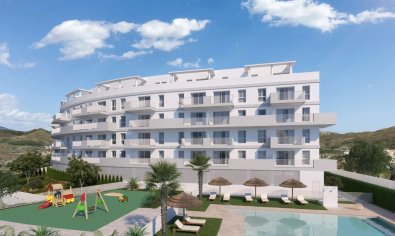
Newer parts of Vélez-Málaga contain more modern apartment developments and are often convenient for larger shops and road access. Apartments are more dominant around Torre del Mar, while Caleta de Vélez, Benajarafe, Chilches and the nearby hills provide a broader mix of townhouses and villas.
Anyone looking for modern construction can also explore our selection of new-build property on the Costa del Sol.
Buying in the historic centre
The historic centre of Vélez-Málaga has been protected as a historic-artistic ensemble since 1970.
A character property here may therefore require a different approach to renovation from a modern home. Buyers should establish whether specific heritage restrictions apply and check the planning, registry and physical condition of the building carefully.
Historic charm can be a major attraction, but it should never replace proper legal and technical checks.
Tourist rentals
The combination of coast, culture and proximity to Málaga may make tourist rentals attractive to some buyers, but permission and income should never be assumed.
Andalusian regulations have changed in recent years and municipal rules and owners' associations may also affect what is permitted. Current requirements should therefore be checked for the specific property before buying with holiday rentals in mind.
A small version of the Axarquía within one municipality
Phoenician trading settlements beside the River Vélez, Roman industry, a Nasrid fortress, churches built over mosques, the uncertain Cervantes story, María Zambrano, deeply rooted Holy Week traditions, subtropical orchards, a working fishing harbour and kilometres of Mediterranean coastline all exist within the same municipality.
That is why Vélez-Málaga cannot really be understood by driving through the city centre once or spending one afternoon on the beach.
For property buyers, the variety makes choosing a location more complicated, but also much more interesting. You can opt for everyday Spanish town life, an old neighbourhood below the fortress, a rural setting among subtropical crops or a home focused completely on the coast.
At Casas Palmeras, we therefore look beyond the property itself and help determine which environment best matches the way you want to live in Spain. You can read more about our working method.
Greetings from Vélez-Málaga!