


Greetings from Moratalla: a castle town among rock art and mountains
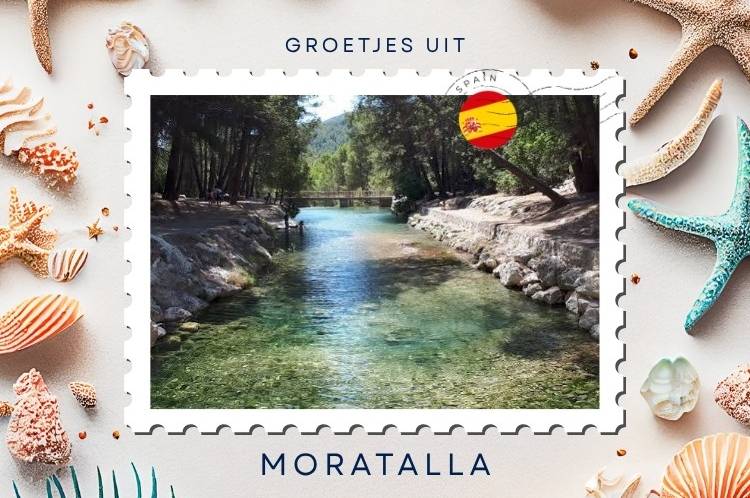
Greetings from Moratalla: a castle town among rock art and mountains
Moratalla is almost the opposite of the Mediterranean Spain many international visitors know first. There is no seafront promenade, no row of holiday apartments beside the beach and no marina. Instead, narrow streets climb a steep hillside beneath a medieval castle, while an enormous municipality of forests, rivers, farmland and small mountain settlements stretches out behind it.
Moratalla lies in the far northwest of the Region of Murcia. Although Casas Palmeras also works throughout the Costa Cálida, Moratalla is very clearly inland. That is precisely what makes it interesting for buyers wanting to see an entirely different side of Murcia. Anyone specifically considering this municipality can also explore our page about living and buying property in Moratalla.
A town built up the side of a hill
Moratalla's silhouette is unmistakable. Houses rise in layers up the hillside while the castle occupies the highest point.
The official Murcia tourism service describes almost the entire historic townscape as monumental because of its steep, narrow streets and the castle dominating the settlement.
For residents, however, that historic pattern has practical consequences. Old streets were not designed for modern cars, gradients can be significant and parking immediately outside a traditional home should never be assumed.
A property that looks wonderfully picturesque during a walk may therefore work very differently as a permanent home.
The castle began as an Islamic fortress
The Castillo-Fortaleza de Moratalla crowns the historic centre.
Official heritage information dates the first Islamic defensive structure to around the ninth century on a site where earlier Neolithic and Iberian remains have also been identified. Its position formed part of the defensive organisation of Al-Andalus.
After the Christian conquest, Moratalla became closely associated with the Order of Santiago, which rebuilt the fortress during the fifteenth century.
The most prominent surviving feature is the Torre del Homenaje, approximately 22 metres high and built in a Levantine military Gothic style. Five additional towers completed the fortified complex.
For centuries, this castle was the reason the hilltop position mattered.
A landscape shaped by the medieval frontier
Moratalla spent a long period close to the frontier separating Castilian Murcia from the Nasrid Kingdom of Granada.
The Order of Santiago controlled extensive territory in northwestern Murcia, using castles and watchpoints to protect routes, settlements and agricultural land.
The defensive history is not limited to Moratalla town. At Benizar, one of the municipality's mountain settlements, the ruins of a twelfth-century Islamic castle stand on an enormous rock formation overlooking the valley. Its difficult access made the position strategically valuable during the frontier period.
Human history here began thousands of years earlier
The medieval period is only a small part of Moratalla's story.
Numerous rock shelters across the municipality contain prehistoric paintings. These belong to the Rock Art of the Mediterranean Basin on the Iberian Peninsula, inscribed on the UNESCO World Heritage List in 1998.
The Region of Murcia has 183 documented sites containing rock art, and Moratalla contains some of its most significant groups.
It is worth being precise: UNESCO did not designate one single Moratalla cave independently. The municipality forms part of a much larger prehistoric World Heritage property spread across several Spanish regions.
Casa de Cristo is becoming a major rock-art centre
Several kilometres outside the town is the Casa de Cristo Regional Rock Art Interpretation Centre.
Its exhibition uses photographs, audiovisual material and documentation to explain the prehistoric paintings and their importance. In April 2026, the regional government and Moratalla municipality announced plans to reinforce Casa de Cristo as a leading centre for the interpretation and promotion of Murcia's rock art.
This creates an unusual combination: prehistoric heritage and a much later Christian pilgrimage tradition in the same location.
A 1493 apparition – according to local tradition
Local religious tradition says that Christ appeared here to shepherd Rui Sánchez on 19 April 1493. The story led Casa de Cristo to become an important pilgrimage destination.
The apparition should be understood as religious tradition rather than a historically verifiable event.
The present sanctuary was constructed in the seventeenth century in a popular Baroque style and altered significantly during the following century. It also formed part of a Mercedarian convent complex; surviving cloister arches still recall that earlier building.
During Holy Week, the drums take over
Moratalla's best-known living tradition is probably its Tamborada.
On Maundy Thursday, Good Friday and Easter Sunday, drumming becomes the defining sound of the historic streets.
Moratalla forms part of the Spanish tradition of ritual drum-playing inscribed by UNESCO on the Representative List of the Intangible Cultural Heritage of Humanity in 2018. Its local Holy Week and Tamborada are also recognised as a Fiesta de Interés Turístico Regional.
In 2026, Holy Week ran from 29 March to 5 April.
For someone living in the old town, this is not simply a visitor attraction. Sound levels, traffic and the entire rhythm of the neighbourhood change for several days.
The green side of Murcia
Moratalla lies in one of the most heavily forested and mountainous parts of the region. Pine, holm oak, oak and juniper occur across the landscape, which also supports wildlife including golden eagles and wild boar.
The Río Alhárabe is one of the most important natural features. At La Puerta Natural Area, the river flows throughout the year and creates a green recreation zone between the mountains.
Further upstream, La Risca dam near Campo de San Juan combines flood control and irrigation management in an area surrounded by farmland, mountains and important prehistoric rock-art locations.
It is a very different Murcia from the dry coastal plains many foreign residents encounter first.
Murcia's highest mountain country
Moratalla municipality reaches into the Revolcadores massif, home to the highest elevations in the Region of Murcia.
The official tourism service presents hiking in these mountains as one of Moratalla's characteristic outdoor activities.
Snow can occur in the higher parts during winter, particularly around the more elevated villages.
Anyone considering permanent residence should therefore understand that Moratalla does not share the same winter climate as the Mar Menor or Murcia's Mediterranean coast.
One municipality, many small settlements
Moratalla covers a very large territory and includes numerous pedanías, among them Benizar, El Sabinar, Calar de la Santa, Campo de San Juan and Otos.
Living in Moratalla town is therefore entirely different from buying a finca outside one of these small mountain communities.
The town provides more everyday services within a compact area. Rural locations may provide land, privacy and silence, but increase the importance of a car and the distance to healthcare, shopping and other facilities.
The exact location of a property advertised simply as “Moratalla” is therefore essential.
Lavender has added a newer landscape
Lavender cultivation has become increasingly visible in parts of the municipality in recent years.
In 2026 the Lalavand Moratalla programme again included activities from spring into autumn, with sensory routes during the summer flowering period.
Flowering dates are naturally affected by altitude and weather, so not every field reaches peak colour simultaneously.
It is nevertheless an interesting example of a rural municipality finding new ways to use and promote its agricultural landscape.
Living in the historic town
The old centre contains traditional town houses and apartments of many different ages and conditions.
Living here gives you direct access to local shops, bars, festivities and municipal services, but access and parking deserve careful investigation.
Older homes should also be checked for damp, roof condition, previous extensions and whether renovations correspond with official documentation.
Properties within protected historic surroundings may also face restrictions on alterations to façades or other elements.
Buying a finca is a completely different process
Outside the town are country houses, detached properties and fincas with substantially more land.
Here, legal checks become particularly important. Land classification, rights of access, water and electricity supplies and the legal status of every existing building should be established before purchase.
Swimming pools, storage buildings, covered terraces and extensions should all correspond with the official records.
A beautifully maintained rural property can still contain administrative issues that need resolving.
A car is part of the lifestyle
For most people living outside central Moratalla, a car is essential.
Nearby Caravaca de la Cruz provides important additional regional services. Moratalla belongs to Health Area IV Noroeste and its reference hospital is Hospital Comarcal del Noroeste in Caravaca de la Cruz.
Primary healthcare is available in Moratalla, while the regional health network also identifies local consultation facilities connected with Benizar and El Sabinar.
Anyone needing major shopping centres, specialist services or international education on a daily basis should therefore calculate those journeys before choosing an isolated rural home.
Moratalla or Calasparra?
Calasparra is a logical comparison for buyers considering northwestern Murcia.
Both offer rivers, mountains and far less tourism than the coast. Calasparra is more compact as a town and has a landscape closely associated with the Segura river and rice cultivation.
Moratalla is more mountainous, geographically larger and more dispersed, with small villages and high-altitude landscapes spread over a wide area.
Buyers primarily seeking land and rural isolation may find more of what they want around Moratalla, while some locations around Calasparra can feel more convenient for regular travel.
Moratalla is not a cheaper version of the coast
Moratalla can be an excellent option for people looking for space, hiking, countryside and a predominantly Spanish environment.
It should not, however, be chosen as though it were simply a Costa Cálida beach town with lower property prices. The lifestyle is fundamentally different.
Casas Palmeras therefore considers not only the property but whether the setting fits your real daily requirements. Our working method explains how we approach that search.
Thousands of years of history within one mountain landscape
Prehistoric rock paintings, an early Islamic fortress, the Order of Santiago, frontier castles, a sanctuary associated with a fifteenth-century religious tradition, Holy Week drums, rivers, forests and small mountain settlements all exist within one municipality.
Moratalla demonstrates how much more varied Murcia is than its coastal image suggests.
And for property buyers, choosing Moratalla is only the first decision. The second is deciding which Moratalla: a traditional home beneath the castle, a house in a mountain village or a finca surrounded by countryside.
Greetings from Moratalla!