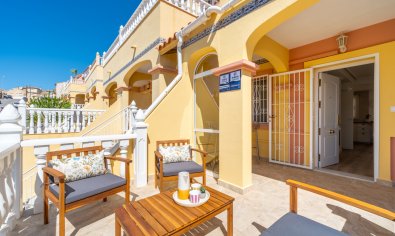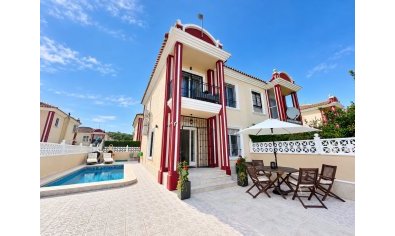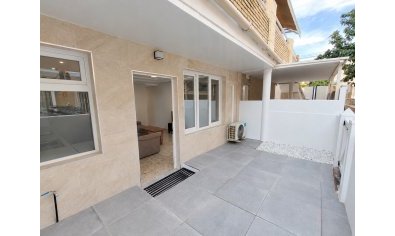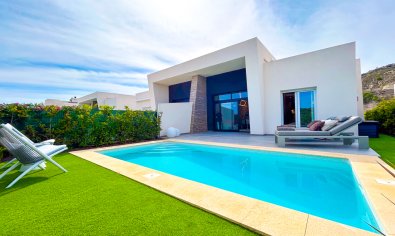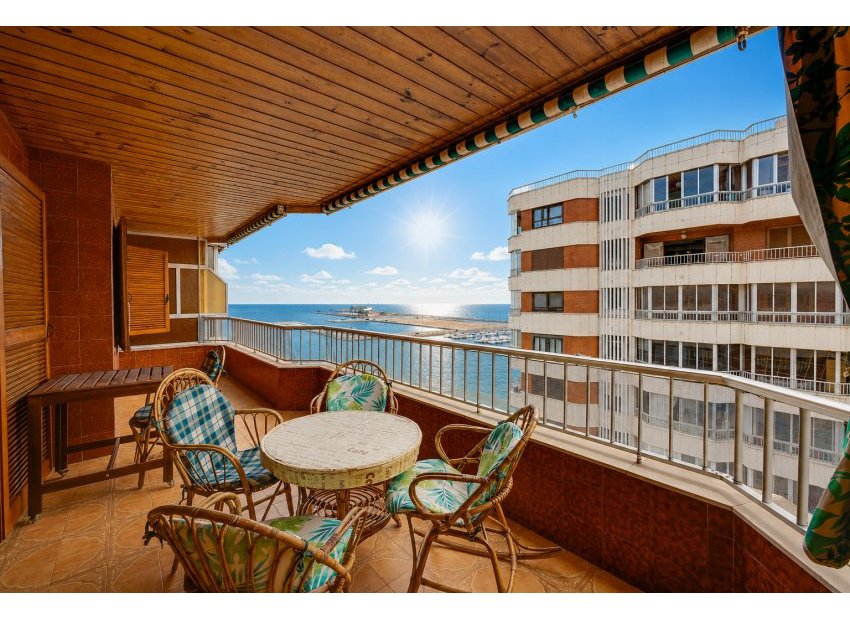


New construction or existing homes on the Costa Blanca: Which is a better fit for you?
New construction or existing homes on the Costa Blanca: Which is a better fit for you?
Are you torn between new construction or existing homes on the Costa Blanca? If so, you’re not just comparing two types of homes, but two completely different purchasing processes.
When buying a new home, you’re often purchasing a property that hasn’t been built yet or has just been completed. You’ll look at floor plans, materials, the location within the development, the level of finish, and sometimes future construction phases.
With existing homes, you’re buying a property that you can assess right away in its actual surroundings. You can see the street, the neighbors, the amount of sunlight, the view, and the condition of the home as it is at that moment.
Both are excellent options. Which choice makes more sense depends mainly on your budget, your preferred location, how much maintenance you’re willing to handle, when you plan to use the property, and how important modern technology or a well-established location is to you.
Be sure to check out our current listings, available new-construction homes, our existing homes, and current new-construction projects.
What is new construction in Spain?
By “new construction,” we generally mean a home that is being sold new by a developer and has not previously been used as a regular residence.
There are several possible stages within this process. You can buy a home that is still completely off-plan, a home whose construction is already well underway, or a home that has already been built and will be available relatively soon.
That difference is important. When you buy an off-plan home, you’re largely relying on drawings and technical documentation. With a completed home, you can assess much more based on what you actually see.
What is existing construction?
An existing home is a residence that already exists and has been occupied in the past.
It could be an apartment that's a few years old, or an older villa that needs to be completely renovated.
So, existing buildings don't automatically mean they're old or poorly maintained. Nor does new construction automatically mean that everything is more luxurious or more practical.
Quality must always be assessed on a per-unit basis.
The biggest difference: knowing for sure what you're seeing
With existing homes, you generally see what you're buying.
You can assess the property's actual location, how much sunlight hits the patio, how much traffic noise you hear, and what's across the street from the property.
In the case of new construction, some of that may still be theoretical.
You will then be working with:
- site plan;
- floor plan;
- renders;
- specifications;
- and information about the entire project.
That is why new construction requires a different approach to evaluation.
New Construction: Modern Layout
A major advantage of new construction is that the layout often better meets today's living needs.
Consider:
- open kitchen;
- larger windows;
- en-suite bathrooms;
- built-in cabinets;
- the terrace;
- and a more open living room.
In older Spanish homes, you'll often see:
- separate kitchen;
- smaller bedrooms;
- less outdoor space;
- or a more traditional layout.
That doesn't have to be a disadvantage, but the living experience is different.
Existing buildings: often established locations
A major advantage of existing housing is that homes are often located in areas where little or no new construction is now possible.
Consider:
- center;
- first or second row by the sea;
- older residential neighborhoods;
- established residential developments;
- and village centers.
For those who prioritize location above all else, this may lead them to consider existing properties more quickly.
New projects are often located where land is still available
New construction naturally takes place where there is still room to build.
That could mean that a project:
- on the outskirts of a town;
- in a new residential development;
- between existing residential areas;
- or outside the traditional city center
is located.
A home may be more technologically advanced, but it may be less practical for everyday living.
That's why you should always look at the location first and then at the project.
New construction or existing homes near the beach
Building land is limited in areas directly adjacent to popular coastal zones.
As a result, existing buildings are sometimes located closer to the beach or downtown than new construction.
New construction projects may be located a little further inland, but could, for example, feature:
- large terrace;
- swimming pool;
- parking space;
- lift;
- and a modern finish.
The question, then, is which is more important to you: location or the quality of the home.
New construction or existing homes for permanent residence
Would you like to move to Spain permanently?
In that case, you should definitely take a look at how the home functions on a day-to-day basis.
The following are important:
- supermarket;
- health care;
- school;
- public transportation;
- parking;
- internet;
- and year-round amenities.
A newly built complex with a beautiful pool but located far from everyday amenities may be less practical for permanent residence than an older apartment right in the heart of the city center.
New construction or existing home as a second home
For a second home, a newly built property can be attractive because it requires less immediate maintenance and offers modern amenities.
For example, an apartment in a new residential complex may feature:
- communal swimming pool;
- parking space;
- lift;
- salvage;
- and a fenced-in area.
But existing properties can actually be a good option if you're looking for an apartment in an established coastal location.
So both can work well.
Maintenance for New Construction
New construction usually requires less immediate renovation work.
You'll start with a new one:
- systems;
- plumbing;
- kitchen;
- the frame;
- floors;
- and finishing.
That doesn't mean you won't have to pay attention to anything for years.
New buildings also require maintenance, and common facilities must be paid for and maintained.
Maintenance of Existing Buildings
For existing buildings, it all depends on the year of construction and the condition of the building.
A well-maintained home can require very little work for years.
Another home may need immediate renovation.
So don't just evaluate cosmetic issues—also consider:
- electricity;
- pipes;
- dak;
- the frame;
- moisture;
- air conditioning;
- swimming pool;
- and common areas.
Renovation Budget
With existing buildings, you may need to set aside a renovation budget.
This could range from a simple cosmetic update to a complete renovation.
Consider:
- kitchen;
- bathrooms;
- electricity;
- floors;
- the frame;
- painting;
- and HVAC system.
A lower purchase price does not, therefore, automatically mean a lower total price.
New construction may seem more expensive, but make a fair comparison
At first glance, a newly built home may seem more expensive.
But consider, too, what still needs to be done with existing buildings.
An older home may incur additional costs for:
- renovation;
- furniture;
- air conditioning;
- the frame;
- swimming pool;
- or exterior work.
Therefore, compare total investment with total investment.
Existing buildings may be ready for immediate occupancy
Not every existing home needs to be renovated.
There are also fully renovated or exceptionally well-maintained homes.
These can be interesting because you can immediately see:
- what you buy;
- how the environment works;
- and what amenities are available.
This may be appealing to buyers who want to move quickly.
New Construction (Off-Plan)
With an off-plan purchase, you buy the home before it is completed.
You will then base your choice on:
- floor plan;
- site plan;
- specifications;
- renders;
- and sales information.
This requires more confidence in the project and the documentation than in conventional construction.
Payments During Construction
Payments for off-plan new construction are often made in installments.
The exact payment schedule varies by project.
Always have the following checked:
- reservation;
- initial deposit;
- interim payments;
- final payment;
- and terms and conditions in the event of a delay or cancellation.
Don't assume there is a single standard model that applies to all project developers.
Protection of Advance Payments
Advance payments for new construction are subject to a legal framework.
Have an independent attorney review how the protection of your payments is handled for this specific project and what documents you will receive.
Never pay just because a salesperson says everything has been taken care of as a matter of course.
Expected completion date
For new construction projects, an expected completion date is usually communicated.
That's still just a plan.
Construction may be delayed due to technical, administrative, or logistical circumstances, for example.
Therefore, don't plan without a margin when using:
- emigration;
- start of the school year;
- sale of current home;
- or a move.
Turnkey new construction
A turnkey home has already been built or is nearly complete.
That has clear advantages.
You'll be able to assess this much better:
- location;
- view;
- zon;
- privacy;
- street;
- and the quality of the finish.
However, “key-ready” does not automatically mean fully furnished or fully equipped.
What does “ready to move in” mean?
The term “ready to move in” is widely used.
A home may be technically ready but still lack:
- furniture;
- lighting;
- curtains;
- kitchen appliances;
- or patio furniture
have.
So always ask what is actually included.
Specifications
For new construction, the memoria de calidades is an essential document.
This document lists the materials and fixtures that are included in the home.
Review this document instead of just looking at sales figures.
A rendering shows what a home might look like, not necessarily how it will be delivered as standard.
Kitchens in New Construction
A modern kitchen can look stunning in sales photos.
But check separately to see which devices are included.
Consider:
- refrigerator;
- stove top;
- oven;
- dishwasher;
- microwave;
- range hood;
- and a washing machine.
That depends on the project.
Air Conditioning
In new construction, “air conditioning” can mean different things.
These may include:
- fully installed climate control system;
- ditch digging without machinery;
- pre-installation;
- or individual units.
Make sure to confirm exactly what you're getting.
Heating
Heating is also important for permanent residence.
Not every new home has the same heating system.
Check how the home is heated in the winter and which rooms are actually heated.
Solar Panels
Solar panels aren't standard everywhere either.
The following may apply:
- individual installation;
- shared facility;
- preparation;
- or no panels.
Therefore, ask about the specific system in the home.
Swimming Pool in a New Construction Project
A pool doesn't always have to be included in the rendering.
For villas, a private pool can:
- included as standard;
- optional;
- for an additional charge;
- or depending on the type of home
are.
In apartment complexes, the pool may be part of the community.
Garden at a New Construction Site
A fully landscaped garden in a sales brochure can show more than the standard delivery.
Check to see if the following are included:
- paving;
- planting;
- irrigation;
- artificial turf or grass;
- trees;
- and lighting.
Pergola and Outdoor Kitchen
Elements like these are often presented in an attractive way.
But they may be optional.
Ask specifically whether a pergola, outdoor kitchen, shower, and utility connections are included as standard.
Parking Lot
In new construction, a parking space may be included, sold separately, or required to be part of the home.
In existing developments, the parking space may be part of the same title deed or may be registered separately under law.
Always check this.
Salvage
A storage room can be especially useful for:
- cycling;
- suitcases;
- beach gear;
- golf clubs;
- and storage.
For both types of homes, ask how the storage area is legally defined.
Lift
Newly built apartments often have an elevator.
With older existing buildings, that is not necessarily the case.
Whether you're looking for a permanent home or making a forward-thinking purchase, an elevator can be a deciding factor.
Also check whether the elevator is accessible from the street and the garage without having to climb any additional stairs.
Patio at a new construction project
New construction projects are often designed with large patios.
That could be appealing.
But don't just look at square meters.
Check:
- depth;
- orientation;
- privacy;
- wind;
- and shade.
A smaller, well-sheltered patio can be more pleasant than a huge patio exposed to the wind.
Patio attached to an existing building
In existing buildings, you can see firsthand how the terrace works.
As you can see:
- real sun;
- view;
- neighbors;
- wind;
- and a glimpse.
That's a major advantage.
Ocean View in New Construction
For a home that is yet to be built, the ocean view must be assessed based on drawings and contour lines.
Be sure to review future construction phases as well.
An unobstructed view of a rendering may not remain the same if a building is constructed in front of it later on.
Ocean View from an Existing Building
With existing buildings, you can immediately see what the current view is like.
But even in that case, you’ll need to find out whether construction is still permitted on vacant lots.
The current view is not necessarily permanent.
Community in New Construction
New residential complexes may offer extensive amenities.
Consider:
- swimming pool;
- gardens;
- lift;
- fitness;
- fell;
- leeway;
- or security.
That looks appealing, but it also leads to community costs.
Ask for a realistic estimate in advance.
Community in Existing Buildings
With existing buildings, you can often get a better sense of how the community functions financially.
Ask about:
- current contribution;
- reserve fund;
- financial statements;
- scheduled work;
- and any outstanding payments.
This can provide valuable information about future costs.
Derramas in Existing Buildings
An existing community association may have already approved additional work.
Such a special contribution is called a derrama.
This could include, for example:
- facade;
- lift;
- dak;
- swimming pool;
- of garage.
Check to see if there are any outstanding or scheduled contributions.
New Construction and Unexpected Community Fees
In the case of new construction, the community does not yet have a long financial history.
The initial estimates may change once the complex is actually in use.
This is particularly relevant for residential complexes with many shared facilities.
Energy Performance
New construction must meet more recent building codes than older homes.
This can offer benefits in the following areas:
- insulation;
- glazing;
- systems;
- and energy performance.
But evaluate each home individually.
A well-renovated existing home can also be comfortable.
Winter Comfort
Many buyers focus primarily on summer.
Winter is just as important for year-round living.
Check:
- insulation;
- the frame;
- heating;
- orientation;
- ventilation;
- and moisture.
A more recent model year may offer advantages here, but the specific model remains the deciding factor.
Summer Comfort
Large glass windows are attractive, but they can let in a lot of heat in the summer.
When building a new home, keep the following in mind:
- sun protection;
- roller shutters;
- crossing;
- orientation;
- and ventilation.
Modern design does not automatically mean a comfortable indoor environment.
New construction or existing home for the winter?
For those who spend the winter here, new construction can be comfortable thanks to modern insulation and heating.
But existing buildings are actually better suited to a vibrant downtown where more amenities remain open during the winter.
So take a look at both the home and the surrounding area.
New construction or existing homes without a car?
If you want to be less dependent on a car, location is usually more important than the model year.
An older apartment in the heart of Guardamar, Torrevieja, Santa Pola, or another compact town may be more practical than a modern new construction outside the city center.
New construction near amenities is also available, but you have to look for it specifically.
Apartment: new or existing?
New apartments often come with modern shared amenities.
For an existing apartment, you can get more information about:
- actual community fees;
- sound;
- neighbors;
- maintenance;
- and everyday use.
That makes it easier to assess existing buildings.
Villa: new or existing?
New villas often feature modern architecture and amenities.
An existing villa, on the other hand, can:
- larger lot;
- mature garden;
- more privacy;
- and a well-established residential area
offer.
The choice depends largely on what matters most to you.
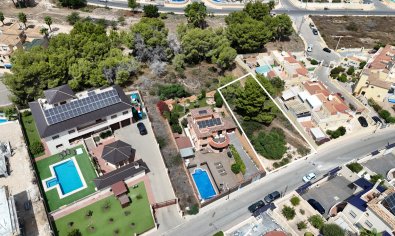
Large lots
People looking for a large plot of land often end up choosing existing homes.
Plots for new construction are generally laid out more efficiently.
That may be modern and low-maintenance, but it often means less garden space.
Mature Garden
Existing villas may feature existing palm trees, other trees, and landscaping.
That immediately adds atmosphere and shade.
But mature greenery also means maintenance and, at times, root or irrigation problems.
Newly Built Home Garden
A new garden usually starts out much sparser.
Plants need time to grow.
Anyone expecting a high degree of privacy should carefully check how much greenery is actually present upon completion.
Privacy
New construction projects can be built in a compact manner.
So a villa isn't automatically very private.
Check sight lines between:
- the terrace;
- swimming pools;
- the frame;
- and neighbors.
In the case of existing buildings, you can assess this right away.
Sound
With new construction, the surrounding area may still change.
A quiet, empty street could one day become a full-fledged residential neighborhood.
For existing buildings, you can find more information about:
- traffic;
- hospitality industry;
- neighbors;
- and daily activities.
Future Construction Phases
Large new construction projects may involve multiple phases.
Ask about:
- number of phases;
- location;
- planning;
- and future facilities.
Your home may be ready even while construction is still underway next door.
Construction Traffic
If you buy at an early stage, you may need to temporarily take the following into account:
- trucks;
- fabric;
- machines;
- and construction noise.
This may be less of an issue for a second home than for a primary residence.
Existing Buildings and Renovations
Existing buildings also have legal considerations.
For example, a previous owner might have added:
- greenhouse;
- swimming pool;
- bedroom;
- garage;
- rooftop terrace;
- or outbuilding.
Have it verified to ensure that this has been properly recorded and, where necessary, approved.
Land Registry and Cadastral Office
For existing buildings, the actual situation must be compared with official data.
Check the following, among other things:
- living space;
- lot;
- swimming pool;
- garage;
- and expansions.
For new construction, you should also have someone verify that the final legal documentation matches the home being delivered.
Independent legal guidance
Whether it’s a new construction or an existing building, it’s wise to have an independent legal review.
For new construction, the focus is on, among other things:
- developer;
- permits;
- contract;
- payments;
- warranties;
- and completion.
In existing buildings, the emphasis is more on:
- ownership;
- owe;
- renovations;
- community;
- registration;
- and taxes.
Snagging in New Construction
When a new building is completed, it is a good idea to have a technical inspection performed.
Check the following, among other things:
- the frame;
- doors;
- plumbing;
- tiling;
- kitchen;
- electricity;
- HVAC system;
- patio;
- and drainage.
Document any defects in writing.
Structural Inspection of an Existing Home
A technical inspection may also be advisable for existing buildings.
This is especially true in the following cases:
- older villa;
- major renovation;
- moisture;
- tears;
- swimming pool problems;
- or concerns about the roof and systems.
Purchasing costs vary
New construction and existing buildings are treated differently for tax purposes.
That's why you shouldn't use a single fixed percentage for all purchases.
In addition to taxes, costs may be involved for:
- notary;
- property registry;
- lawyer;
- mortgage;
- and additional services.
Always have a separate total cost estimate prepared for each specific home.
Be sure to also read our information about buying a home in Spain.
Mortgage for a New Home
With off-plan new construction, timing can be especially important.
You may already be making payments during construction, even though the final mortgage won't be issued until around the time of completion.
Therefore, discuss financing early on.
Mortgage for an Existing Home
For existing homes, the reservation, mortgage application, appraisal, and closing typically occur in closer succession.
But here, too, funding depends on, among other things:
- income;
- obligations;
- age;
- taxation;
- home value;
- and immigration status.
Learn more about a mortgage in Spain.
NIE number
For both new and existing homes, you'll need a NIE number for the purchase process.
An NIE is not the same as a residencia.
Learn more about NIE and residency in Spain.
New Construction and Customization
For some projects, you can make certain decisions early on.
Consider:
- floors;
- kitchen finishes;
- plumbing;
- and sometimes additional options.
That varies greatly depending on the developer and the stage of construction.
The later you buy, the fewer options you'll usually have left.
Modifying Existing Structures
With existing homes, you can make changes to the property yourself after purchase, to the extent permitted by permits and community rules.
That gives you more design freedom, but it means you'll have to organize the renovation and hire contractors yourself.
Move right away or wait?
When time is of the essence, existing buildings or turnkey new construction may be a more logical choice.
Buying off-plan requires patience.
Anyone who buys now but won't be moving permanently for a few years can actually make a conscious decision to choose a project that is still under construction.
New Construction for Investment
Would you like to invest in Spanish real estate?
New construction can be appealing because of its modern look and minimal immediate maintenance.
However, the new-construction premium, community fees, and location must be taken into account.
New construction does not guarantee higher appreciation or rental returns.
Existing Buildings for Investment
Existing properties can be attractive if you buy in a strong, well-established location.
You'll also be able to see better:
- how the neighborhood functions;
- how the building is maintained;
- and what types of housing are in demand locally.
There is no guaranteed return here either.
Vacation Rentals
Whether a home can be rented out to tourists does not depend on whether it is new or existing.
Check this before purchasing.
The following may be relevant:
- regional regulations;
- municipality;
- urban planning context;
- community;
- and registration requirements.
Never assume that there are automatic options for tourist rentals.
New Construction Project with a Rental Guarantee
When a developer or seller mentions a rate of return, treat it as a commercial projection and not as a guarantee.
Judge for yourself:
- net costs;
- management;
- vacancy;
- taxes;
- community;
- and regulations.
Existing home with an existing lease
Just because a property has been rented out before does not automatically mean that the same type of lease can simply be continued for you.
Have the permits, registration, and contractual status reviewed.
Which one is easier as a second home?
Many buyers choose new construction because it requires little immediate renovation.
But a renovated existing apartment can be just as easy to maintain.
The real question is:
How much maintenance does the home require when you're not there?
Which one is better for permanent residence?
That depends mainly on the location and layout.
A modern home far from amenities may be less practical than an older home in the heart of a lively village.
For permanent residence, the following often applies:
Location first, home second.
Which one has more character?
That's a personal matter.
Existing buildings may feature more traditional elements such as:
- Spanish tiles;
- patio;
- the book;
- mature garden;
- and a classic facade.
New construction often features a sleek, modern style.
Neither is objectively better.
Which one has more storage?
Older homes can have a surprising amount of storage space, but sometimes they have hardly any built-in closets.
New projects often have built-in closets, but smaller storage rooms.
Always check storage in a practical way.
Which one has larger bedrooms?
Older homes may have larger rooms, but this varies greatly depending on when they were built.
New construction often makes more efficient use of square meters.
Therefore, don't just compare total surface area—compare the actual camera dimensions.
Which one has a larger patio?
New construction is often designed with an emphasis on outdoor living.
As a result, patios can be relatively large.
But older penthouses and villas can actually have exceptionally large outdoor spaces.
The same applies here: compare properties on a case-by-case basis.
Which is easier to evaluate?
Existing buildings.
You can see and feel:
- how much light comes in;
- how warm rooms get;
- how much noise there is;
- how big rooms really feel;
- and what you see from the window.
With off-plan purchases, you have to use your imagination to some extent.
Which option involves less risk?
There is no general answer to that.
New construction involves different risks than existing construction.
For new construction, these are more likely to be:
- project;
- planning;
- contract;
- and completion.
For existing buildings, see also:
- technical condition;
- renovations;
- documentation;
- and maintenance.
Thorough legal and technical reviews reduce uncertainty in both cases.
New construction or existing homes, depending on your housing preferences
If you're primarily looking for something modern, more energy-efficient, and requiring little direct maintenance, a new home might be the logical choice.
If you're primarily looking for a downtown location, a beachfront location, a larger lot, or an established neighborhood, an existing home may be the more logical choice.
If you're looking for a home that's available quickly and modern, be sure to check out move-in-ready new construction or fully renovated existing homes.
Never compare only the asking price
This may well be the most important piece of advice.
Always consider the big picture.
For new construction:
- options;
- furniture;
- air conditioning;
- swimming pool;
- communitykosten;
- and wait time.
For existing buildings:
- renovation;
- systems;
- community;
- spills;
- furniture;
- and technical maintenance.
Only then will you know what's actually more cost-effective.
Dutch real estate agent specializing in new construction and existing homes
Casas Palmeras assists Dutch and Belgian buyers with both new construction and existing homes on the Costa Blanca and in surrounding regions.
We can work with you to compare which option best suits:
- budget;
- desired location;
- second home;
- permanent residence;
- maintenance;
- delivery time;
- and plans for the future.
Learn more about our approach and about Casas Palmeras as a Dutch real estate agency on the Costa Blanca.
When is a new construction project a better option?
New construction can be particularly appealing if you value modern architecture, up-to-date systems, a large patio, and the fact that less immediate renovation work is required.
You should have no problem buying off-plan, partly based on blueprints, or waiting for completion.
When is an existing building a better fit?
Existing properties can be particularly appealing if you're looking for an established location and want to see exactly what you're buying.
It might also be a better fit if you:
- want to move quickly;
- enjoys renovating;
- is looking for larger lots;
- whether you want to live near the city center or the beach.
View new and existing properties
You don't have to make a final decision in advance.
It’s often a good idea to visit both.
Browse our complete listings, the current new-construction homes, our existing homes, and the available new-construction projects.
Would you like us to conduct a targeted search for properties in both categories side by side, based on the same budget and the same region? If so, please fill out the questionnaire for your housing search or contact Casas Palmeras with no obligation.
When it comes to the Costa Blanca, choosing between a new-construction home and an existing home isn’t ultimately a matter of good versus bad, but rather a matter of weighing different advantages and considerations. New-construction homes often offer modern layouts, up-to-date technology, and fewer immediate renovation needs, while existing homes can offer prime locations, established neighborhoods, and an immediate sense of the property’s actual condition. Therefore, don’t just compare the price or year of construction, but focus especially on location, total budget, maintenance, completion date, community fees, outdoor space, and how you actually plan to use the property. The best choice is the home that best suits your life in Spain, both practically and financially.