

Retirement in Spain: Everything you need to know if you want to enjoy your retirement under the Spanish sun
Retirement in Spain: Everything You Need to Know
More and more Dutch and Belgian citizens are choosing to move to Spain after retirement. The pleasant climate, the relaxed lifestyle, good medical care, and the opportunity to spend a large part of the year outdoors make Spain an attractive destination for retirees.
The Costa Blanca and Costa Cálida are particularly popular. Here you'll find coastal towns with plenty of amenities, international communities, and a wide selection of apartments, villas, and other properties in Spain.
But living permanently in Spain during your retirement does, of course, require some preparation. What will happen to your AOW and pension? How does health care in Spain work? Do you need an NIE number? When should you apply for residency? And is it wiser to buy a second home first or to emigrate permanently right away?
In this guide, we discuss the most important topics for anyone considering spending their retirement in Spain.
Why do so many retirees choose Spain?
For many retirees, moving to Spain is primarily about quality of life. The climate makes it possible to spend a large part of the year outdoors, and many daily activities take place on the patio, in the garden, at the beach, or in the village square.
In addition, there are many regions that are already home to large international communities. This can make the transition easier, especially if you are not yet fluent in Spanish.
Many people choose Spain because:
- the Mediterranean climate;
- plenty of opportunities to enjoy the outdoors;
- good medical facilities;
- a wide variety of restaurants and shops;
- good connections to the Netherlands and Belgium;
- international communities;
- golf, hiking, biking, and water sports;
- a wide and varied selection of homes.
If you're still unsure about which region to choose, you can check out our guide to the best places to live on the Costa Blanca, for example.
Receiving AOW Benefits When You Live in Spain
If you move permanently from the Netherlands to Spain, you can, in principle, continue to receive your accrued AOW.
The Social Insurance Bank can also pay your AOW benefits if you live in Spain. However, you must report your change of address, and depending on your personal situation, additional administrative requirements may apply.
If you lived outside the Netherlands for extended periods before retirement without being insured under the AOW, this may affect the amount of your eventual benefit.
That is why it is a good idea to check your personal AOW statement before emigrating.
Taking Your Pension Benefits to Spain
An employer-sponsored pension or other pension can normally be paid out if you live in Spain.
So, the fact that you are moving does not mean that your accrued pension benefits will be lost.
However, things like:
- taxation;
- type of pension;
- country of the pension provider;
- housing status;
- and other income
affect how your pension is treated for tax purposes.
Therefore, before making a final decision to move, find out what emigrating to Spain means for your specific situation.
Where do you pay taxes on your pension?
If you live in Spain permanently, you can become a tax resident of Spain.
In practice, this means that Spain can tax your worldwide income in many situations. In addition, there are agreements between the Netherlands, Belgium, and Spain to prevent double taxation on pension income.
The type of pension you have, among other factors, determines where and how much tax you pay. A standard corporate pension may be treated differently for tax purposes than, for example, a government pension.
Because tax rules depend heavily on your personal situation, we always recommend discussing this with a tax specialist or tax advisor before emigrating.
When are you considered a tax resident of Spain?
The well-known 183-day rule is often mentioned.
If you stay in Spain for more than 183 days within a single calendar year, you will in many cases be considered a tax resident of Spain.
But the number of days isn't the only criterion. The center of your economic and personal interests can also play a role.
That makes it especially important to carefully assess your situation if, for example, you want to live part of the year in the Netherlands and part in Spain.
Health Care for Retirees in Spain
For retirees, health care in Spain is often one of the most important topics.
Spain has a comprehensive public health care system, supplemented by many private hospitals and clinics.
On the Costa Blanca, there are major medical facilities in and around Torrevieja, Elche, Alicante, Benidorm, and Dénia, among other places.
If you'd like to live near Dutch-speaking healthcare providers, you can also check out our guide to hospitals, clinics, and Dutch doctors on the Costa Blanca.
The S1 Form for Retirees
Many Dutch and Belgian citizens who receive a statutory pension and move permanently to another EU country may, under certain conditions, use the S1 form.
This document allows you to register for medical care in the country where you live while your entitlement to care from the competent pension country is being processed.
For Dutch citizens, this is often handled through the CAK.
Once you have registered in Spain, you will then be able to access the Spanish public health care system.
The exact procedure depends on your personal situation, so it's best to take care of this before or immediately after your move.
Private health insurance in addition to public health care
In addition, some retirees opt for private health insurance in Spain.
This can offer benefits such as:
- faster appointments with certain specialists;
- a wider selection of hospitals;
- direct access to certain specialties;
- and international or Dutch-speaking healthcare providers.
Whether this is necessary or desirable depends on your own preferences and your right to public health care.
You can read more about this in our comprehensive guide to health care in Spain.
NIE Number for Residents in Spain
Anyone who buys a home or settles permanently in Spain will almost always need a NIE number.
This is the personal identification number for foreign nationals in Spain and is used, among other things, for:
- purchase of a home;
- taxes;
- banking;
- insurance;
- utility services;
- and all kinds of administrative procedures.
For more information, please visit our page on NIE and residency in Spain.
Residencia if you live in Spain permanently
EU citizens who stay in Spain for more than three months must normally register as residents.
In practice, this is often referred to as residencia.
In addition, you must be able to demonstrate, among other things, that you have sufficient financial resources and how your health care is arranged.
For retirees, this can be done, for example, through pension income and by filing the S1 form.
On our page about NIE and residency in Spain, we explain these procedures in more detail.
Register with the municipality
If you live in Spain permanently, you will usually also register with the municipality through the padrón municipal.
Registration on the padrón is different from residencia.
The padrón records where you live within the municipality and is used for all kinds of administrative purposes.
Consider, for example, local services, health care, municipal administration, and sometimes certain tax or tax credit programs.
Where do many Dutch retirees live in Spain?
The east and southeast coasts, in particular, are popular with Dutch and Belgian retirees.
On the Costa Blanca, there is a wide variety of options, and there are many international communities.
Well-known places of residence include, for example:
- Ciudad Quesada
- Rojales
- Torrevieja
- Orihuela Costa
- Guardamar del Segura
- The Navy
- Saint Fulgentius
- Santa Pola
- Calpe
- Altea
- Jávea
- Denial
- Alfaz del Pi
Which place is best for you depends, among other things, on your budget, mobility, distance from the sea, need for shopping and medical care, and how much of a Spanish or international atmosphere you're looking for.
Ciudad Quesada for Retirees
Ciudad Quesada is popular among Dutch, Belgian, and British residents.
The residential area consists largely of villas, bungalows, and apartments, and there are many restaurants, shops, supermarkets, and other amenities.
Medical facilities and larger towns such as Torrevieja and Guardamar are also relatively close by.
For people who enjoy living in an international setting and want plenty of amenities within a short distance, Ciudad Quesada may be an attractive option.
Torrevieja for Retirees
Torrevieja is a larger coastal city with shops, a boardwalk, beaches, healthcare services, and a very international population.
The advantage of a larger town is that many amenities are available right within the municipality itself.
For retirees who want to get around easily without a car, an apartment near the city center or the boardwalk might be a good option.
If you're looking for peace and quiet, you might want to check out the residential areas around Torrevieja.
Orihuela Costa for Retirees
Orihuela Costa consists of several popular coastal and residential areas, such as La Zenia, Playa Flamenca, Villamartín, and Cabo Roig.
The area is very international and has many shops, restaurants, golf courses, and beaches.
The housing inventory consists mainly of apartments, townhouses, bungalows, and villas.
If you're looking to combine golf, the ocean, and international amenities, you'll find plenty of options here.
Guardamar del Segura
Guardamar del Segura has a different atmosphere.
The town has long sandy beaches, extensive dune areas, parks, and a truly Spanish town center.
This makes Guardamar attractive to retirees who want international amenities in the area but do not want to live exclusively in an international residential community.
San Fulgencio in La Marina
San Fulgencio and La Marina are popular with foreign residents who like to live relatively close to the sea without being right in the middle of a larger coastal city.
The neighborhood features many low-rise buildings, single-family homes, and international amenities.
Larger amenities are also easily accessible via Guardamar, Santa Pola, and Elche.
Northern Costa Blanca for Retirees
The northern Costa Blanca is also very popular.
Places like Altea, Calpe, Moraira, Jávea, and Dénia combine the sea, mountains, and a wide range of international amenities.
The landscape here is generally hillier than on the southern Costa Blanca.
That offers beautiful views, but when we retire, we would also consider practical matters such as elevation changes, accessibility, and distance to stores and medical facilities.
A villa high up on a mountain can be wonderful as long as you enjoy driving and are able to get around easily. If you prefer to do everything on foot, you’re better off looking for a central location or a flatter residential area.
The Costa Cálida as an alternative
The Costa Cálida in the Murcia region is also becoming an increasingly popular choice among foreign homebuyers.
Places such as Los Alcázares, San Javier, Santiago de la Ribera, and San Pedro del Pinatar are located around or near the Mar Menor.
This may be appealing to retirees because of the flat landscape, beaches, boardwalk, and often relatively short distances between amenities.
Coast or inland?
Not every retiree wants to live right by the sea.
Inland, you'll often find more peace and quiet, space, and housing for the same budget.
Consider, for example, places like Hondón de las Nieves, Pinoso, and other villages farther from the coast.
There, you're more likely to find a detached villa or finca with land.
The downside is that stores, hospitals, and other amenities may be farther away.
Especially when it comes to retirement, we should therefore consider not only the home's price, but also how practical the location will still be in ten or fifteen years.
How much does it cost to live in Spain after you retire?
The cost of living varies greatly by region and lifestyle.
Spain isn't automatically cheaper than the Netherlands or Belgium in every respect.
Some items may be less expensive, while others may have comparable or higher costs.
When drawing up your budget, consider the following, among other things:
- mortgage or rent;
- electricity and water;
- Internet and phone;
- property taxes;
- community fees for apartments;
- insurance;
- car and fuel;
- health care;
- groceries;
- hospitality industry;
- and maintenance of the home.
A villa with a pool naturally has different monthly expenses than an apartment without shared amenities.
Should you rent or buy a home for retirement?
Some people choose to rent in Spain for a while first.
That might be a good idea if you're not yet sure which region or town is right for you.
Living there permanently for a few months feels different from a two-week vacation.
Other people are already familiar with the region and decide right away to buy a home in Spain.
Both approaches can work well.
The most important thing is not to base your decision solely on how a place feels in August.
Buy a second home first
Another popular option is to first buy a second home in Spain.
You can then use the home during vacations and longer stays and gradually discover how you like daily life in Spain.
At a later date, the home may become your permanent residence.
Check out our current listings in Spain if you'd like to see what's available.
What requirements must a retirement home meet?
When looking for a vacation rental, a ocean view, a pool, and a patio are often the first things people consider.
When it comes to choosing a permanent place to live during retirement, we would also take many more practical factors into account.
For example:
- single-level home;
- few stairs;
- elevator in the apartment building;
- private parking space;
- stores nearby;
- local family doctor and pharmacy;
- a hospital within a reasonable distance;
- nice winter sunshine;
- easy maintenance;
- public transportation;
- and a setting that’s lively even outside the peak season.
A home that feels perfect when you're 65 should ideally remain practical when you're 75 as well.
Apartment or villa?
An apartment can be appealing because of its lower maintenance costs.
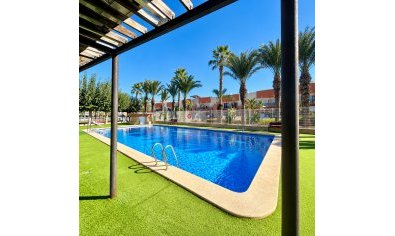
In a residential complex, the gardens, swimming pool, and common areas are usually maintained collectively.
On the other hand, there are community fees.
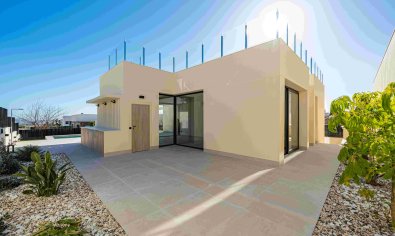
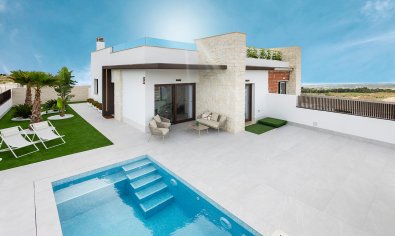
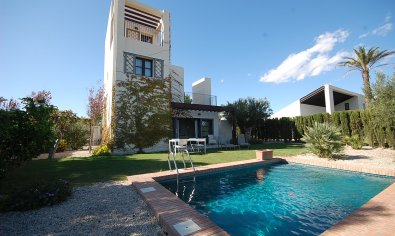
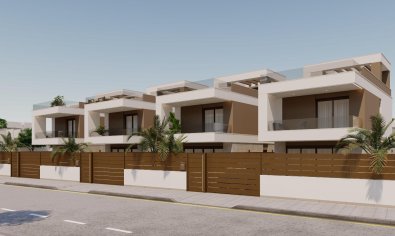
A villa offers more privacy, more land, and often a private pool, but naturally requires more maintenance as well.
For retirees, there is no one-size-fits-all best choice.
It depends mainly on how active you want to remain and how much responsibility you want to have regarding the home.
New construction or existing property?
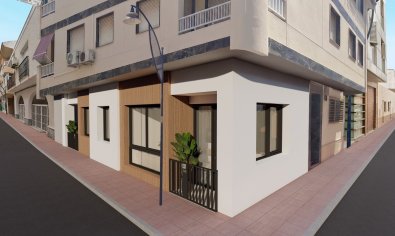
There are also clear differences between new construction in Spain and an existing home.
New construction often offers:
- good insulation;
- modern facilities;
- little direct maintenance;
- elevators;
- parking spaces;
- and more energy-efficient facilities.
Existing buildings can actually be attractive because of:
- established residential neighborhoods;
- larger plots;
- immediate delivery;
- existing gardens;
- and sometimes a more favorable location.
Which option is best for you depends on your needs and budget.
A Mortgage After Retirement
Even after retirement, a Spanish mortgage may still be an option in some situations.
Banks consider factors such as income, age, loan term, existing debts, and the value of the home.
The maximum loan term may be shorter than for younger buyers due to age.
Anyone who needs financing would therefore be wise to find out in advance how much a Spanish bank is willing to finance before seriously looking at homes.
Include purchase costs in your budget
The home price is not the total purchase price.
When buying a home in Spain, you'll also have to deal with taxes, a notary, the property registry, and other purchase costs.
As a result, you should always set aside a portion of your budget in addition to the purchase price.
So, before you start looking, don't just consider what your maximum budget is, but especially the price range in which you actually need to look for homes.
Should you sell or keep your home in the Netherlands?
This is a very personal decision.
Some people sell their homes in the Netherlands or Belgium and emigrate permanently.
For now, others are keeping a house or apartment so they can easily return.
Of course, this has implications for your assets, taxes, fixed expenses, and where your actual place of residence is.
Therefore, discuss this decision not only with a real estate agent, but also, if necessary, with a tax specialist or financial advisor.
A Car in Spain
Outside of larger cities, a car is often very practical.
For example, people who live in a villa community near Ciudad Quesada, Orihuela Costa, or Calpe are more likely to use their cars for many everyday errands.
In the downtown areas of Torrevieja, Alicante, or Dénia, you can actually walk around a lot more.
This is another factor to consider when looking for a retirement home.
When driving becomes less enjoyable later in life, a centrally located apartment may be more practical than a villa on a remote hill.
Learn Spanish During Your Retirement
You don't have to speak Spanish fluently to live on the Costa Blanca.
In international settings, you can get quite far with English—and sometimes even Dutch.
Still, learning Spanish makes everyday life much easier and more fun.
Chatting with neighbors, making an appointment at city hall, visiting a local market, or simply having a chat at a café becomes much easier.
That is precisely why, if you are emigrating permanently, we would recommend that you at least learn the basics.
Building Social Connections
One of the biggest changes after emigrating is not administrative, but social.
In the Netherlands, you’ve often spent years building a network.
In Spain, you'll be starting over, at least in part.
Fortunately, there are many associations, sports clubs, and international groups on the Costa Blanca and the Costa Cálida.
Golf, hiking, padel, biking, volunteering, and language classes are all ways to meet new people relatively quickly.
Spend the winter here or emigrate permanently?
Not everyone has to emigrate completely right away.
Some retirees choose, for example, to spend four to six months a year in Spain for the winter and spend the rest of the year in the Netherlands or Belgium.
This can be appealing if you want to maintain family and social ties in both countries.
Be sure to pay close attention to the length of stay, insurance, and tax rules.
As your stay becomes longer, your legal and tax status may also change.
Sign up for a trial period
For those who know Spain only from vacations, we usually recommend trying a longer stay first.
For example, rent a home for a few months in the area where you plan to buy a home in the future.
Go on a regular shopping trip, visit a doctor, drive during rush hour, experience January and February, and see how busy or quiet a place really is outside of the summer.
After that, you'll have a much better idea of whether you want to stay permanently.
Checklist for Retirement in Spain
Before you move for good, it’s a good idea to at least consider the following:
- State Old-Age Pension (AOW) and pension benefits.
- Tax Implications of Emigration.
- Health insurance and, if applicable, an S1 form.
- NIE number.
- Residence.
- Registration with the municipality.
- Home and neighborhood.
- Spanish bank account.
- Insurance.
- Wills and Estates.
- Car and driver's license.
- Daily medical services.
- Your social network.
- Administrative deregistration in the Netherlands or Belgium.
In our emigration checklist, you'll find more practical information to help you prepare for your move.
Finding a Home in Spain for Your Retirement
In our opinion, looking for a retirement home requires a slightly different approach than buying a regular vacation home.
Of course, the view, the pool, and the overall appeal remain important.
But we also consider how practical the home is in the long term.
Are there a supermarket, a pharmacy, and a family doctor nearby? Can you get to the house without climbing many stairs? Does it get sunny in January? Do you always need a car? Is the neighborhood lively all year round?
These are questions that ultimately have a big impact on how comfortable you really are living there.
Casas Palmeras helps you compare different properties in Spain and locations along the Costa Blanca and Costa Cálida, among others.
You can also read more about buying a home in Spain, moving to Spain, NIE and residency, healthcare in Spain, and our process for buying a home.
With the right preparation, your retirement in Spain can be so much more than just living in a sunny country. It can mean a completely different way of life—with more time outdoors, a new environment, and a home that fits the future you envision.