

Greetings from Málaga: three thousand years of city life between mountains and sea
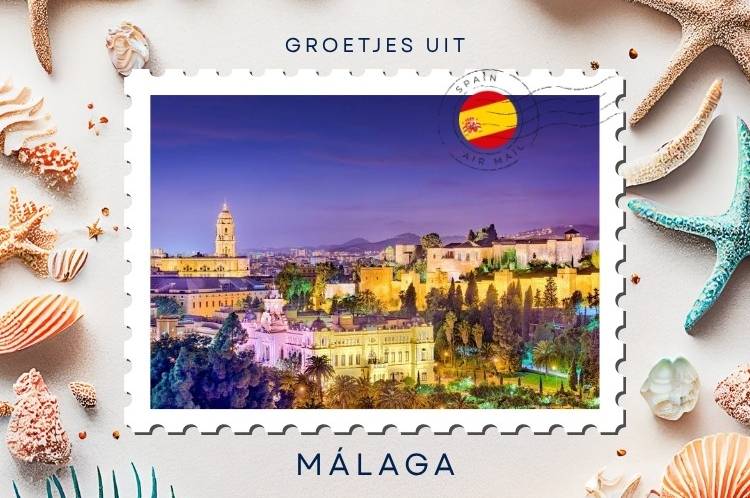
Greetings from Málaga: three thousand years of city life between mountains and sea
Málaga is often described as the gateway to the Costa del Sol, but that description hardly does the city justice. This is not a beach resort that simply became large through tourism. Málaga was already a port city when much of modern Europe looked completely different. Phoenicians traded here, the Romans built a theatre and fish-processing facilities, Muslim rulers developed Malaqa into an important Mediterranean trading city, and in the nineteenth century Málaga became one of the pioneering centres of Spanish industrialisation.
Today it is simultaneously a provincial capital, university city, cultural destination, international transport hub and permanent home to hundreds of thousands of people. Anyone considering living and buying property in Málaga will therefore discover several very different housing markets inside the same city. An apartment in the historic centre, a home in Pedregalejo and a modern flat in Teatinos may all be in Málaga, yet provide completely different daily lives.
The Phoenicians chose this bay almost three thousand years ago
Málaga's urban history begins in the Phoenician period. An important settlement known as Cerro del Villar existed near the mouth of the Guadalhorce from around the ninth century BC. Repeated flooding eventually encouraged settlement to shift towards the area around today's Alcazaba.
Here the Phoenician city of Malaka developed, with fortifications, commercial areas, workshops and access to the sea. The sheltered bay provided a useful Mediterranean harbour while nearby valleys created routes into the Andalusian interior.
Málaga's connection with maritime trade therefore dates back to the foundation of the city itself.
A Roman theatre beneath the Alcazaba
At the foot of the Alcazaba stands the Roman Theatre, one of the clearest places in Málaga to see different historical periods layered almost on top of one another.
The theatre was constructed in the first century AD. Roman homes and industrial installations used for salting and processing fish also existed around the hill. Málaga formed part of a Mediterranean trading economy in which preserved fish and sauces such as garum were important products.
Centuries later, stone from the theatre was reused in the Muslim fortifications. Standing on Calle Alcazabilla today, Roman and Islamic Málaga can therefore be seen almost simultaneously.
Malaqa became an important city of Al-Andalus
Under Muslim rule, Málaga developed into Malaqa, a prosperous trading city with a fortified medina, suburbs, mosques, markets and a busy port.
Between the eleventh and fourteenth centuries the city became known for lustreware ceramics, silk, sugar, dried figs and raisins, while cotton, spices and other goods arrived through its harbour from across the Mediterranean.
The medieval town was surrounded by walls extending from the Alcazaba through areas corresponding to today's Carretería and Álamos streets, towards the Guadalmedina and harbour.
The Alcazaba was a fortress and palace
The Alcazaba of Málaga served both military and political purposes. Written references to fortifications on the site date to the eighth century, although the complex was rebuilt and expanded substantially in later periods.
Major works took place under King Badis in the eleventh century and the Nasrid rulers subsequently altered and reinforced the complex. Its upper sections developed into a palace-fortress and seat of local government.
It is therefore misleading to assign the Alcazaba one construction date. The monument visible today represents centuries of building, alteration and later restoration.
Gibralfaro protected the Alcazaba from above
Higher on the ridge is Gibralfaro Castle. The existing fortress was largely created during the fourteenth century under the Nasrid rulers Yusuf I and Muhammad V.
It housed troops and provided an additional defensive position above the Alcazaba. The two fortresses were linked by a fortified passage known as the Coracha. From the summit, defenders controlled the city, bay and approaches by land and sea.
The panoramic view admired by visitors today was precisely what made the hill so strategically important.
Atarazanas was once a shipyard
The present Atarazanas Market occupies the site of Málaga's fourteenth-century Nasrid shipyards.
A monumental marble gateway from the medieval complex survived. When Joaquín de Rucoba designed the current market between 1876 and 1879, the historic arch was incorporated into the new façade. Much of the market's metal structure was also produced using iron associated with Málaga's former iron industry.
One building therefore brings together the maritime Málaga of the Nasrid period and the industrial city of the nineteenth century.
The conquest of 1487 was far from peaceful
On 19 August 1487, the Catholic Monarchs entered Málaga after a long and violent siege.
The consequences for the existing population were severe. According to the city's official historical account, thousands of residents were enslaved or deported, after which Christian settlers were brought into the city.
The main mosque was consecrated for Christian worship and Málaga gradually changed through the construction of churches, monasteries and new public spaces.
The modern Feria de Málaga is still connected with this date. The August fair traditionally includes 19 August in commemoration of the Christian conquest. In 2026 it took place from 15 to 22 August.
The cathedral occupies the former religious centre
After 1487, the former main mosque was initially used as the cathedral. Construction later began on the present Cathedral of the Incarnation.
Built and modified over several periods, it became one of Andalusia's major Renaissance monuments. Its location reveals an important continuity in Málaga: religious authority remained concentrated in almost the same place even though the society and architecture changed completely.
Málaga became an industrial powerhouse
The nineteenth century produced one of the most unexpected chapters in the city's history.
Families including Heredia, Larios and Loring drove economic growth through agricultural exports, iron production and textiles. Factories such as La Constancia and Industria Malagueña were among the pioneers of Spain's Industrial Revolution, while the railway reached Málaga in 1865.
The prosperity also reshaped the city. Calle Larios opened in 1891, a large industrial and working-class zone developed west of the historic centre, while wealthier residential areas such as La Caleta and El Limonar appeared to the east.
Some of the present residential contrast between eastern and western Málaga still reflects that nineteenth-century expansion.
Huelin grew around factories and workers
Huelin is one of the clearest examples of Málaga's industrial urban history.
The district was named after industrialist Eduardo Huelin Reissig. Housing for workers developed around factories and industrial sites at a time when the surrounding land was still largely agricultural. Municipal planning documents describe the district as one of the principal areas shaped by Málaga's nineteenth-century industrialisation.
Today Huelin is a popular residential neighbourhood close to the sea, Huelin Park and Misericordia beach. Most of the factories have disappeared, but the district's original purpose still explains part of its urban structure.
La Concepción tells the story of Málaga's industrial elite
The same nineteenth-century wealth also created a very different environment.
North of the city lies the La Concepción Historic Botanical Garden, created by Jorge Loring and Amalia Heredia, members of two of Málaga's most influential business families.
They developed an extensive subtropical landscape garden during the nineteenth century. Its historic section received official protection in 1943 and Málaga municipality purchased the estate in 1990. It now contains thousands of tropical, subtropical and Mediterranean plant species.
La Concepción is therefore not simply a botanical attraction. It is also physical evidence of the wealthy social world created during Málaga's industrial boom.
Pablo Picasso spent his first decade in Málaga
Pablo Ruiz Picasso was born on 25 October 1881 on Plaza de la Merced, in what is now number 15.
He remained in Málaga until 1891. His father José Ruiz Blasco taught drawing and worked as curator of the municipal museum, playing a significant role in his son's earliest artistic training.
Today both Picasso's birthplace and Museo Picasso Málaga in the Palacio de Buenavista can be visited.
Picasso's connection with Málaga is therefore much more substantial than simply using a famous name for cultural tourism: his first ten years of life and earliest artistic environment were here.
From industrial city to cultural city
During recent decades Málaga has undergone another major transformation. The historic centre has been restored, the harbour has become far more integrated with the city and the range of museums and cultural institutions has grown significantly.
Visitors can now walk between the Alcazaba, Roman Theatre, Picasso Museum, shopping streets, contemporary museums and waterfront without covering great distances.
This gives Málaga a much more urban cultural character than most resorts along the Costa del Sol.
For permanent residents, that concentration of facilities is extremely useful, although successful tourism also means that parts of the historic centre can be crowded and noisy.
Pedregalejo still feels like a former fishing community
East of the centre is Pedregalejo, one of Málaga's oldest traditional fishing districts.
Its shoreline consists of small sheltered bays and a promenade lined with restaurants and chiringuitos. The municipality describes Pedregalejo as historically connected with fishing and identifies its waterfront promenade as the oldest in Málaga.
It is also strongly associated with Málaga's famous espetos: sardines skewered on canes and cooked beside an open fire, traditionally on the beach.
For residents, Pedregalejo offers a rare combination of neighbourhood identity, beach access and proximity to a large city centre. Parking and seasonal visitor pressure are among the practical disadvantages.
El Palo remains a genuine neighbourhood by the sea
Further east is El Palo, another district with strong fishing traditions.
Municipal information confirms that fishing boats are still used from its beaches. The waterfront extends for around 1.2 kilometres and includes a promenade.
El Palo appeals to people who want to remain inside Málaga while experiencing a more self-contained neighbourhood, with local shops, schools, restaurants and beaches close together.
Málaga does not have one type of beach life
A buyer wanting to live “near the beach in Málaga” should first decide what kind of city environment they want.
La Malagueta is immediately beside the city centre and harbour. This is genuinely urban coastal living: apartments, the promenade, restaurants and central services are all close together.
Continue east and you reach La Caleta, Baños del Carmen, Pedregalejo and El Palo, where the atmosphere gradually becomes more residential and connected with older fishing communities.
To the west are San Andrés, Huelin and Misericordia, which form part of a more modern and densely developed side of Málaga with excellent transport links.
For buyers prioritising modern apartments, transport and access to the airport, western Málaga can be particularly practical. Buyers looking for character, beaches and larger homes more often investigate the eastern districts.
La Malagueta and El Limonar offer very different lifestyles
La Malagueta consists mainly of apartment buildings and provides one of Málaga's most central beachfront locations. The historic centre, harbour and park are all walkable.
El Limonar and the hills behind it offer a quieter residential environment, with larger apartments, villas and older substantial homes. Its development was partly connected with the affluent nineteenth-century expansion of eastern Málaga.
The higher you move into the hills, the more space and views you may gain, but the more important a car usually becomes.
Teatinos is a completely different Málaga
Anyone visiting only the old town and coastline might never understand the scale of Teatinos.
This western district grew significantly around the expansion of the University of Málaga. Newer apartment blocks, wide streets, parks and restaurants dominate much of the area.
Metro Line 1 connects the university and Teatinos area through Ciudad de la Justicia and El Perchel to Atarazanas near the historic centre.
For permanent residence it can be considerably more practical than an old-town apartment if modern construction, parking, lifts and family facilities are priorities. The beach, however, is much further away.
Huelin and the western coastline
Huelin, La Princesa, La Paz and the Misericordia area combine city living, beaches and strong transport infrastructure.
Metro Line 2 serves areas including Princesa-Huelin and connects towards El Perchel.
The proximity of María Zambrano railway station, the airport and major roads makes this part of Málaga particularly practical for residents who travel frequently.
It may appear less picturesque than Pedregalejo, but everyday logistics can be significantly easier.
An international airport only eight kilometres away
Accessibility is one of Málaga's strongest advantages for foreign residents.
Málaga-Costa del Sol Airport is approximately eight kilometres from the centre. Aena recorded 26.8 million passengers in 2025, and the current network includes direct connections with Amsterdam and numerous cities across northern Europe and beyond.
For Dutch, Belgian and other northern European residents, living close to such a large international airport can make an enormous difference.
Living without a car is genuinely possible
Málaga's two Metro lines meet around El Perchel and now reach Atarazanas, immediately beside the city centre. Line 1 serves Teatinos and the university, while Line 2 serves much of western Málaga.
Cercanías rail services provide additional connections towards the airport and western Costa del Sol.
This makes car-free living realistic in the centre, Huelin, Teatinos and several other well-connected districts.
The situation is very different in hillside areas such as Pinares de San Antón, Cerrado de Calderón and upper El Limonar, where a car is often essential.
Which Málaga neighbourhood best suits you?
Historic Centre and Soho
Ideal for culture, restaurants, shops and urban life. Apartments dominate and parking can be difficult or expensive. Historic properties may also be subject to additional building restrictions.
La Malagueta
One of the clearest choices for combining city centre and beach. The convenience is reflected in the value placed on location.
El Limonar and the eastern hills
More space, quieter streets and a greater choice of villas and larger apartments. Car dependence generally increases with altitude.
Pedregalejo and El Palo
Beach access, neighbourhood identity and everyday facilities. Very suitable for permanent living, although parking close to the coast requires consideration.
Teatinos
Modern, practical and popular with families, students and professionals. Good Metro access and newer housing, but no beach on the doorstep.
Huelin and Misericordia
Flat, urban and well connected with the centre, railway station and airport. A very practical choice for everyday life.
Historic buildings need different checks
Buying in the historic centre or another older district requires a different approach from purchasing a modern apartment.
Architectural protection may restrict renovation. Roof condition, façades, communal installations, lifts, damp and community costs can all be particularly important.
A beautifully renovated apartment does not necessarily mean the entire building has been technically modernised.
New-build property is often outside the tourist centre
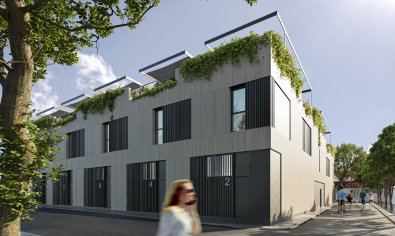
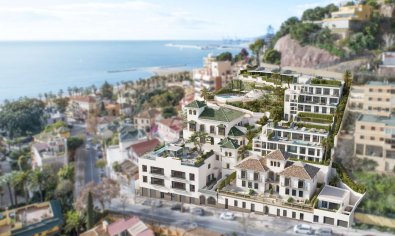
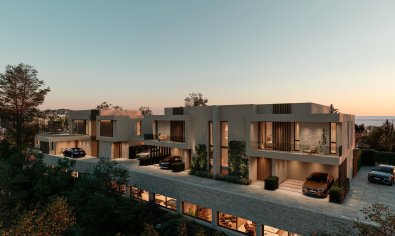
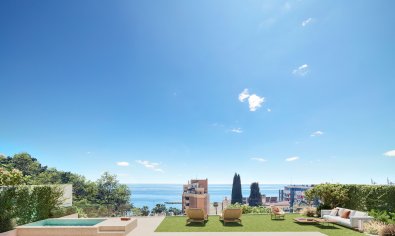
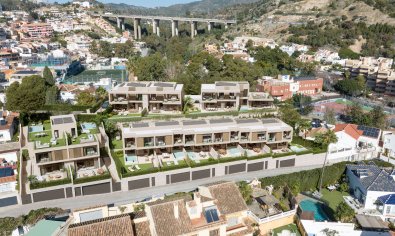
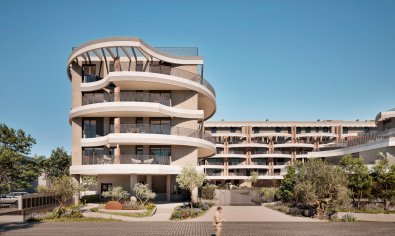
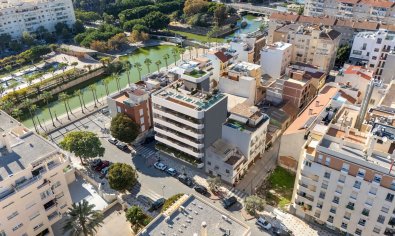
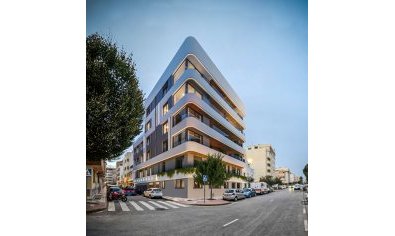
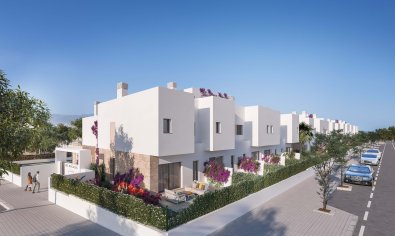
Anyone browsing new-build property on the Costa del Sol will also find developments in Málaga city.
Many are in expanding residential districts or areas outside the tourism-focused centre. For permanent residence this can be an advantage because newer developments more frequently include parking, lifts, terraces, improved insulation and shared amenities.
Do not judge a development solely by its driving time to Calle Larios. A Metro stop, supermarket, school, hospital or motorway junction may have far more influence on everyday life.
Tourist rentals require careful checking
Málaga has strong tourism demand, but that does not mean every apartment can automatically be used for holiday rentals.
Andalusian tourist-accommodation regulations have changed in recent years and municipalities have gained additional regulatory powers. Owners' associations can also impose restrictions.
Anyone buying specifically for tourist letting should therefore verify the current rules for the exact address and building before reserving the property.
Málaga or a Costa del Sol resort?
For someone moving permanently to southern Spain, this may be the most useful comparison.
Places such as Torremolinos, Benalmádena and Fuengirola are smaller and daily life is generally more directly centred around the coastline.
Málaga offers something different: a full Spanish city with a university, major hospitals, employment, cultural institutions, numerous residential districts and extensive public transport.
Those primarily looking for a permanent holiday atmosphere may prefer a smaller coastal resort. Those wanting a real city that also happens to have beaches may find Málaga difficult to beat.
Málaga does not have a single story
A Phoenician trading city, Roman theatre, Muslim palace-fortress, Nasrid shipyards, the violent conquest of 1487, nineteenth-century factories, Picasso's childhood, traditional fishing districts, a modern university and a major international airport all exist within the same city.
That variety is reflected in the property market. Two homes separated by only a few kilometres can provide entirely different lifestyles.
Casas Palmeras therefore looks not only at the property but also at how the neighbourhood will work for your daily life. You can read more about our guidance through our working method.
In Málaga, choosing the right district may be every bit as important as choosing the right home.
Greetings from Málaga!