

Greetings from Marbella: much more than Puerto Banús and the Golden Mile
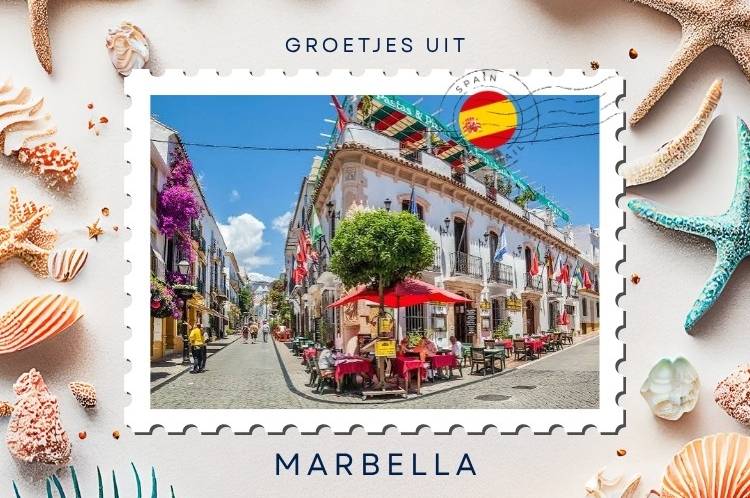
Greetings from Marbella: much more than Puerto Banús and the Golden Mile
Mention Marbella and most people immediately picture luxury villas, sports cars, beach clubs and the yachts of Puerto Banús. That image certainly exists, but it represents only one part of the municipality. Marbella also has Roman mosaics, an early Christian basilica, remains of a Muslim fortress, an old town radically reshaped after the Christian conquest and an industrial past that included some of Spain's earliest civilian blast furnaces.
Today Marbella is also a substantial municipality. The latest population figure published by the municipal tourism service is 173,420 registered residents. Marbella has 27.9 kilometres of coastline and is officially divided into five districts: Las Chapas, Marbella Este, Marbella Oeste, Nueva Andalucía and San Pedro Alcántara. “Living in Marbella” can therefore mean many very different things.
Marbella existed long before international tourism
Human occupation around Sierra Blanca goes back thousands of years. Palaeolithic and Neolithic material has been discovered in the mountains, while archaeological evidence suggests Phoenician and Punic settlement around Río Real from approximately the seventh century BC.
The Romans also left extensive evidence throughout the area. Historical attempts have been made to identify Marbella with ancient settlements mentioned in classical texts, but not every proposed name and location is certain. It is therefore more accurate to speak of a substantial documented Roman presence without treating every ancient identification as settled fact.
The Roman Villa of Río Verde
One of the municipality's most important archaeological sites is the Villa Romana de Río Verde, close to the coast west of Marbella centre.
Its mosaic floors are particularly notable. Alongside geometric decoration and animals, the mosaics include objects associated with food preparation and domestic life.
Other significant Roman remains include the Las Bóvedas Roman Baths near Guadalmina, while Roman material has also been discovered within the present old town.
Areas now surrounded by villas, apartments, hotels and golf courses were therefore already part of an active Mediterranean coastal landscape almost two thousand years ago.
An early Christian basilica
Near San Pedro Alcántara stands the Vega del Mar Early Christian Basilica, dating from the fifth century.
The complex consists of a basilica and associated cemetery. Its most unusual characteristic is the presence of two opposing apses, a design with very few parallels on the Iberian Peninsula. The baptistery also preserves pools used for baptism by immersion.
It is one of the clearest reminders that organised communities lived and worshipped on this coastline more than fifteen centuries before today's tourism industry appeared.
The Muslim town shaped today's historic centre
The present historic centre developed principally from the medieval Muslim settlement. The castle was built in the tenth century and a substantial defensive wall was later constructed around the town. Historical sources mention three main gates: the Sea Gate, Ronda Gate and Málaga Gate.
Parts of the castle and walls survive. Roman building materials were even reused in the medieval fortifications, and Roman capitals can still be seen incorporated into one of the towers.
Marbella's old town is therefore not simply a collection of whitewashed streets preserved for visitors. Much of its underlying structure is the result of centuries of life inside a fortified medieval town.
11 June 1485
Marbella surrendered to King Ferdinand the Catholic on 11 June 1485. Local historical sources place the ceremonial handing over of the keys, probably, at the Cruz del Humilladero on what is now Calle Málaga.
The date remains fundamental to Marbella because San Bernabé is the city's patron saint. The annual feria takes place around 11 June. In 2026, the Feria y Fiestas de San Bernabé ran from 8 to 14 June.
For permanent residents this is much more than a tourism event. Roads, parking and the use of central streets change considerably during the festivities.
Plaza de los Naranjos came after the conquest
The famous Plaza de los Naranjos was not the centre of the Muslim town.
Following the conquest, part of the former medina was demolished to create a new Plaza Mayor, later known as Plaza Real and eventually Plaza de los Naranjos. A new street was also created to connect the square with the former Sea Gate.
The square is therefore the physical expression of a new political and urban order introduced after 1485.
Today its orange trees, terraces and historic buildings make it one of Marbella's most photographed locations, but its origins are closely connected with the transformation of the conquered medieval city.
Marbella once produced iron
Perhaps the least expected chapter of Marbella's history began in the nineteenth century.
In 1826, businessman Manuel Agustín Heredia and a group of investors founded La Concepción to exploit the iron deposits of Sierra Blanca. Ironworks at La Concepción and El Ángel turned Marbella into an important centre of early Spanish industrialisation.
According to Marbella's municipal heritage service, the two works supplied an extraordinary 72% of the iron consumed in Spain in 1844. La Concepción also preserves remains associated with Spain's first civilian blast furnaces.
It is difficult to reconcile this landscape of mines and ironworks with modern Marbella, which is exactly why the industrial story is so interesting.
El Cable still remembers the mining years
Mining continued into the twentieth century. Construction began in 1955 on a cable transport system almost three kilometres long, designed to carry iron ore from the mines towards the Mediterranean.
Its final section extended more than 300 metres offshore so ships could be loaded directly. The first shipment took place in 1957 and the installation remained in operation until 1974.
A surviving element on the shoreline gave the present-day El Cable area its name.
What is now an urban beach was once connected to an industrial transport network carrying ore from Sierra Blanca to ships bound for northern Spain.
The 1950s created a different Marbella
The decisive shift towards international tourism began in the 1950s.
Ricardo Soriano was one of the pioneers, followed by figures including Prince Alfonso von Hohenlohe. In 1954, Hohenlohe founded the Marbella Club Hotel, which became one of the symbols of the emerging Golden Mile.
International aristocrats, film personalities, entrepreneurs and wealthy visitors began arriving, gradually transforming the local economy and Marbella's international reputation.
Municipal historical material describes this period as a fundamental change in the physical appearance, economy and everyday life of Marbella and San Pedro Alcántara.
Then came Puerto Banús
Another major turning point arrived in 1970, when Puerto Banús opened.
The marina was promoted by José Banús and today contains 915 berths according to Marbella Tourism.
Its design concept is particularly interesting. After meeting architect and designer Noldi Schreck, Banús developed the idea of an internationally oriented luxury marina with the appearance of an Andalusian Mediterranean village rather than simply surrounding the harbour with high-rise buildings.
Designer boutiques, luxury cars, restaurants and yachts now dominate the public image of Puerto Banús, but for residents it is also a neighbourhood containing apartments, shops, supermarkets, offices and beaches.
Almost 28 kilometres of coastline
Marbella municipality has 27.9 kilometres of coastline and 24 officially identified beaches.
La Venus, La Fontanilla and El Faro are close to the centre. To the west are Casablanca, Nagüeles, Río Verde, Puerto Banús and Guadalmina. To the east are El Cable, Los Monteros, El Alicate, Las Chapas, Real de Zaragoza and Artola/Cabopino, among others.
A home described as “close to the beach in Marbella” can therefore provide a completely different lifestyle depending on which part of the coastline it occupies.
Artola shows a more natural Marbella
Around Cabopino, the Artola dunes preserve a very different coastal landscape from the heavily developed central sections of Marbella.
For residents in the eastern part of the municipality, quieter beaches, dunes and lower-density residential areas can be among the strongest reasons to choose this side of Marbella.
It feels very different from the Golden Mile despite belonging to the same municipality.
Sierra Blanca and La Concha
Marbella sits immediately beneath Sierra Blanca. Its most recognisable peak is La Concha, approximately 1,215 metres high.
The mountains matter to property buyers as well as hikers. Elevated residential areas can offer exceptional sea views, but gradients, road access, orientation and winter sunshine vary considerably.
A spectacular view is therefore only one part of evaluating a hillside property.
Marbella is a collection of very different residential areas
The municipality has two principal population centres, Marbella and San Pedro Alcántara, alongside major dispersed residential areas including Nueva Andalucía and Las Chapas.
Marbella Centre and the Old Town
This is the most urban choice. Beaches, shopping, restaurants, schools and everyday services can all be relatively close.
The historic centre includes older apartments and traditional properties. Vehicle access and parking can be more difficult, and protected buildings may be subject to additional renovation requirements.
The Golden Mile
The Golden Mile is not an official administrative district. It is a widely used name for the coastal corridor between central Marbella and Puerto Banús.
It contains some of the municipality's best-known hotels, apartment developments and villa communities. The attraction is the combination of central location, coastline, promenade and high-level services.
Nueva Andalucía
Nueva Andalucía is one of Marbella's official districts. At its centre is the well-known Golf Valley, where Marbella Tourism lists courses including Las Brisas, Aloha, Los Naranjos, La Quinta and Magna.
The housing stock ranges from apartments and townhouses to large villas. Some parts are convenient for shops and restaurants, while others are highly car-dependent.
Marbella East and Las Chapas
To the east are residential names such as Los Monteros, El Rosario, Elviria, Marbesa, Hacienda Las Chapas and Cabopino.
Development is often less dense than in the centre, with many villas and lower-rise complexes. Access to beaches, shops and schools varies substantially from one community to another.
San Pedro Alcántara and Guadalmina
San Pedro is the municipality's second major urban centre and has already been covered separately in this series.
Guadalmina stretches across both sides of the A-7 and combines golf, apartments and detached homes. Whether a property is on the sea side or mountain side of the road can make a major difference to everyday walkability.
Golf changes the shape of the neighbourhoods
Golf courses create broad green spaces through Nueva Andalucía and other parts of Marbella.
They provide open views and lower development density, but they also mean that straight-line distances can be misleading. Two homes may appear close together on a map yet require much longer drives around golf courses and gated developments.
Even non-golfers may enjoy these neighbourhoods for their greenery and quieter atmosphere.
More than 170,000 year-round residents
Marbella is no longer a holiday town that empties outside summer. The municipal tourism service currently lists 173,420 registered residents.
The city offers Spanish and international schools, extensive shopping, sports facilities and a broad range of public and private services.
The Hospital Universitario Costa del Sol is also located within the municipality and forms part of Andalusia's public healthcare system.
These facilities allow Marbella to function as a genuine permanent home as well as a second-home destination.
Can you live without a car?
In Marbella Centre, a surprisingly large part of everyday life can be managed on foot. Parts of the Golden Mile, San Pedro and Puerto Banús can also provide good access to beaches and services.
Many villa communities are very different. Distances and slopes make a car important in Nueva Andalucía, Sierra Blanca, Los Monteros, Elviria and numerous other locations.
Marbella does not have a railway station. The main road connections are the A-7 and AP-7. Málaga Airport is approximately forty minutes away by car, while Gibraltar Airport lies roughly eighty kilometres to the west.
That access to Málaga Airport is an important practical advantage of this part of the Costa del Sol.
Buying property in Marbella: location matters as much as the home
The housing market ranges from 1960s and 1970s apartments to traditional town properties, large villas, golf developments, beachfront homes and contemporary projects.
Anyone exploring new-build property on the Costa del Sol will also see that “Marbella” covers a huge geographical area. A development marketed under the Marbella name may be several kilometres from the town centre.
Check real walking and driving distances, orientation, winter sun, access to the A-7, whether the motorway separates the property from the beach, parking and community fees.
Older villas deserve careful legal checks
Many Marbella villas have been altered or extended during their lifetime.
Swimming pools, enclosed terraces, basements, guest accommodation and auxiliary buildings should all correspond with the official planning and registry documentation.
Extra square metres are only an advantage when their legal status is clear.
Community fees can vary enormously
Many apartments, penthouses and townhouses belong to an owners' association.
A development with swimming pools, extensive gardens, security, lifts and reception services will naturally have different running costs from a simple urban apartment building.
Before buying, it is important to check regular fees, reserves, planned major works and any approved extraordinary contributions.
Tourist rentals are not an automatic right
Marbella's tourism market makes holiday letting attractive to some buyers, but high visitor demand does not mean every property can legally be used for tourist accommodation.
Current Andalusian regulations, any applicable municipal requirements and the rules of the owners' association should all be checked before purchasing with this intention.
Rental-income calculations only become meaningful once the proposed use has been confirmed as legally possible.
Marbella or Estepona?
This is one of the most common comparisons on the western Costa del Sol.
Marbella is larger, more international and considerably more dispersed, with an enormous variety of golf communities, international facilities and luxury residential areas.
Estepona also has a strong international property market, but its old town and modern urban areas feel more compactly connected.
The right choice depends less on reputation and more on the kind of daily life you want.
Marbella is much larger than its public image
Marbella's most interesting characteristic is not simply luxury. It is the number of different historical periods and lifestyles found within the same municipality.
Roman mosaics lie close to modern villas. A fifth-century Christian basilica survives in an area that later became part of an international coastal city. Muslim walls still shape the old town. Industrial remains recall a period when Marbella produced iron. The Marbella Club opened in 1954 and Puerto Banús followed in 1970, creating the international image known today.
Among all of this are more than 170,000 people using Marbella as an ordinary city: going to school, work, the supermarket, sports clubs and hospital.
That is why Casas Palmeras looks beyond the property itself when helping buyers in Marbella. The exact location within this large municipality will determine a major part of everyday life. You can read more about our working method.
Greetings from Marbella!