



Greetings from Istán: the water village behind Marbella
Greetings from Istán: the water village behind Marbella
Only a short distance from Marbella, the landscape changes remarkably quickly. The coast, golf courses and busy A-7 disappear from view, replaced by a winding mountain road, a large reservoir and increasingly steep green slopes. At the end lies Istán, a compact white village overlooking the valleys of the River Verde and River Molinos.
Istán is in Málaga province and forms part of the western Costa del Sol, although everyday life bears little resemblance to a conventional coastal resort. Part of the municipality lies within the protected Sierra de las Nieves landscape, while Marbella and Puerto Banús remain relatively close.
Two Moorish settlements rather than one simple founding date
Different stories are told about the origins of Istán. Some tourism sources mention 1448 and connect the village's foundation with inhabitants of the old Arboto fortress who moved here following fighting around the River Verde.
Local historical research presents a broader picture. Today's municipality developed from two Muslim alquerías, Istán and Arboto, where farmland, water and defensive towers were central to settlement. Arboto later became depopulated and its territory was incorporated into Istán during the sixteenth century.
The origins of Istán are therefore better understood as a gradual development than as one precisely documented founding event.
Torre de Escalante
The most important surviving monument from this world is the Torre de Escalante. Its exact construction date is uncertain, although the municipality believes it may have formed part of the inland defence system protecting Marbella while also functioning as a fortified farmhouse tower and refuge.
The tower was connected with an attempted escape towards North Africa in 1506 and later featured in events surrounding the Morisco rebellion that began at the end of 1568. Municipal historical material describes how Juana de Escalante defended herself inside until troops arrived from Marbella. The surviving tower is protected as a Bien de Interés Cultural.
The Morisco rebellion
Istán played a significant role in the Morisco uprising in the former Kingdom of Granada. Historical research dates the local rebellion to 31 December 1568. The events created considerable alarm throughout Málaga province and contributed to the military reinforcement of surrounding towns.
After the rebellion was suppressed, much of the Morisco population was deported. Resettlement with Christian families from other parts of Spain began from 1570. Andalusia's official tourism service connects settlers arriving from Murcia with the local nickname panochos, which remains associated with the people of Istán.
Water still shapes the village
Istán is often called the Manantial de la Costa del Sol, or spring of the Costa del Sol. Water is much more than a tourism slogan here.
Moorish irrigation channels are still visible around the village. The municipality describes these acequias as Islamic in origin, created to distribute water for agriculture and domestic use.
Public fountains tell the same story. Before modern piped supplies, they provided drinking water for residents and animals. At Fuente y Lavadero El Chorro, water still travels through a channel into the old communal washing area.
Water therefore helped determine how Istán developed rather than merely decorating its streets.
La Concepción reservoir
Below the village lies Embalse de la Concepción, also known as the Río Verde reservoir. Construction took place in 1971 and it began storing water in 1973. The reservoir has a capacity of approximately 56 cubic hectometres and covers around 214 hectares.
According to Istán municipality, it supplies drinking water to roughly 450,000 people on the Costa del Sol.
The lake may look like part of the natural mountain scenery, but it is simultaneously one of the most important pieces of water infrastructure serving the densely populated coastline below.
Sierra de las Nieves National Park
Part of Istán municipality lies within Sierra de las Nieves National Park, which received national-park status in July 2021.
The protected landscape is notable for its limestone formations, peridotite geology and forests of Spanish fir, or pinsapo. These rare fir forests survive in only a small number of areas in southern Spain and northern Morocco.
The wider Sierra de las Nieves has also been a UNESCO Biosphere Reserve since 1995. This should not be confused with UNESCO World Heritage status; they are different designations.
Hiking to Charco del Canalón
One of Istán's best-known routes leads to Charco del Canalón, a natural pool on the River Verde. The official PR-A 280 trail is approximately 7.2 kilometres each way and the municipality estimates around one and a half hours walking in each direction, with medium difficulty.
The first section passes orchards, irrigation channels and areas where orange and avocado trees are common.
Other official routes connect Istán with Ojén, Marbella, La Concha, El Picacho and surrounding mountain areas. The historic route between Marbella and Istán also survives as the PR-A 140 hiking trail through Sierra Blanca.
San Miguel
The Church of San Miguel stands in the village square. Municipal information dates it to 1505, making it one of Istán's oldest surviving buildings after Torre de Escalante.
Around three kilometres outside the village is the Hermitage of San Miguel, partly built around a natural cave in the rock. San Miguel is Istán's patron saint and the annual fair is traditionally held around the weekend closest to 29 September, generally lasting several days.
Living in the old village
Istán's historic centre consists of whitewashed homes, narrow streets, small squares and considerable changes in elevation. Anyone used to modern coastal developments immediately notices that this village was built according to a very different logic.
That provides character, but buyers should also think practically. Not every street offers easy vehicle access, parking immediately outside a home may be impossible and steep gradients can make a significant difference to everyday life.
A traditional house that feels charming during a holiday visit may therefore work very differently as a permanent residence.
Istán is more than the pueblo
For property buyers, it is important to realise that the municipality includes more than the historic village. Official data also identifies residential centres such as Cerros del Lago and Balcones del Lago.
Istán Pueblo
The village offers traditional houses and smaller-scale apartment developments. Residents are close to local bars, fountains, squares and municipal services and experience the strongest sense of everyday village life.
Cerros del Lago and Balcones del Lago
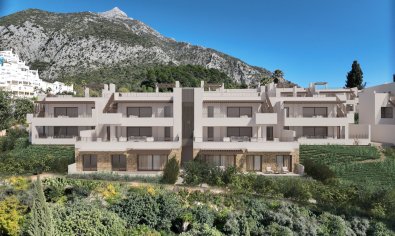
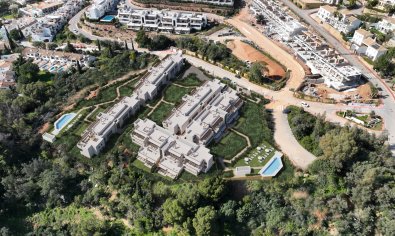
Closer to Marbella, the housing stock changes considerably. Apartment complexes, townhouses and modern developments occupy hillside locations overlooking the reservoir and mountains.
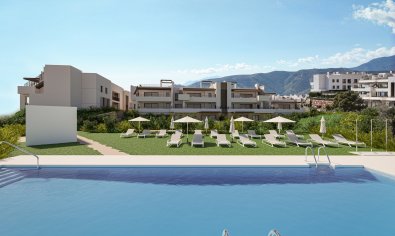
These areas generally require much greater reliance on a car. Community fees, swimming pools, gardens, garages and owners' association rules also become important considerations.
In 2024, Istán municipality granted planning permission for a 24-home residential development with garages, storage rooms and a swimming pool in the Balcones y Cerros del Lago sector.
You can also explore our page about living and buying property in Istán.
New-build homes and panoramic views
Istán increasingly appears in searches for modern property close to Marbella. Our selection of new-build property on the Costa del Sol regularly includes homes in this wider area.
A panoramic view, however, should not be the only criterion. Orientation, winter sunshine, slope, actual driving distances and access to everyday amenities are equally important.
A home can be geographically close to Puerto Banús yet provide a completely different lifestyle because almost every journey depends on the same mountain road.
The road to Marbella
The A-7176 is the essential connection between Istán and Marbella. Its southern section has undergone substantial redevelopment in recent years, including road widening, roundabouts, pavements, lighting and improvements for cyclists and pedestrians. Final major surfacing and junction works continued through 2025.
For residents working, studying or shopping in Marbella, Nueva Andalucía or Puerto Banús, this road is one of the most important practical elements of living in Istán.
Everyday services
Istán itself has municipal services, sports facilities, local businesses and restaurants. Marbella provides the far wider choice of specialist healthcare, international education, large shopping areas and other services.
Living here therefore means consciously choosing the scale of a small municipality rather than expecting city facilities on the doorstep.
Istán or Marbella?
The comparison makes sense because some residential developments in Istán municipality are actually much closer to Marbella than to the old village.
Marbella offers beaches, major shopping areas, international schools, hospitals, restaurants and a much more urban lifestyle. Istán provides far more greenery, quiet and mountain scenery.
Anyone wanting to walk to the beach every morning will naturally favour Marbella. Those who want reservoir and mountain views and are happy to drive for many everyday activities may find Istán much more appealing.
Istán or Ojén?
Both villages sit immediately behind Marbella and attract buyers who want to combine the Costa del Sol with mountain living.
Ojén is closer to the coast and has a more direct relationship with Marbella. Istán extends further into the River Verde valley and its identity is much more closely connected with the reservoir, springs and Sierra de las Nieves.
The best choice therefore depends less on which village is objectively “better” and more on how often you need to reach the coast.
Buying a property in Istán
Traditional village homes require careful checks of previous alterations, property boundaries, access and registry documentation. Rural homes and fincas may require additional checks relating to land classification, services and the legality of existing buildings.
In modern developments, attention shifts towards community fees, shared facilities, parking arrangements and owners' association regulations.
Anyone considering tourist rentals should also have the current Andalusian, municipal and community rules checked before purchasing. A beautiful apartment overlooking the reservoir should never be assumed automatically suitable for holiday letting.
Casas Palmeras therefore looks not only at the property but also at its exact surroundings and intended use. You can read more about our working method.
A village whose story is held together by water
Istán has no beach promenade, marina or large historic city centre. Its story works differently.
Moorish settlements, a fortified tower, Morisco rebellion, ancient irrigation channels, public fountains, the River Verde, a reservoir supplying much of the Costa del Sol and a national park all exist within the same small municipality.
Added to that is a modern housing market in which the traditional village and the newer residential areas towards Marbella provide completely different ways of living.
On a map, Istán can look like little more than a small white dot in the mountains. Once you travel the road inland, it becomes clear why water, altitude and history matter here at least as much as distance from the beach.
Greetings from Istán!