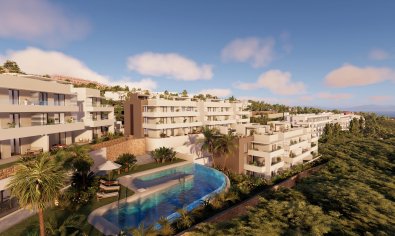




Greetings from Manilva: between vineyards, Roman remains and the Mediterranean
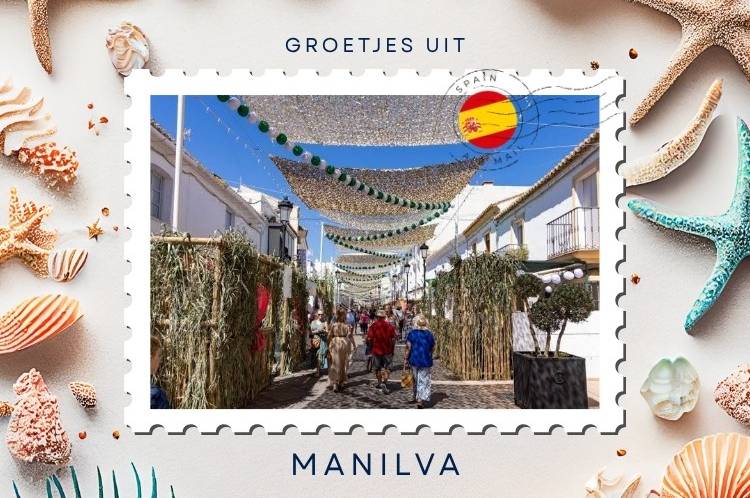
Greetings from Manilva: between vineyards, Roman remains and the Mediterranean
Anyone who knows Manilva only from the apartments and new-build developments of the western Costa del Sol is missing a large part of its story. The municipality brings several very different worlds together within a surprisingly small area. Manilva Pueblo sits among vineyards above the coast; San Luis de Sabinillas lies on the flatter shoreline below; further west are Castillo de la Duquesa and Puerto de la Duquesa, while towards Cádiz the landscape changes again around Punta Chullera.
Manilva is located at the extreme south-western end of Málaga province, beside Cádiz and the Campo de Gibraltar. According to the municipality, Gibraltar is around 35 kilometres away and Málaga approximately 97 kilometres. This makes Manilva something of a transition point: it is clearly part of the Costa del Sol, yet both the landscape and everyday atmosphere start to feel different from Marbella, Fuengirola and Málaga.
One municipality, several very different places
The name Manilva is often used for the entire municipality, but for property buyers that description is far too broad. Manilva Pueblo lies inland on a hill and retains the feel of an Andalusian village. Sabinillas sits directly on the coast, is flatter and more densely built, and is generally more practical for everyday life on foot. Puerto de la Duquesa revolves around the marina and restaurants, while El Castillo is a small coastal neighbourhood surrounding an eighteenth-century fort and important archaeological remains.
There are also residential areas such as Los Hidalgos and Duquesa Golf, as well as numerous developments on the slopes between the coast and inland Manilva. Further west towards Cádiz are Chullera and Punta Chullera, where development becomes more dispersed and rocky coves and natural scenery become increasingly prominent.
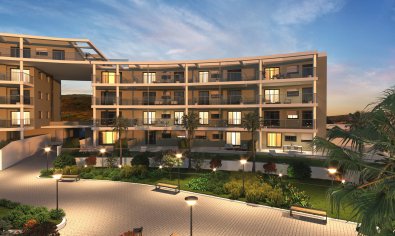
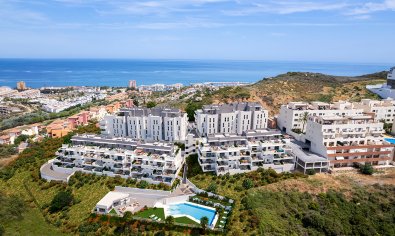
A property advertised simply as being “in Manilva” can therefore mean a village house inland, an apartment within walking distance of Sabinillas beach or a hillside home where practically every daily journey requires a car.
More than three thousand years of history at Alcorrín
Manilva's history began long before the modern village existed. One of its most significant archaeological sites is Los Castillejos de Alcorrín, a fortified settlement dating from the beginning of the first millennium BC.
Archaeological research places the fortress in the Late Bronze Age and the beginning of the Iron Age, roughly around the ninth and eighth centuries BC. It should not simply be described as a Phoenician settlement. The Junta de Andalucía identifies it as a community with indigenous traditions that existed at the same time as the first Phoenician colonists were establishing themselves in Andalusia. The combination of local characteristics and Mediterranean contacts makes Alcorrín particularly valuable to archaeologists.
The settlement also possessed substantial defensive walls and circular bastions. It is a remarkable contrast with the modern image of beaches, golf and apartment developments commonly associated with this part of the coast.
The Romans came for fishing, trade and the sea
Another major chapter of Manilva's history can be found almost beneath the homes of El Castillo. Surrounding Castillo de la Duquesa is a protected Roman archaeological zone containing the remains of a maritime villa, baths, a necropolis and installations used for producing salted fish.
The Junta de Andalucía dates the settlement mainly from the second to fifth centuries AD. Its coastal position was closely linked to fishing and fish processing, including activity associated with tuna. The remains therefore tell us not only how people lived but also about industry and trade along the Roman coastline. The archaeological area was officially protected as a Bien de Interés Cultural in 2005.
More recent archaeological projects have cleaned, documented and prepared parts of the fish-salting complex, residential area and baths for better interpretation and public presentation.
An eighteenth-century fort built over a Roman past
On the same site stands Castillo de la Duquesa, also known as the Fortín de Sabinillas. The present fortress was built in 1767 at the initiative and expense of Francisco Paulino of Seville. Roman remains were already known on the site and ancient building materials were even reused.
Engineer Miguel del Castillo was responsible for its design and construction. The small settlement of El Castillo subsequently developed in the shelter of the fortress. Today an eighteenth-century coastal fort, Roman archaeology, homes, restaurants and the beach all exist within a very compact area. The fort also houses Manilva's Municipal Archaeological Museum.
For property buyers, that history has practical consequences. Building or alteration work close to protected archaeological areas may be subject to additional heritage requirements, making proper legal and planning checks particularly important.
From Casares to an independent municipality
Modern Manilva developed much later. Following the Christian conquest, the area was repopulated from Casares. Sugar cane and vineyards became important drivers of the local economy for centuries.
In October 1796 Manilva received its Real Privilegio de Villazgo, formally separating from Casares and receiving its own municipal territory.
That historic relationship remains easy to understand when travelling through the inland landscape. White villages, agricultural hills and vineyards sit close together, while the heavily developed coastline belongs to a much more recent period.
The grape that still defines Manilva's landscape
One of Manilva's most distinctive sights appears when driving uphill from Sabinillas towards Manilva Pueblo. Vineyards still survive between areas of development. The Muscat of Alexandria grape has been connected with local wine, raisins and agriculture for generations.
These vineyards are important for more than their economic value. Manilva's own planning documents explicitly recognise the traditional vineyard landscape as something worth protecting.
Several local wineries and wine projects operate today. Production is no longer limited to sweet Muscat wines; dry styles and other varieties are also being explored. The Centro de Interpretación Viñas de Manilva (CIVIMA) explains traditional viticulture, farming tools and historic and modern wine production. The centre continues to be used for municipal and educational activities in 2026.
The Vendimia is a genuine local tradition
The grape harvest becomes the focus of the annual Fiesta de la Vendimia, traditionally held during the first weekend of September at the end of the harvest.
One of its most characteristic events is the pisa de la uva, when grapes are crushed and the season's first young must is offered for tasting. A daytime fair has also formed part of the celebrations since 1983.
It is a good illustration of Manilva's identity. Coastal tourism and an international population are now major parts of the local economy, yet one of its principal annual celebrations still revolves around a crop growing on the hills around the village.
Sabinillas: where much of everyday life takes place
For many permanent residents, San Luis de Sabinillas is the most practical part of the municipality. It lies directly beside the sea, is relatively flat and has supermarkets, shops, restaurants, schools, a health centre and a long seafront promenade.
Sabinillas also has a fishing tradition. The municipality states that fishing was historically one of the community's main sources of income and that local residents are still involved in the industry today.
For anyone who wants to walk to the beach, do everyday shopping without constantly using a car and have services close by, life here feels very different from the hillside developments further inland.
Friday market and Sunday flea market
Markets are still part of the weekly routine. Current municipal information lists markets in Sabinillas and Manilva on Fridays and a flea market in Sabinillas on Sundays, generally between 9 a.m. and 2 p.m. The municipality was still working with traders on the organisation and improvement of these markets in 2026.
Temporary markets and commercial events are also often held along the promenade during summer, although these can change from one season to another and are best checked shortly before visiting.
Puerto de la Duquesa: an international atmosphere around the marina
Immediately west of Sabinillas is Puerto de la Duquesa. Apartments, restaurants, cafés and terraces are grouped around the marina. The atmosphere is more international and tourism-oriented than in Manilva Pueblo and considerably more compact than the villa developments in the hills.
For a holiday home, having the sea, restaurants and marina just outside the door can be attractive. Anyone planning to live here throughout the year should also visit outside July and August, as the atmosphere can vary considerably between seasons.
For marina apartments, community fees, parking arrangements and owners' association regulations deserve careful attention. Anyone considering holiday rentals should also have the current Andalusian regulations, municipal requirements and community statutes checked rather than assuming that tourist letting is permitted.
Not all of the coastline is heavily developed
Continue towards Sotogrande and the coast becomes increasingly rugged. The beaches of Chullera, Los Toros and El Negro form an ecological reserve covering approximately three and a half kilometres of coastline. Sand, gravel, rocky sections and small coves create a much less urban environment here.
The western part of the municipality is also home to the Torre de Chullera. Two historic watchtowers survive here, with the older structure associated with the Nasrid period. The tower was already mentioned in coastal defence instructions issued by the Catholic Monarchs in 1497.
For residents, this part of Manilva can provide greater peace, open views and a stronger connection with the landscape, but everyday services are further away and a car becomes considerably more important.
From urban beaches to rocky coves
Manilva's coastline changes dramatically from east to west. Playa de Sabinillas lies directly in front of the town and has a promenade, restaurants and extensive services. La Duquesa and El Castillo combine beach, marina and historic surroundings, while quieter sections appear as you travel towards Chullera.
In 2026 both Sabinillas beach and Las Gaviotas received Blue Flags again, while Puerto de la Duquesa also retained the distinction.
For a property buyer, asking how far a home is from “the beach” is therefore not enough. It is equally important to understand which beach is nearby and what kind of everyday environment surrounds it.
Schools, healthcare and year-round living
Manilva has considerably more everyday infrastructure than the size of the hilltop village alone might suggest. Municipal information lists public schools in Manilva and Sabinillas, a secondary school, municipal nurseries and health centres serving the municipality.
During summer 2026 staffing at Sabinillas Health Centre was reinforced and its July and August opening hours were extended to 8 p.m. to respond to the seasonal increase in population.
For more extensive hospital care, Estepona, Marbella and the Campo de Gibraltar are important surrounding areas. In everyday life, Manilva's position close to the provincial boundary means residents regularly travel in both directions.
Which part of Manilva suits you?
For property buyers, the differences within the municipality are more important than the name Manilva itself.
Manilva Pueblo
This offers a more traditional Spanish environment, with white houses, squares and vineyards immediately outside the built-up area. The sea is not on your doorstep, but the atmosphere feels less like a coastal resort.
Sabinillas
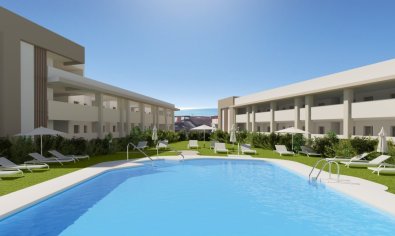
The most practical choice for those who value the beach, promenade, shops, schools and everyday facilities within easy reach. Apartments make up a large part of the housing stock and parking can deserve extra attention during the busiest summer months.
Puerto de la Duquesa and El Castillo
Here you are closer to the marina, restaurants and beach. Apartments are common and the atmosphere is more international. El Castillo additionally offers a highly unusual historic and archaeological setting.
Duquesa Golf and the hillside developments
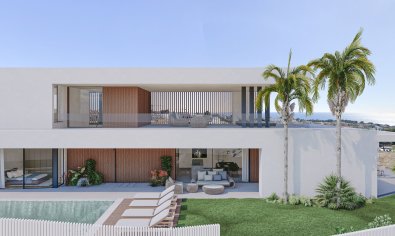
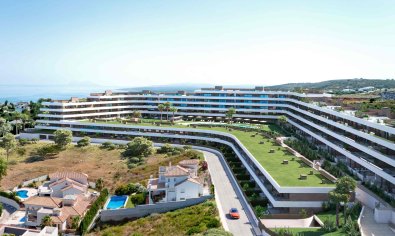
Residential complexes, townhouses and villas are found around the golf course and on the slopes above the coast. They can offer more space and sea views, but the elevation often increases dependence on a car.
Chullera and Punta Chullera
These areas are worth considering for peace, natural surroundings and views. They are less suited to anyone who wants to walk to shops, school and cafés every day.
You can also explore our area page about living and buying property in Manilva.
Manilva or Sotogrande?
The two municipalities almost meet, yet they offer very different ways of living.
Sotogrande was deliberately planned from the 1960s onwards as a spacious international residential destination built around golf, polo and low-density villa neighbourhoods. Manilva evolved much more organically and combines an agricultural village, a former fishing settlement, marina, archaeological heritage and modern residential developments.
Anyone looking specifically for a highly planned and spacious international environment may be drawn towards Sotogrande. Those who prefer a mix of normal Spanish town life, beaches, everyday services and a wider variety of residential settings within one municipality may find Manilva more suitable.
Do you need a car?
In Sabinillas, a surprising amount can be done on foot. Around Puerto de la Duquesa, the marina, restaurants and beach are also easily accessible without driving. That changes quickly once you choose a hillside development, Duquesa Golf or a property towards Chullera.
The A-7 is the principal coastal route and the A-377 connects Sabinillas with Manilva Pueblo. During 2026, road and traffic improvements were carried out around Sabinillas and along the connection towards Manilva, partly to improve traffic flow during the busy summer season.
Before buying, it is therefore worth physically driving the journeys you expect to make every day. One kilometre uphill can have a greater impact on daily life than several kilometres along a flat coastal road.
Buying property in Manilva: what deserves extra attention?
Manilva's housing stock includes older village homes, apartments from different periods, large residential complexes, modern new developments and detached villas. There is therefore no single checklist that applies equally to every property.
With older houses and villas, extensions, swimming pools, terraces and auxiliary buildings should be checked carefully. Additional restrictions may apply around protected historic or archaeological areas. In apartment developments, community fees, outstanding debts, parking spaces and owners' association rules become especially important.
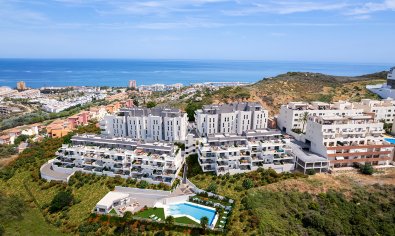
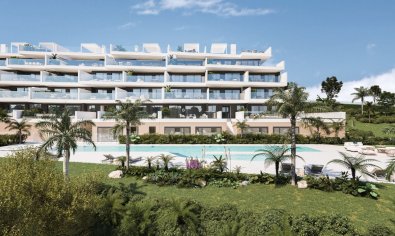
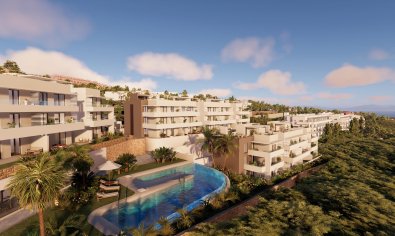
With new developments, location should be examined just as carefully as the property specification. A project advertised as offering “sea views in Manilva” may be high on a hillside and provide a completely different lifestyle from an apartment a few hundred metres from Sabinillas promenade. Our page featuring new-build property on the Costa del Sol also includes developments in this part of the region.
Casas Palmeras therefore looks not only at the property itself but also at whether its surroundings match the way you want to live in Spain. You can read more about our working method.
Manilva may be most interesting precisely because it is not just one place
A fortified settlement from the Late Bronze Age, Roman fish processing, an eighteenth-century coastal fort, a village that separated from Casares in 1796, Muscat vineyards, a former fishing community, an international marina and protected rocky beaches all exist within the same municipality.
That means Manilva gives residents several very different choices: living among vineyards above the coast, within walking distance of the Sabinillas promenade, around a marina or closer to the quieter landscape of Chullera.
It is precisely that variety that makes Manilva worth exploring beyond a quick afternoon visit. For anyone considering buying here, understanding each part of the municipality may ultimately be just as important as choosing the property itself.
Greetings from Manilva!