

Greetings from Ojén: a white mountain village above Marbella
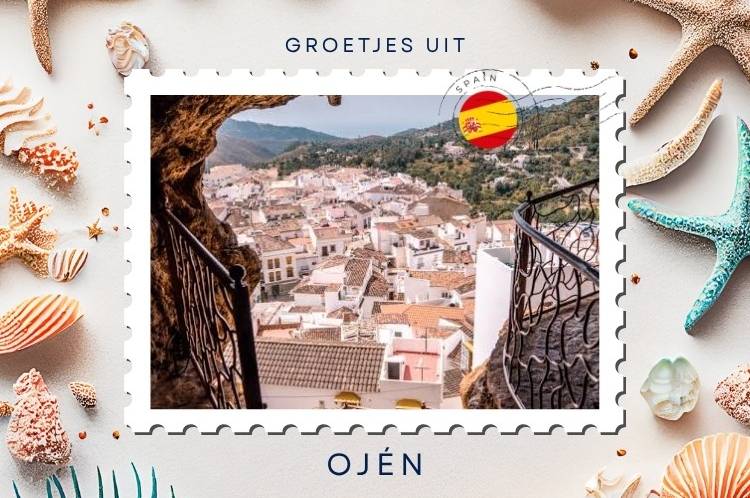
Greetings from Ojén: a white mountain village above Marbella
Only a short drive uphill from Marbella lies Ojén, a white Andalusian village at around 310 metres above sea level. The municipality covers approximately 85.6 square kilometres and had 4,812 registered residents in 2025, including 1,455 foreign nationals.
Despite that international population, central Ojén still feels like a small mountain community rather than a coastal resort. At the same time, the municipality includes very different residential areas such as La Mairena, high above Elviria and much more closely connected with Marbella in everyday life.
Discover the Costa del Sol with Casas Palmeras
Between Sierra Blanca and Sierra Alpujata
Ojén lies between Sierra Blanca and Sierra Alpujata, immediately behind Marbella. The Juanar valley is one of the municipality's most important natural landscapes.
Ojén is also closely associated with Sierra de las Nieves, although there is an important geographical distinction: the municipality belongs to the peripheral protection zone of the Sierra de las Nieves National Park rather than the park's central territory.
For residents, the practical result is still impressive: genuine mountain country begins almost immediately outside the village.
Islamic Ojén
Historical sources refer to the settlement by names including Oxen and Hoxán.
Its elevated position gave it considerable strategic value during Al-Andalus. Fighting took place in the area between the forces of Abd al-Rahman III and rebels associated with Umar ibn Hafsun.
The irregular pattern of the modern village still reflects the logic of a settlement built into steep mountain terrain.
The Christian conquest
Ojén surrendered in 1485, the same year Marbella was taken by the Catholic Monarchs.
It subsequently came under Marbella's jurisdiction while much of its Muslim population initially remained as Mudéjars and later Moriscos.
The following century brought increasing religious and political tension.
Church of Nuestra Señora de la Encarnación
The parish church was built in the early sixteenth century.
Its single nave has an attractive Mudéjar timber ceiling, but the most interesting element is its bell tower: the structure incorporates the minaret of the former mosque.
The building therefore preserves the transition between two major periods of Ojén's history in its architecture.
The Morisco revolt
In 1569, Ojén's Morisco population joined the wider revolt spreading through the former Kingdom of Granada.
Local historical accounts record damage to homes, farmland and the church before many inhabitants fled into the mountains. The uprising was eventually suppressed and Ojén was repopulated with Old Christians from 1570 onwards.
Solís Castle
Ruins of the Castillo de Solís stand above the village.
The site has archaeological protection and occupies a commanding plateau overlooking Ojén. Natural and artificial caves are also found within the surrounding rock formations.
The castle played a significant role in controlling the area during the sixteenth-century unrest.
Today the appeal is primarily archaeological and scenic rather than that of a restored medieval castle.
Ojén's caves
The Upper and Lower Caves are among the village's strangest features.
Historically they were used to shelter animals and store food and fodder. The Lower Caves have since been adapted for cultural events, while the Upper Caves provide panoramic views over the white village towards the Mediterranean.
The remarkable point is their location.
They sit virtually inside the village rather than at the end of a remote mountain excursion.
Fuente de los Chorros
The five-spouted Fuente de los Chorros dates from 1905.
Fed by water from the Almadán area, it supplied generations of local residents and served as a natural social meeting point.
Today it remains one of the characteristic sights of central Ojén.
Olive Oil Mill Museum
The restored olive mill dates from around 1800.
Original millstones, presses and machinery show the traditional production process, which made use of local water power.
Demonstrations make it easier to understand just how central olive oil was to everyday rural life.
The drink that made Ojén famous
In the nineteenth century, the village became internationally associated with aguardiente de Ojén.
The story begins in 1830, when businessman Pedro Morales started distilling and marketing his distinctive anise spirit. It won international prizes and even became a supplier to the Spanish Royal Household.
For a small mountain village, the brand achieved remarkable international recognition.
The secret recipe
Local legend says Morales guarded the exact formula so closely that he died without fully passing it on.
When the original production eventually disappeared, attempts to recreate it never achieved the same reputation.
Whether every detail of the story is literally true or not, the lost recipe has become part of Ojén folklore.
Picasso and the last unopened bottle
The drink was famous enough to enter Spanish cultural history.
It appeared in a work by Picasso and was mentioned by writers including Rosalía de Castro and Nobel laureate Camilo José Cela. Málaga-born Maharani Anita Delgado even had it sent to India for her guests.
The local museum also preserves an original unopened bottle that was long safeguarded by successive mayors.
Chestnut stew
Another distinctive local speciality is potaje de castañas.
Despite the word “stew”, it is a sweet dish traditionally made from dried chestnuts, aniseed, cinnamon and honey and associated particularly with Lent and Holy Week.
Fennel rice and other olive-oil-based mountain dishes also belong to traditional Ojén cooking.
The Popular Chestnut Roast
Autumn brings the Tostón Popular.
Chestnuts are roasted in the main square and served alongside local aguardiente, grilled bacon and traditional food. The celebration holds provincial tourism recognition.
In 2026 it takes place on 8 November.
It offers an entirely different Costa del Sol experience from the beaches below.
Ojeando Festival
Modern music has also become part of Ojén's identity.
The 21st Ojeando Festival took place on 26 and 27 June 2026, using five stages distributed through the compact village centre.
Thousands of visitors filled the streets during the event.
For two days, the traditional white village effectively becomes a live music venue.
Castillo del Cante
Flamenco has an even longer festival tradition.
On 1 August 2026, Ojén held the 51st Castillo del Cante Flamenco Festival, featuring performers including Israel Fernández, Aurora Vargas, El Pele and El Canario.
It is remarkable that such a small place supports both an alternative pop-rock festival and one of Málaga province's longest-established flamenco events.
San Dionisio Fair
Ojén's main traditional fair honours San Dionisio Aeropagita.
The 2026 fair runs from 8 to 12 October, with 9 October as the patron saint's principal day, including Mass and procession.
Plaza de Andalucía becomes the social centre of the celebrations.
Juanar
Above Ojén lies El Juanar, one of the best-known landscapes in Sierra Blanca.
The original hunting lodge was built in 1906 for José Aurelio de Larios, the third Marquis of Larios. King Alfonso XIII was associated with its formal opening.
The property was later transferred to the state and developed as tourism accommodation.
Charles de Gaulle came here to write
Juanar has another remarkable historical connection.
Official Junta de Andalucía walking information records that Charles de Gaulle stayed here in 1970 while completing his memoirs.
The secluded mountain atmosphere makes the choice easy to understand.
Walking from Juanar
Several trails begin around the lodge.
The Mirador del Corzo provides views over Ojén, nearby mountains and sections of the coast.
A low-difficulty trail of approximately 2.9 kilometres also runs towards Puerto Marbella.
More demanding routes continue towards Cruz de Juanar, La Concha and Istán.
Exceptional protected nature
The wider Sierra de las Nieves environment contains Mediterranean karst, rare peridotite geology, Spanish fir forests and wildlife including the Iberian ibex.
Ojén sits at the Costa del Sol gateway to this mountain system.
For someone who wants nature without moving deep into inland Andalucía, that is a major attraction.
La Mairena
Modern residential Ojén is not limited to the old village.
La Mairena lies in the hills above Elviria at around 400 metres elevation. Although administratively in Ojén, it is normally accessed from the Marbella coast.
Development began in 1987, with apartments, villas and plots spread through a wooded hillside environment.
Its daily lifestyle has very little in common with Ojén Pueblo.
Two completely different property markets
Ojén Pueblo means a compact Spanish mountain village.
La Mairena means an international residential development oriented towards Elviria and Marbella.
Both may appear under the same municipality in property listings.
For buyers, exact location is therefore far more useful than the word “Ojén” alone.
Living in Ojén Pueblo
The village suits people who want a small community and traditional surroundings.
Local bars, shops, schools and municipal services sit within a compact area.
Steep streets and parking are the main practical issues.
A beautiful traditional house may not necessarily allow you to park outside the front door.
Villas and hillside developments
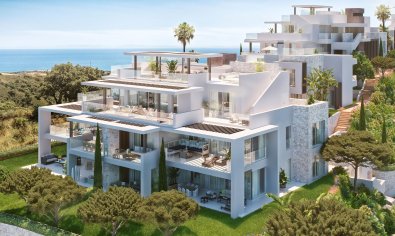
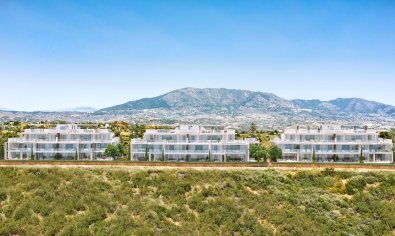
Moving away from the historic centre brings more villas, rural houses and modern developments.
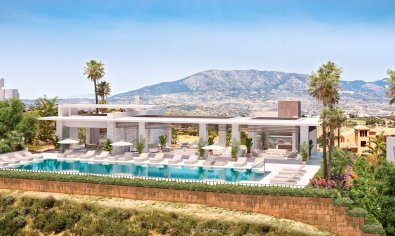
Private pools, larger terraces and open views become easier to find.
The trade-off is greater dependence on a car and, in rural property, the need for careful legal checks on land, pools and extensions.
Marbella just below the mountain
Proximity to Marbella is one of Ojén's strongest advantages.
The road distance is roughly 8–10 kilometres, normally around fifteen minutes by car in ordinary conditions.
Beaches, hospitals, major shopping, restaurants and international schools remain close at hand.
You gain a village setting without genuinely giving up city facilities.
Transport
Neither Ojén nor Marbella has a current Cercanías railway station.
Fuengirola is one of the nearest points for rail services towards Málaga and the airport.
Buses exist, but for most families a car makes permanent living substantially easier.
Ojén or Mijas Pueblo?
Both are white mountain villages overlooking the Costa del Sol.
Mijas Pueblo is more heavily visited and is oriented towards Fuengirola and Mijas Costa.
Ojén is smaller and sits directly behind Marbella.
For anyone whose daily life revolves around Marbella, Ojén may therefore be the more practical village option.
Ojén or Benahavís?
Benahavís is especially associated with restaurants, golf and high-end residential estates.
Ojén has a stronger direct relationship with Sierra Blanca, Juanar and Marbella.
Both combine mountains with easy access to the coast, but their property markets and road connections are quite different.
Buying property in Ojén
We would divide the search into Ojén Pueblo, countryside, modern hillside developments and La Mairena.
In the village, focus on parking and gradients.
In rural areas, access and legal registration.
In modern developments, community fees and everyday mobility.
In La Mairena, understand that your practical life will probably revolve around Elviria and Marbella.
Only after choosing the correct environment should individual properties be compared.
Why Ojén is worth discovering
Start in Plaza de Andalucía with the church and Fuente de los Chorros.
Visit the olive-oil mill and walk through the cave area before climbing to the Upper Caves for the view.
Save another morning for Juanar.
Then drive back down towards Marbella.
The contrast is the whole attraction.
A white village above Marbella, an old mosque minaret turned into a bell tower, caves among the houses, an internationally famous lost aguardiente and genuine mountain landscapes beginning almost at the edge of town.
Greetings from Ojén!