


Greetings from Mijas Pueblo: white streets, mountains and sea
Greetings from Mijas Pueblo: white streets, mountains and sea
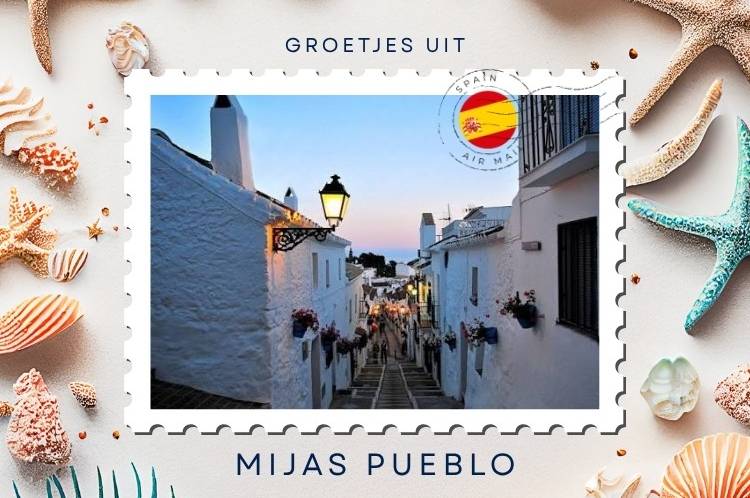
High above the Costa del Sol on the slopes of the Sierra de Mijas sits Mijas Pueblo. White houses climb the mountainside while almost every gap between buildings seems to reveal another view of the Mediterranean. Its historic centre was declared a protected historic-artistic ensemble in 1969 and retains a street pattern with strong Andalusian origins.
It is important to distinguish Mijas Pueblo from the much larger municipality of Mijas. The municipality extends from the mountains to the Mediterranean and also contains Las Lagunas and La Cala de Mijas. It is an exceptionally international area: the council currently refers to approximately 90,000 registered residents, almost 40% of whom are foreign nationals representing around 125 nationalities.
Discover the Costa del Sol with Casas Palmeras
More than 20,000 years of history
The earliest known human occupation of Mijas dates back to the Palaeolithic, while Bronze Age remains have also been documented.
Phoenician traders began transforming this part of the Málaga coastline from around 900 BC, developing links between coastal settlements and inland communities.
Archaeology has revealed traces of this period across modern Mijas.
The Eyes of Astarte
One of the most remarkable discoveries was made around La Muralla in Mijas Pueblo.
Archaeologists identified evidence interpreted as a Phoenician-Punic sanctuary, including two distinctive eye plaques known as the “Eyes of Astarte”, together with terracotta objects and ceramics.
The strategic hilltop was therefore important long before the medieval fortress was built.
Roman Mijas
Roman villas, pottery and coins have been discovered throughout the municipality.
Evidence covers a period from the reign of Augustus until around the end of the fourth century.
The marble quarries of the Sierra de Mijas were also significant during the Roman period.
Stone from these mountains would continue to influence the local economy centuries later.
Moving towards safer ground
As Roman authority collapsed, living close to the open coast became less secure.
Municipal history suggests that some communities may have moved towards higher and more defensible locations, including present-day Mijas.
Standing above the modern town makes the logic obvious.
The hill controls enormous views across valleys and coastline.
Mijas in Al-Andalus
From the eighth century the area became part of Islamic Iberia.
Historical sources refer to Mixas, and during the ninth century Mijas became involved in the rebellions associated with Umar ibn Hafsun.
Agriculture remained central to the economy.
Improved irrigation and crop systems transformed the countryside, while figs became an important product. Local historical sources even cite Al-Idrisi's account that figs from the area were exported as far as India.
The old street pattern survives
The winding streets of modern Mijas Pueblo are one of its strongest reminders of the Andalusian period.
Narrow lanes follow the slope, turn unexpectedly and open into tiny squares or viewpoints.
Whitewashed walls later became the postcard image of Mijas, but this layout originally responded to practical needs: shade, defence, climate and limited mountain space.
Resistance to the Catholic Monarchs
In 1485, Mijas and neighbouring Osunilla resisted Christian forces moving towards Málaga.
After Málaga fell in 1487, representatives from Mijas attempted to negotiate surrender. The earlier resistance, however, resulted in severe punishment and the inhabitants were enslaved alongside many residents of Málaga.
Land was subsequently redistributed among approximately fifty Christian settlers in 1492.
Piracy kept the coast dangerous
North African raids made the coastline difficult to repopulate.
Between the sixteenth and eighteenth centuries, a chain of watchtowers was built along the coast of the Mijas municipality.
The higher settlement of Mijas Pueblo remained an important defensible community.
Inmaculada Concepción Church
Construction of the main parish church began in the second half of the sixteenth century and was completed in 1631.
Its square bell tower is particularly interesting.
It was originally the older Torre de la Vela, a defensive structure used by residents as a refuge during attacks. It was later incorporated into the church.
Restoration work in 1992 also revealed paintings of eight apostles dating from around 1632.
Gardens on the former fortress
Parts of the old defensive walls survive around the Jardines de la Muralla.
Today the site contains gardens and panoramic viewpoints rather than soldiers and fortifications.
The views towards the Mediterranean are among the best in Mijas.
They also demonstrate exactly why this position was so strategically valuable.
Plaza de la Constitución and the 1884 flood
The central square preserves the memory of a natural disaster.
Its fountain and stone benches were created from rocks carried through the village during the severe 2 November 1884 flood.
Today cafés and pedestrians fill the square, but the stonework quietly preserves that much darker event.
Marble from the Sierra
During the seventeenth and eighteenth centuries, marble and decorative stone from the Sierra de Mijas were used in important Spanish monuments.
Local records identify buildings in Málaga, Seville, Granada and Burgos containing Mijas stone.
The mountains were therefore an economic resource long before they became a hiking destination.
A sanctuary carved into the rock
Beside the El Compás viewpoint is the Virgen de la Peña Sanctuary.
Much of the small sanctuary is actually carved directly into travertine rock. Local tradition associates its creation in the later seventeenth century with the Carmelite monk Diego de Jesús, María y San Pablo.
Inside is the image of the Virgen de la Peña, patron saint of Mijas.
Legend says two young shepherds found the image in 1586 after being guided to the place by a dove.
8 September is the great local day
The Virgen de la Peña's feast day is 8 September, an official local holiday.
In 2026, Mijas Fair runs from 7 to 12 September, with the opening proclamation on 6 September.
On the 8th, Mass is celebrated in the Inmaculada Concepción church and the patron saint is carried through Mijas Pueblo in an evening procession.
It is the busiest and most traditional period of the Mijas Pueblo calendar.
Calvary Chapel
Higher above the village is the white Ermita del Calvario.
A footpath marked by iron crosses climbs through the pines. During Holy Week the route becomes a traditional Stations of the Cross.
The chapel has limited opening times, but the walk is worthwhile simply for the views.
Walking directly into the Sierra
A network of self-guided hiking trails begins almost at the edge of Mijas Pueblo.
Routes start from the village viewpoint and can be combined through the Sierra de Mijas.
Pine forest, limestone slopes and Mediterranean vegetation make this one of the easiest places on the Costa del Sol to combine a historic village with genuine mountain walking.
The famous donkey taxis
The Burro Taxi has become one of Mijas's most recognisable images.
The activity began in the early 1960s, when workers returning home on their donkeys were approached by tourists asking for photographs and short rides. Tips sometimes exceeded the workers' daily wages and the practice gradually developed into an organised tourism service.
The municipality currently refers to around sixty donkey taxis and eight carriages.
Animal welfare is also part of the modern story
The tradition has increasingly become part of a wider animal-welfare debate.
Municipal rules cover matters including working hours during high temperatures, rest periods, weight limits and veterinary controls. Veterinary reports from May and July 2026 are published by the council, and a further review of the local regulation is included in its 2026 legislative programme.
The donkey taxi is therefore both a historic tourism symbol and an evolving contemporary issue.
An oval bullring
Mijas bullring was constructed at the request of local residents in 1900.
Its most unusual feature is its oval shape, one of relatively few Spanish bullrings built in this form.
From the outside, the small white entrance almost resembles another village house.
Historic bull runs once brought animals through the streets, although these no longer take place.
A museum inside a caravan
The Carromato de Mijas miniature museum opened in 1972.
Its remarkable collection includes dressed preserved fleas, a ballerina carved into a toothpick, a naval battle on a pinhead and Leonardo's Last Supper painted on a grain of rice.
It is one of the village's strangest and most entertaining small attractions.
Picasso and Dalí
The CAC Mijas Contemporary Art Centre provides an unexpected contrast.
Its collection contains more than 400 works, including a major group of works by Picasso alongside Dalí, Braque and other important artists.
Stepping from white Andalusian lanes into a substantial modern-art collection is surprisingly easy here.
The old Mijas before tourism
The Historical-Ethnological Museum occupies the former Town Hall.
It recreates older rural life through agricultural tools, traditional kitchens, wine and oil equipment, fishing objects, esparto work and information about local marble extraction.
It provides useful perspective on a village that today seems almost entirely shaped by tourism.
The Mole of Mijas
The museum also recreates the room associated with Manuel Cortés Quero.
Cortés was the last Republican mayor of Mijas before the end of the Spanish Civil War. After returning in 1939, he remained hidden for around thirty years to avoid persecution under the dictatorship.
His story became one of the best-known examples of Spain's post-war topos — people who lived secretly for years or decades.
Traditional crafts
Since 2018, Mijas has been designated an official Area of Craft Interest.
Silver embossing, esparto weaving, wickerwork, marquetry and leatherwork are among the crafts highlighted by the tourism authority. Mijas is described as the only municipality in Málaga province with this particular recognition.
Flamenco in the squares
In 2026, free flamenco performances once again take place in Mijas Pueblo.
They are held on Wednesdays in Plaza Virgen de la Peña and Saturdays in Plaza de la Constitución at noon. The municipality says the programme has been running for more than thirty years.
Traditional food
Local cuisine is strongly connected with the countryside.
Gazpachuelo, maimones, cachorreñas, salmorejo and ajoblanco are among the dishes promoted as local traditions. Traditional breads, buñuelos, hornazos and sugared almonds also remain popular.
It is very different from the seafood-dominated cuisine found directly on Mijas Costa.
An exceptionally international municipality
The wider municipality is one of the Costa del Sol's most international communities.
Mijas established a dedicated Foreign Residents Department in 1985, described by the council as the first municipal service of its kind in Spain. In 2024 alone it handled more than 28,000 enquiries involving residency, municipal registration, taxes, health services and other practical matters.
For people moving from abroad, that can be a genuine practical advantage.
Living in historic Mijas Pueblo
The historic centre offers traditional houses and apartments within walking distance of restaurants and local services.
The same old streets that create the village's charm can also make daily life less straightforward.
Parking may be some distance away and steep or pedestrian-only streets are common.
Anyone considering permanent living should test those everyday routes rather than viewing the house in isolation.
Villas around the village
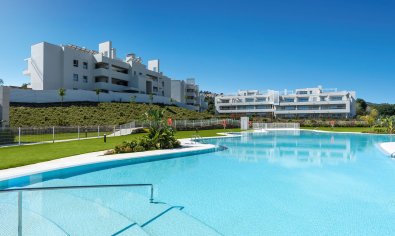
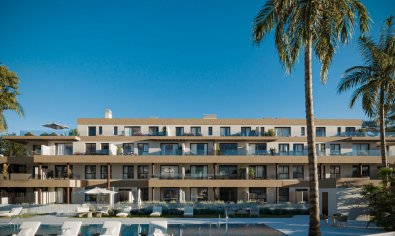
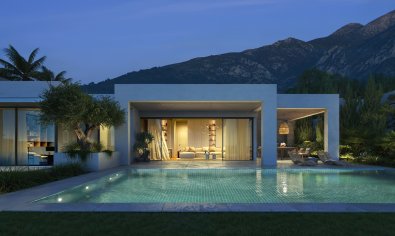
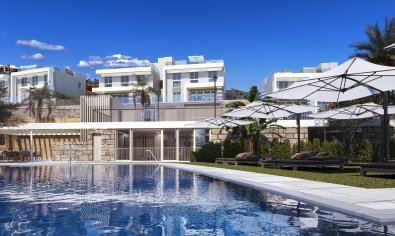
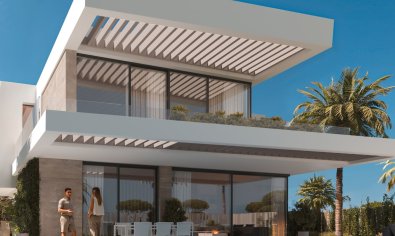
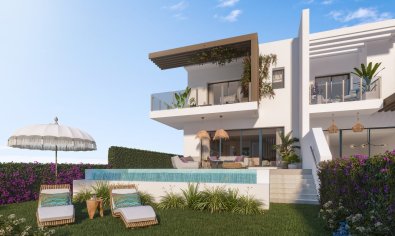
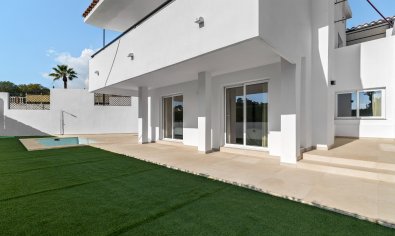
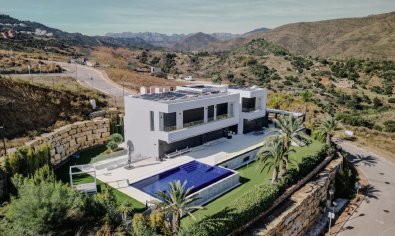
Beyond the historic core are residential areas with villas, townhouses and apartment developments.
Private parking, gardens, communal or private pools and panoramic views become easier to find.
The trade-off is greater car dependence.
Road gradient, orientation and winter sunshine are particularly important on the mountain slopes.
Mijas Pueblo or the coast?
This is the fundamental lifestyle choice.
Mijas Pueblo means mountains, views and historic village life.
La Cala de Mijas means beach, promenade and coastal living.
They are part of the same municipality but offer completely different daily routines.
Buying property in Mijas Pueblo
We would divide a property search into three areas: historic centre, immediate village surroundings and hillside villa zones.
Older properties require attention to roofs, moisture, services, building condition and any heritage restrictions.
Detached homes require careful checking of access, land classification and the registered status of pools, extensions and outbuildings.
In Mijas Pueblo, gradient can be almost as important as square metres.
Why Mijas Pueblo is worth discovering
Start at El Compás and the Virgen de la Peña Sanctuary and take time to enjoy the coastal panorama.
Walk through the old streets to Plaza de la Constitución, Inmaculada Concepción and the Muralla gardens.
Visit the unusual bullring and choose one of the village's small museums.
If you have walking shoes, continue towards Calvary Chapel or into the Sierra.
And stay until late afternoon.
Once many of the day visitors leave, the famous tourist destination becomes a mountain village again.
Phoenician Eyes of Astarte, Andalusian streets, marble quarries, defensive towers, a sanctuary carved into rock, an oval bullring and the Mediterranean always visible far below.
Greetings from Mijas Pueblo!