

Greetings from Torre del Mar: beach, history and coastal life
Greetings from Torre del Mar: beach, history and coastal life
Torre del Mar lies on the eastern Costa del Sol between Málaga and Nerja. At first sight it appears to be a modern Mediterranean resort with apartments, palm trees, a long promenade and wide beaches. Its history, however, includes coastal defence, agricultural trade, sugar production, railways, fishing and some remarkably important archaeology nearby.
One practical distinction is important: Torre del Mar is not an independent municipality. It belongs to Vélez-Málaga and is one of the municipality's largest population centres. Nevertheless, it has its own commercial centre, schools, bus station, restaurants, sports facilities and year-round services.
Discover the Costa del Sol with Casas Palmeras
A tower beside the sea
The name reflects Torre del Mar's original defensive role.
A coastal settlement associated with Vélez appears in written records from 1090 under the name Mariyyat Ballis. During the Nasrid period the coastline was important for defence and trade, with a watchtower helping control maritime activity.
The modern town eventually developed around this coastal position.
Torre del Mar Castle
The surviving remains of the old castle-fort mark the historical origin of the town.
The original fortification was relatively small and protected both the shoreline and vessels using the natural harbour. In 1730, it was extensively rebuilt and enlarged with additional defensive walls, a central battery and towers.
It also contained warehouses.
Agricultural products including raisins, wine and citrus fruit were stored here before being exported.
The shoreline moved away
The castle once stood considerably closer to the Mediterranean.
Natural changes to the coastline gradually left it further inland.
That makes its present position in the built-up centre much easier to understand.
The sea has not always been where today's promenade suggests.
A major naval battle in 1704
The coast also witnessed an enormous European naval confrontation.
On 24 August 1704, the Battle of Málaga took place offshore during the War of the Spanish Succession. Local heritage information describes it as the largest naval engagement of that conflict.
The modern beach gives almost no indication of the military fleets that once fought beyond it.
Phoenicians nearby
The wider area has a considerably older Mediterranean history.
Near the mouth of the Vélez River, the archaeological site of Toscanos developed as a Phoenician trading and harbour settlement from the mid-eighth century BC. Nearby Cerro del Mar continued through Phoenician, Punic and later Roman phases.
Some researchers have connected Cerro del Mar with ancient Mainake, although this interpretation should not be treated as completely settled.
What is certain is that international Mediterranean trade was taking place here almost three thousand years ago.
The sugar era
A much more visible chapter began with sugar cane.
José García Navarrete began sugar production around 1796. In 1846, Ramón de la Sagra constructed a new factory using steam machinery and industrial methods influenced by Cuba. The complex later passed to the powerful Larios family and became the Nuestra Señora del Carmen Sugar Factory.
For generations it was one of the principal employers in Torre del Mar and the surrounding Axarquía.
Production continued until 1991
The final sugar campaign took place in 1991.
This industrial past is therefore relatively recent.
Torre del Mar's transition from agricultural-industrial settlement to tourism, commerce and services happened largely within living memory.
The old sugar factory
The main factory building was restored in 1993 and now has a cultural role.
Two original chimneys survive nearby, while the interior preserves equipment related to the historic production process.
It is one of the best places to understand Torre del Mar before mass coastal tourism.
Casa Larios
Nearby Casa Larios was built in 1888 as part of the same industrial complex.
It accommodated administrative offices and the factory engineer's residence. Today it houses Torre del Mar's local municipal administration and cultural functions.
Its regionalist and Neo-Mudéjar details give it a very different character from the modern residential buildings around it.
A railway station from 1904
Torre del Mar once had a railway connection with Málaga and Vélez-Málaga.
The surviving 1904 station building has attractive Neo-Mudéjar-influenced brickwork, overhanging roofs and green glazed tiles.
The railway has disappeared, but the building still performs a transport function.
It is now Torre del Mar's bus station.
Five historic lighthouses
Torre del Mar has an unusually complicated lighthouse history.
Changes to the shoreline and urban development repeatedly made older lights unsuitable. The 1930 Faro de la Barraca was the third of five historic lighthouses associated with the town.
As the town grew, even that lighthouse became surrounded by buildings.
Several generations of maritime navigation can therefore still be identified around Torre del Mar.
The modern lighthouse
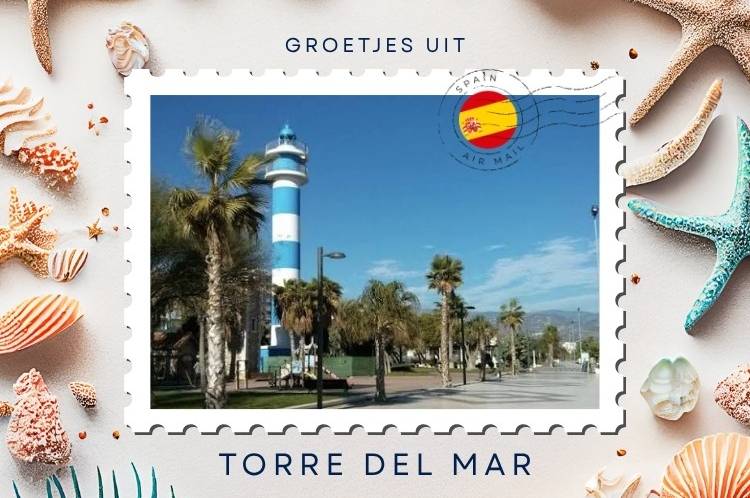
The current cylindrical lighthouse was completed in 1976 beside the new promenade.
At almost 30 metres high, it required a greater range than the smaller structures it replaced and has since become one of Torre del Mar's most recognisable landmarks.
Sports facilities and cultural spaces now surround it.
Four kilometres of urban beach
Modern Torre del Mar is naturally defined by its coastline.
Municipal tourism information describes approximately four kilometres of urban beaches, with extensive services, children's facilities and water activities.
The coastline is much broader and flatter than Nerja's cliffs and small coves.
For everyday walking or cycling, that difference can matter considerably.
The promenade
The long Paseo Marítimo continues towards neighbouring Caleta de Vélez.
Residents use it for walking, running, cycling, sport and evening strolls throughout the year.
Restaurants, playgrounds and public art make it much more than a strip used only by summer tourists.
For permanent residents, it effectively becomes part of the town's everyday infrastructure.
Sardine espetos
Food remains closely tied to the sea.
Local tourism information identifies sardine espetos and fried fish as Torre del Mar's most characteristic dishes, with much of the seafood coming from nearby Caleta de Vélez harbour.
Numerous chiringuitos cook sardines over open fires directly beside the beach.
It is one of the simplest and most enjoyable ways to experience the local coastline.
Virgen del Carmen
The seafaring tradition is especially visible in July.
The Larios family donated an image of the Virgen del Carmen in 1888, and devotion to her became closely associated with Torre del Mar's fishing community.
Every 26 July, the image is carried through the streets to the promenade, placed aboard a boat and taken out to sea. The event is officially recognised as a Festival of Tourist Interest in Andalusia.
Santiago and Santa Ana Fair
In 2026, Torre del Mar's main summer fair ran from 22 to 26 July.
Daytime festivities, concerts, children's activities and the Virgen del Carmen sea-and-land procession filled the programme.
For anyone considering a home near the central celebration areas, experiencing the town during these dates can be useful.
Weekend Beach Festival
Torre del Mar also has a modern festival identity.
The 2026 Weekend Beach Festival took place on 9, 10 and 11 July beside Poniente Beach.
Large summer events bring obvious economic and entertainment benefits.
They also make exact residential location important for anyone who values peace during July.
A genuine year-round town
Torre del Mar does not shut down when the summer visitors leave.
Schools, shops, sport, healthcare, restaurants and local services operate throughout the year. Tourism and hospitality are important, but commerce and the wider subtropical agricultural economy of the Axarquía also contribute to local activity.
That makes it quite different from a purpose-built holiday resort.
Vélez-Málaga next door
Vélez-Málaga is only a few kilometres inland.
Its larger historic centre and additional services give Torre del Mar residents easy access to another completely different urban environment.
For property buyers, visiting both makes sense.
One provides the coast and promenade; the other offers inland Andalusian city life.
Better buses to Málaga in 2026
Torre del Mar has no current railway connection, but several bus routes serve Málaga, Nerja and towns across the Axarquía.
A new direct M-380 Torre del Mar–Málaga service began on 30 July 2026, providing six complete weekday return services.
Public transport has therefore improved, although many permanent residents will still find a car useful.
Living in central Torre del Mar
The centre suits residents who value walkability.
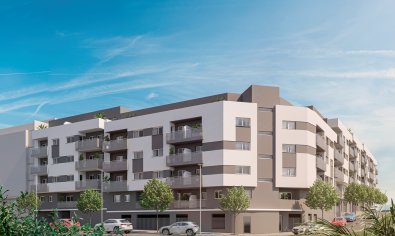
Beaches, shops, restaurants and the bus station are relatively close together, and apartments dominate the housing stock.
The main compromises are parking and greater summer activity.
A quiet street in February can feel quite different in July.
Living near the promenade
A seafront or near-seafront apartment makes the Mediterranean part of everyday life.
For permanent living, however, check orientation, parking, summer noise and building condition rather than choosing solely for the view.
Moving a few streets inland can often preserve easy beach access while creating a more practical residential environment.
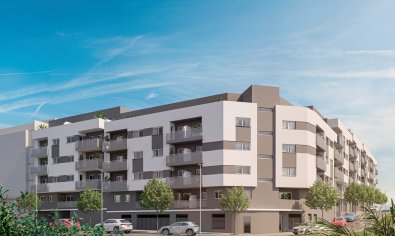
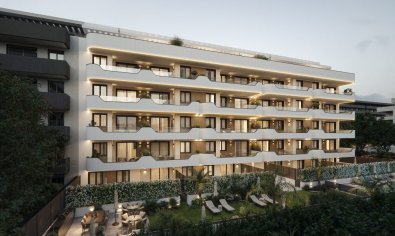
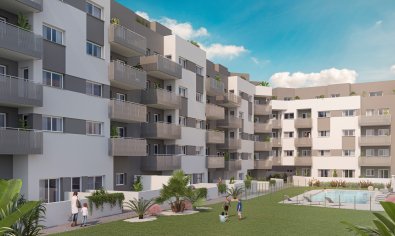
Poniente and newer housing
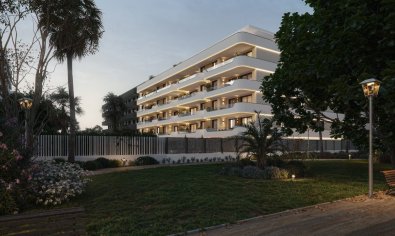
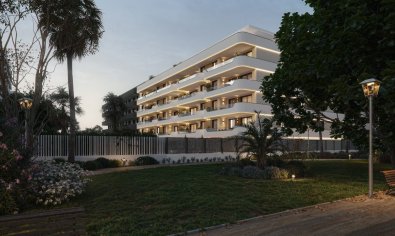
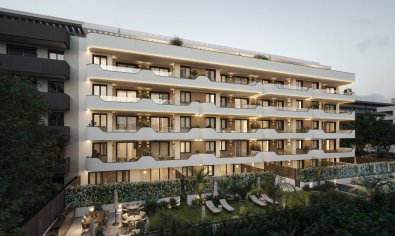
Towards Poniente, newer residential developments are more common.
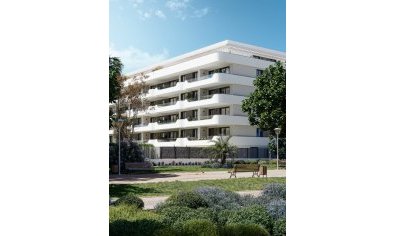
Garages, terraces, communal swimming pools and modern building standards are easier to find than in some older central streets.
The atmosphere can also feel more residential.
For families or permanent residents, this may provide a useful compromise between beach access and everyday practicality.
Torre del Mar or Torrox Costa?
Both offer relatively level coastal living and a large supply of apartments.
Torre del Mar feels larger as a commercial centre and benefits from immediate proximity to Vélez-Málaga.
Torrox Costa offers a different scale and closer connections with Nerja and Torrox Pueblo.
They are close enough that property buyers should ideally experience both.
Torre del Mar or Nerja?
The contrast is stronger here.
Nerja has a historic centre above small coves, cliffs and a more dramatic coastline.
Torre del Mar provides broad beaches, long level promenades and a more practical grid of everyday services.
Buyers who prioritise easy walking and cycling may prefer Torre del Mar.
Those drawn to cliffs, coves and a traditional centre immediately above the sea may favour Nerja.
Buying property in Torre del Mar
We would begin with four practical questions: distance to the beach, noise, parking and access to everyday services.
Apartment buyers should also check community fees, lifts, building maintenance and any planned communal works.
Older properties near the sea deserve particular attention because salt and coastal exposure can affect façades and metalwork.
Anyone relying on holiday rentals for their financial calculations should also verify the current Andalusian and municipal regulations before purchasing.
Why Torre del Mar is worth discovering
Begin with the remains of the old castle before walking towards the former sugar factory and Casa Larios.
Continue past the old railway station and visit both the historic and modern lighthouses.
Then simply follow the promenade.
Have a sardine espeto beside the beach and, if you still feel like walking, continue towards Caleta de Vélez.
That route tells the story remarkably well.
Phoenician trade nearby, a coastal fortress, sugar cane, steam engines, railways, fishing, lighthouses, festivals and kilometres of Mediterranean beach.
Greetings from Torre del Mar!