

Greetings from Frigiliana: white streets, history and three cultures

Greetings from Frigiliana: white streets, history and three cultures
Only around six kilometres separate Frigiliana from Nerja, yet the two places feel remarkably different. Frigiliana sits at approximately 350 metres above sea level on the southern slopes of Sierra Almijara, between the Mediterranean and the Sierras de Tejeda, Almijara y Alhama Natural Park.
The village belongs to the Los Pueblos Más Bonitos de España network and is particularly known for its exceptionally well-preserved Moorish-Mudéjar old quarter.
Behind the famous white façades, however, is a much more complex history.
The Barribarto
Frigiliana's best-known district is the Barribarto, the historic upper quarter.
Narrow cobbled lanes, stairways, passages and brilliant white houses follow the steep contours of the mountain. Colourful doors, plants and flowers create the appearance behind the village's tourism slogan, Light of Andalusia.
Calle Real is the main route, but smaller streets such as Zacatín, Calle Alta, El Garral and Hernando el Darra reveal the old settlement more clearly.
Islamic Frigiliana
The region became part of Al-Andalus during the eighth century.
Muslim communities expanded irrigation using channels and reservoirs and introduced crops including sugar cane. By the end of the ninth century, a substantial castle covering around 4,000 square metres had been built above the settlement.
Very little of that fortress survives today.
The reason lies in the events of 1569.
Twelve ceramic panels tell the story
The Barribarto contains twelve ceramic panels explaining the events surrounding the Battle of the Peñón of Frigiliana.
They were installed during restoration of the historic district in the 1960s and can be followed chronologically from Calle Hernando el Darra to Calle El Garral.
Following them turns a picturesque walk into a historical route.
They are one of the best ways to understand why Frigiliana looks the way it does today.
Increasing pressure on the Moriscos
Following the Christian conquest, much of the population remained Muslim.
During the sixteenth century, restrictions became increasingly severe. Philip II's 1567 Pragmatic prohibited Moriscos from carrying weapons, using their own language, wearing traditional clothing and continuing various cultural practices.
The revolt that began in the Alpujarras in 1568 eventually spread into the Axarquía.
Thousands of Moriscos took refuge on the formidable mountain position known as El Fuerte above Frigiliana.
The Battle of the Peñón
On 11 June 1569, around 6,000 Christian troops under Luis de Zúñiga y Requesens launched the decisive assault.
The mountain itself provided a powerful defence, but the royal army eventually defeated the Morisco resistance.
The consequences were devastating.
Moriscos were expelled and dispersed and Frigiliana was left seriously depopulated before being resettled with so-called Old Christians.
Lízar Castle
The old Islamic castle was destroyed following the conflict.
Today only the remains of Castillo de Lízar survive.
Do not expect a fully restored fortress.
The importance lies in the position, the surviving archaeology and the panoramic view that explains why the site had such enormous strategic value.
Walking towards El Fuerte
Hiking routes also lead towards El Fuerte, the actual setting of the battle.
Municipal routes use the landscape to explain both the historical events and the natural environment.
Standing among these steep mountains makes the military history considerably easier to understand.
Building a village again
Frigiliana had to recover from severe depopulation.
Around 1600, the historical municipal guide records only about one hundred inhabitants. In 1630, Íñigo Manrique de Lara became Count of Frigiliana and approximately ten years later the settlement received independent villa status rather than remaining under Vélez-Málaga.
Agriculture became essential to this recovery.
One crop in particular would shape the village for centuries: sugar cane.
El Ingenio: palace and factory
At the lower end of the historic centre stands the enormous Ingenio Nuestra Señora del Carmen.
It occupies the former palace of the Counts of Frigiliana, completed in the late sixteenth century. The Renaissance building covers more than 2,000 square metres and was partly constructed using material from the destroyed Muslim castle.
Sugar processing later became the building's defining function, with a major expansion in 1725.
Cane syrup is still produced here
Remarkably, El Ingenio remains a working factory.
It produces miel de caña, the dark sugar-cane syrup sold throughout the village. The municipality describes it as the only factory of its type still operating in Europe.
Despite the Spanish word miel, this is not bee honey.
It is a direct continuation of Frigiliana's centuries-old relationship with sugar cane.
Fried aubergine with miel de caña
One classic combination is berenjenas fritas con miel de caña — fried aubergine drizzled with the dark syrup.
It is found elsewhere in Andalusia too, but eating it in Frigiliana has a particular connection with the village's own industrial heritage.
Local gastronomic events have also used the syrup in pastries, sauces and modern tapas.
Casa del Apero
Beside this heritage stands the Casa del Apero.
Probably built in the early seventeenth century, it originally served as a granary, stable and agricultural store associated with the palace and sugar operation. It has since been restored as Frigiliana's cultural centre.
Today it houses the library, archive, temporary exhibitions, tourist office and Archaeological Museum.
Archaeology before the Moors
Frigiliana's human history extends far beyond the medieval period.
There is evidence of settlement from the Neolithic, including discoveries around caves near the Higuerón River. Archaeological sites represented in the museum include Cueva de los Murciélagos, Cerrillo de las Sombras, Lízar Castle and El Fuerte.
The museum therefore provides useful context before exploring the Moorish old quarter.
San Antonio Church
The Church of San Antonio de Padua was financed by the Manrique de Lara family and completed in 1676 by master builder Bernardo de Godoy.
San Antonio now plays a major role in the local festival calendar.
His feast day is 13 June, around which Frigiliana's main annual fair takes place.
And San Sebastián too
Frigiliana also maintains strong devotion to San Sebastián, celebrated on 20 January.
The main village festivities originally took place in winter, but poor January weather led to the principal celebration being moved in 1967 to June around San Antonio.
Both saints consequently remain important to local tradition.
Fuente Vieja
The seventeenth-century Fuente Vieja was commissioned by Íñigo Manrique de Lara, the first Count of Frigiliana, and carries his coat of arms.
Public fountains once played an essential everyday role rather than merely decorating the streets.
Several historic water points remain visible throughout the village and some have been restored to working condition.
Reales Pósitos
The Reales Pósitos date from the eighteenth century and were used to store grain.
Buildings such as this help explain ordinary life in historic Frigiliana.
The old town was not a picturesque collection of holiday homes. It was a working agricultural community that needed food storage, water, stables and production spaces.
The Village of Three Cultures
Modern Frigiliana promotes itself as the Village of Three Cultures.
Christian, Islamic and Jewish cultural traditions provide the theme for several local events and represent the wider historical complexity of Andalusia.
Frigiliana's own history also demonstrates that coexistence was not always peaceful.
The modern Festival of Three Cultures therefore focuses deliberately on cultural exchange and tolerance in the present, against a historical background that included severe conflict.
Three Cultures Festival 2026
The 2026 edition runs from 27 to 30 August.
For four days the normally compact village becomes one of the Axarquía's major cultural meeting points.
Music, markets, food and cultural activities fill different parts of Frigiliana. Previous editions have also included exhibitions, talks and the popular tapas route.
Visiting during the festival and visiting Frigiliana on a quiet weekday are two completely different experiences.
May Crosses
The Cruces de Mayo create another colourful local celebration.
Flower-covered crosses appear in streets and small squares while residents offer food and drink. Cane syrup and local sweet wine frequently feature and groups performing verdiales and other traditional music move between the different crosses.
It is considerably smaller and more local than the Three Cultures Festival.
San Antonio Fair
Frigiliana's main Feria takes place around 13 June.
Traditional programming combines music, dancing, children's events, fairground attractions and the San Antonio pilgrimage.
On the saint's day, the image of San Antonio traditionally travels through the village on a cart pulled by oxen.
Straight from the streets into the mountains
Frigiliana borders the Sierras de Tejeda, Almijara y Alhama Natural Park.
The municipality promotes nine walking routes that begin and end in Frigiliana, leading towards locations including El Fuerte, Cruz de Pinto, the Higuerón River, Cruz de Félix and El Acebuchal.
Few villages allow such a quick transition from restaurants and white streets into genuine mountain terrain.
Cruz de Pinto
The Cruz de Pinto has its own local legend.
According to tradition, navigator Francisco de Pinto promised to build a sanctuary on the highest mountain he could see if he and his crews survived a severe storm off the Nerja coast. The small shrine is said to date from 1643.
The official walking route is just under six kilometres and is rated easy.
El Acebuchal: the lost village
Another well-known route leads towards El Acebuchal.
Although officially within the municipality of Cómpeta, it has strong historical links with Frigiliana.
Residents were forced to abandon the hamlet in 1948-1949 as authorities attempted to isolate anti-Franco guerrillas operating in the surrounding mountains.
The settlement remained abandoned for decades.
Rebuilding El Acebuchal
In 1998, the García Sánchez family from Frigiliana began restoring the hamlet.
Today its small stone houses have been brought back to life.
The official walking route from Frigiliana covers approximately 13 kilometres and takes around four hours and twenty minutes.
It passes farmland, pine forest and viewpoints over Frigiliana and the Nerja coastline.
Old trade routes
The ruins of Venta Cebolleros reveal another layer of mountain history.
Until the 1960s it served travellers and muleteers moving fish and fruit from the Málaga coast towards Granada and returning with cereals and other inland products.
Today's hiking tracks were once working transport routes.
Nerja only six kilometres away
For permanent residents, proximity to Nerja is a major practical advantage.
Frigiliana is around six kilometres from Nerja and approximately 50 kilometres from Málaga.
A regular bus service links the two towns.
A new timetable came into force on 10 August 2026, with multiple daily services and additional late buses during July and August.
Frigiliana or Nerja?
This is a very logical property comparison.
Nerja provides beaches, more shops and services and a larger property market.
Frigiliana offers a smaller mountain-village atmosphere with the Mediterranean nearby but not directly outside the front door.
Anyone who wants to walk to the beach every morning may prefer Nerja.
Anyone happy to drive six kilometres in exchange for mountain views and a white village may find Frigiliana much more appealing.
Living in the Barribarto
A historic house in the old quarter can be extraordinarily attractive.
White façades, wooden doors, roof terraces and views over the Axarquía are exactly what many buyers imagine when they first fall in love with Frigiliana.
Daily life, however, includes steep streets, steps and limited vehicle access.
Parking may be some distance from the house and moving groceries, furniture or renovation materials can be more complicated than in a modern residential street.
The lower, newer village
More recent development lies below the historic quarter.
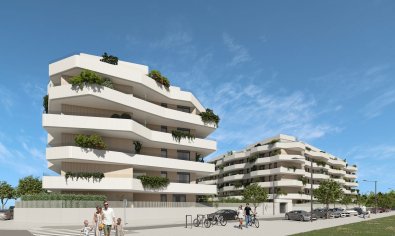
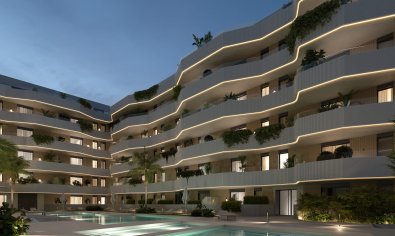
Road access is generally easier and there are more modern apartments and residential buildings.
Buyers may sacrifice a little of the postcard atmosphere but gain easier parking, access and everyday practicality.
For permanent living, this area should not be overlooked.
Villas and countryside
Frigiliana's countryside offers yet another option.
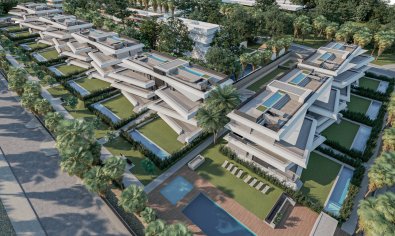
Detached villas, cortijos and fincas can provide pools, gardens, larger plots and impressive views towards both mountains and sea.
Roads can also be narrow and steep and a car becomes almost essential.
For rural properties, careful checks of land classification and the registered status of the house, pool, extensions and outbuildings are particularly important. Frigiliana's planning documentation includes several land and protection categories.
Year-round living
Frigiliana has an obvious international presence because of tourism and foreign property ownership, yet it remains small enough for local community life to be highly visible.
Schools, associations, religious celebrations and village festivals continue throughout the year.
Its position at around 350 metres altitude also means the climate can feel slightly different from Nerja on the coast, particularly during winter evenings.
Orientation and winter sunshine therefore deserve particular attention when buying a permanent home.
Buying property in Frigiliana
We would begin with three different environments: historic quarter, newer village and countryside.
Choose the Barribarto for character and walkability if steep streets are not an issue. Consider the lower village for easier everyday access and parking. Look towards the countryside for privacy, land, pool and panoramic views.
And always compare Frigiliana with Nerja before deciding.
They are only six kilometres apart, but the lifestyle difference is considerable.
Why Frigiliana is worth discovering
Start at Plaza del Ingenio and walk slowly along Calle Real into the Barribarto.
Follow several of the twelve ceramic panels, visit San Antonio and Fuente Vieja and then return to Casa del Apero and the archaeological museum.
Try something made with miel de caña.
On another day, walk towards El Fuerte or Cruz de Pinto. With more time, continue into the mountains towards El Acebuchal.
A quick visit reveals a beautiful white village.
A longer stay reveals Neolithic settlement, Islamic agriculture, violent Morisco history, sugar-cane industry, old mountain trade routes and a modern identity built around bringing cultures together rather than dividing them.
Greetings from Frigiliana!