

Greetings from Caravaca de la Cruz: faith, horses and history
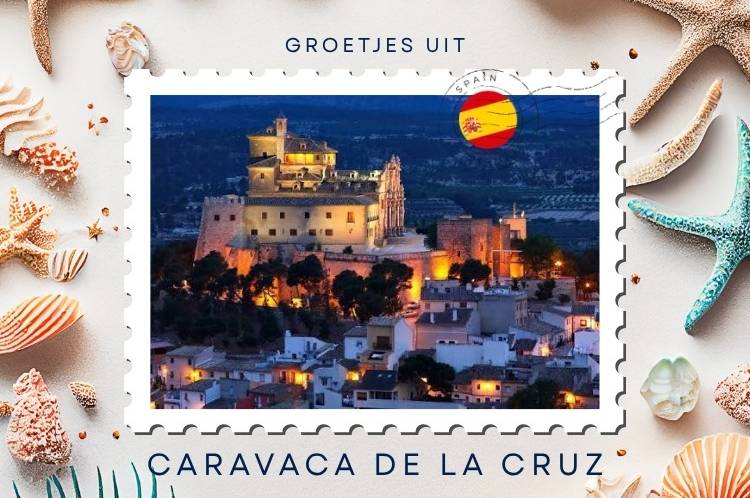
Greetings from Caravaca de la Cruz: faith, horses and history
Caravaca de la Cruz lies in the northwest of Murcia at approximately 625 metres above sea level. Its municipality covers more than 859 km² and the city acts as the main service centre for Murcia's large northwestern district.
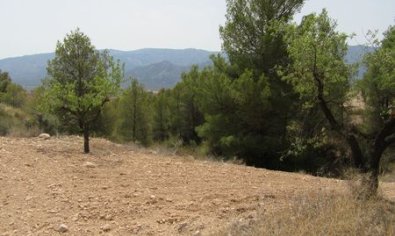
Mountains, farmland and small rural communities make the landscape completely different from the Mar Menor and Mediterranean coast.
Caravaca is best known, however, for the Santísima y Vera Cruz.
The cross that gave the city its name
According to religious tradition, the Vera Cruz appeared miraculously in 1231 while an imprisoned Christian priest was celebrating Mass before a Muslim ruler.
Its distinctive reliquary has two horizontal arms and is preserved in the sanctuary above the city.
Centuries of devotion transformed Caravaca into an important pilgrimage destination.
Caravaca Castle
The historic fortress dominates the city from its hilltop.
Its defensive walls have Islamic origins and include remains dating from the twelfth century, while much of the present structure developed during the fifteenth century. Fourteen towers survive today, including the older Chacona Tower.
During the Middle Ages the fortress was associated first with the Knights Templar and later with the Order of Santiago.
The hill provides extensive views over the modern city and surrounding countryside.
Basilica-Sanctuary of the Vera Cruz
Inside the fortress walls stands the Basilica-Sanctuary of the Santísima y Vera Cruz.
The present sanctuary dates mainly from the seventeenth century, while its striking Baroque façade was added during the eighteenth.
This unusual combination of medieval fortress and monumental sanctuary has become the defining image of Caravaca.
The Vera Cruz relic is preserved inside.
A perpetual Jubilee tradition
In 1998, Pope John Paul II granted Caravaca the right to celebrate a perpetual Jubilee Year every seven years.
Recent Jubilee Years were 2003, 2010, 2017 and 2024. The next will take place in 2031.
Local and regional tourism organisations consequently describe Caravaca alongside Jerusalem, Rome, Santiago de Compostela and Santo Toribio de Liébana as one of the major Catholic destinations with this special Jubilee tradition.
Importantly, 2026 is not a Jubilee Year, although pilgrimage continues throughout the year.
Walking to Caravaca
Several official pilgrimage routes lead to the sanctuary.
One long-distance Camino begins at Roncesvalles in Navarra and travels almost 900 kilometres through five autonomous regions before reaching Caravaca.
Pilgrims who document at least 50 kilometres can receive a Caravacensis certificate when they arrive.
Shorter sections also provide an excellent way to explore the countryside around the city.
A surprisingly monumental old town
Walking downhill from the sanctuary brings you into a historic centre filled with churches, convents, mansions and small squares.
The official heritage routes are divided into Medieval, Renaissance and Baroque Caravaca, demonstrating just how many architectural periods are represented here.
The old town is compact enough to explore on foot and this is definitely the best way to discover it.
The Concepción Church
The Purísima Concepción Church is especially notable for its impressive Mudéjar wooden ceiling.
Its bell tower and Baroque main altarpiece are other important features.
Together with El Salvador and several convents, it illustrates the religious and economic importance Caravaca acquired after the medieval period.
El Templete
The eighteenth-century Templete, popularly called El Bañadero, has a particularly important ceremonial role.
Each 3 May, the traditional Blessing of the Waters takes place here with the Vera Cruz.
The small circular building therefore becomes one of the focal points of Caravaca's biggest week of the year.
The May festivities
Caravaca's great annual celebrations officially run from 1 to 5 May.
The Vera Cruz, Moors and Christians and the extraordinary Wine Horses all come together during a festival recognised as being of International Tourist Interest.
The atmosphere bears almost no resemblance to an ordinary week in this otherwise relatively relaxed inland city.
Wine Horses
The Caballos del Vino, or Wine Horses, are Caravaca's most distinctive tradition.
Each horse is covered in an elaborate handmade cloak decorated with silk, gold and silver thread and ornamental stones. Four handlers accompany the animal.
Three competitions are involved: the Bare Horse event, the Harnessing or Enjaezamiento competition and the famous race.
2 May is the principal day.
Racing up to the castle
During the famous race, each horse sprints up the steep castle hill together with its four handlers.
Thousands of spectators line the route and the entire run is timed.
It is fast, loud and visually spectacular — and almost impossible to understand fully from photographs alone.
The contrast with the same peaceful streets on an ordinary winter morning could hardly be greater.
UNESCO recognition
In 2020, UNESCO inscribed the Wine Horses on the Representative List of the Intangible Cultural Heritage of Humanity.
The recognised tradition includes not only the race but also knowledge connected with breeding, caring for and handling the horses and the craft of creating their embroidered cloaks.
These skills are transmitted through families, groups and specialist workshops.
Silk and gold artwork
The cloaks deserve attention in their own right.
Following the 2026 celebrations, the highest-scoring examples were displayed publicly so visitors could examine their intricate handmade embroidery at close range.
Caravaca is also investing in preserving these skills. A new training programme launched in 2026 specifically teaches traditional silk-and-gold embroidery to a new generation.
The Wine Horses House Museum explains the tradition throughout the year.
Moors and Christians
The same week also includes the Moors and Christians festivities.
Historic costumes, bands and parades refer to Caravaca's medieval frontier history. Together with the Vera Cruz ceremonies and Wine Horses, they form the central components of the May celebrations.
Few Spanish festivals combine so many very different traditions within five days.
Festival Museum
The Museo de la Fiesta occupies the historic Uribe Palace.
It displays Moors and Christians costumes, festival objects and music alongside impressive Wine Horse cloaks.
If you intend to visit during early May, seeing the museum beforehand gives useful context to what happens in the streets.
Fuentes del Marqués
Just over two kilometres from the city centre is the beautiful Fuentes del Marqués.
This protected historic landscape covers around 17.4 hectares and feels remarkably lush because of its natural springs, water channels and dense vegetation.
The principal springs, known locally as Las Sartenes, have an average combined flow of approximately 320 litres per second.
On a hot day, the contrast with the dry surrounding countryside is striking.
Water that powered everyday life
These springs were historically essential for agriculture, livestock, drinking water, mills and textile fulling.
Old channels still reveal how carefully the water was distributed through the landscape.
References to the springs even appear in accounts associated with the medieval Arab geographer Al-Himyari.
Fuentes del Marqués is therefore both a natural and historical landscape.
The so-called Templar Tower
At the entrance is the Torre de los Templarios.
Despite its evocative name, the existing structure probably dates from the sixteenth or seventeenth century, perhaps replacing an earlier building. Its exact origins remain uncertain.
It now houses the Nature Interpretation Centre for Fuentes del Marqués.
Barranda
The municipality extends far beyond Caravaca city.
Around 12 kilometres away, Barranda is home to the Ethnic Music Museum and the Blanco Fadol collection.
Instruments collected from cultures across five continents explore music connected with religion, ritual, traditional society and everyday life.
It is a surprisingly international museum in a small rural Murcian community.
Rural Caravaca
Archivel, La Encarnación, Singla, El Moral, Navares and Los Royos are among the many other settlements within the municipality.
Many maintain their own patron saint celebrations and local traditions. Several were holding their own festivals during the summer of 2026.
This means a Caravaca address can describe anything from a city apartment to a rural village home many kilometres away.
Walking and cycling
Northwestern Murcia is particularly good for outdoor activities.
The Vía Verde del Noroeste, developed along a former railway, is one of the main walking and cycling routes promoted around Caravaca.
Pine forest, agricultural landscapes, springs and small communities make this an entirely different side of Murcia from the Mediterranean coast.
Inland cuisine
Food reflects the agricultural and mountain environment.
Traditional dishes include migas, rice dishes, stews, sausages and meat, while Segureño lamb is an important regional product with protected geographical status.
Local sweets include yemas de Caravaca and regional alfajor.
It is hearty inland cooking rather than coastal seafood cuisine.
Living in Caravaca de la Cruz
Caravaca functions as the main commercial and service centre of northwestern Murcia.
Schools, healthcare, shops, sport and restaurants operate year-round, while the local economy includes tourism, commerce, agriculture, livestock and industry.
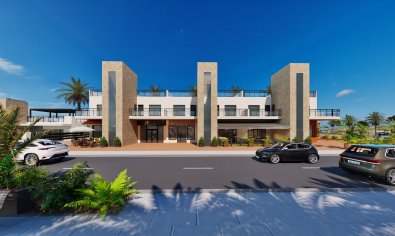
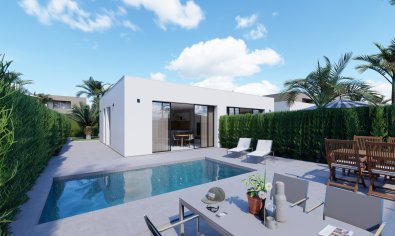
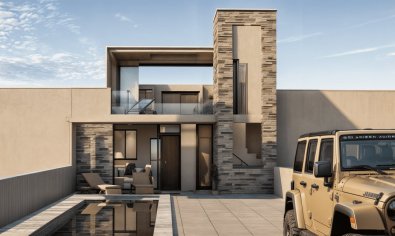
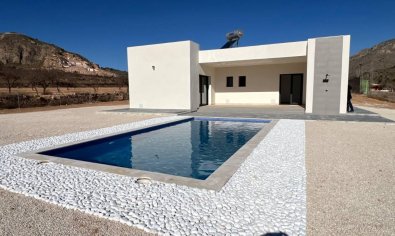
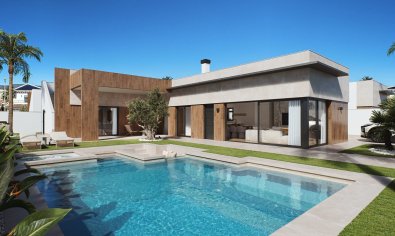
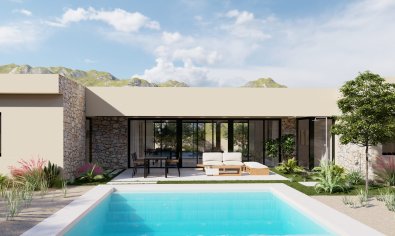
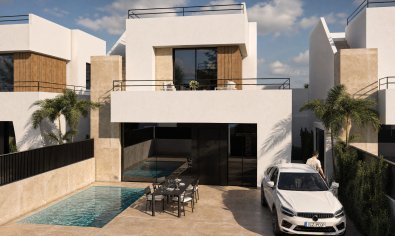
The urban centre mainly offers apartments and town houses. Detached homes, village properties and fincas become more common further out.
A different climate from the coast
At approximately 625 metres altitude, Caravaca does not have exactly the same climate as the Mediterranean shoreline.
Seasonal differences are greater and winters are noticeably cooler.
Anyone considering permanent relocation should therefore experience Caravaca in winter as well as during spring or summer.
Buying property in Caravaca
The first choice should be between city, village and countryside.
The city provides easier walking access to everyday services. Smaller settlements offer quieter rural life, while country properties provide land and privacy.
For rural property, land classification and the legal registration of houses, pools and outbuildings require careful checking.
The municipality's enormous size also means that exact location matters much more than the words “Caravaca de la Cruz” in a property listing.
Why Caravaca de la Cruz is worth discovering
Start at the castle and Vera Cruz Basilica before walking slowly down through the historic centre.
Visit the Templete and one of the museums, then spend the afternoon beside the springs and trees of Fuentes del Marqués.
On another day, explore Barranda or one of the rural communities.
And if you can choose one exceptional date, visit on 2 May.
That is when pilgrimage city, horses, embroidery, history and thousands of local people come together in one unforgettable celebration.
A medieval fortress, centuries of pilgrimage, UNESCO-recognised horses and crystal-clear springs in the mountains of Murcia.
Greetings from Caravaca de la Cruz!