


Greetings from Guadalest: castle, mountains and a turquoise reservoir
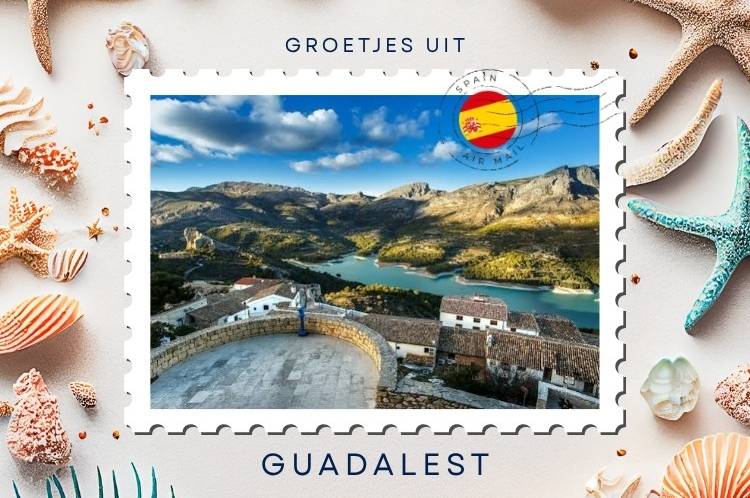
Greetings from Guadalest: castle, mountains and a turquoise reservoir
El Castell de Guadalest sits high in the mountainous interior of the Marina Baixa. The historic village occupies a dramatic rocky outcrop overlooking the Guadalest Valley, while the famous reservoir lies below surrounded by the Aitana, Xortà and Serrella mountain ranges.
Despite its small size, Guadalest contains an extraordinary concentration of history, museums and natural scenery.
A fortified village on the rock
The settlement already existed during the Muslim period.
After the Christian conquest in the thirteenth century, a substantial Muslim population remained under different noble families. Jaime II granted Guadalest Castle to Bernardo de Sarrià in 1293 and the Cardona family later became particularly influential.
The village was declared a Historic-Artistic Site in 1974 and later received protected cultural status. Since 2015 it has also belonged to Los Pueblos más Bonitos de España.
Entering through the mountain
One of Guadalest's most memorable features is the entrance to the historic fortress.
Visitors pass through a tunnel carved directly through the rock, with the old entrance gate still preserved.
On the other side are the church, Casa Orduña, museums and paths leading towards the castle ruins.
San José Castle
The Castillo de San José is an eleventh-century Muslim fortress occupying the highest point.
Its strategic location made it extremely important for controlling the valley. Earthquakes in 1644 and 1748 caused serious damage and an explosion during the War of the Spanish Succession in 1708 destroyed much of what remained.
Today the ruins appear almost fused with the rock itself.
Alcozaiba Castle
Guadalest also had a second Muslim fortress, Alcozaiba Castle.
It also dates from the eleventh century and today mainly survives as a ruined tower within the former Casa Orduña estate.
Together, the two fortifications show how heavily defended this mountain position once was.
Casa Orduña
Casa Orduña was built after the devastating earthquake of 1644.
The Orduña family, originally from the Basque Country, served the Marquis of Guadalest and acted as governors and administrators of the estate for almost three centuries.
The house was burned and looted during the War of the Spanish Succession in 1708 but was later rebuilt.
It now houses the municipal museum and provides access towards San José Castle.
A remarkable historic library
One of Casa Orduña's highlights is its library containing 1,265 volumes.
Hundreds belong to the historic collection dating from the sixteenth to eighteenth centuries. The house also contains period furniture, paintings, family insignia and traditional objects.
It offers much more context than the castle ruins alone.
Church of Nuestra Señora de la Asunción
The current parish church was built between 1740 and 1753 in Baroque style.
It stands on the site of an earlier church and underwent several later alterations, including major changes in 1962.
Church, noble house and fortress all occupy an extraordinarily compact area.
A surprising number of museums
For such a tiny mountain village, Guadalest has a remarkable number of museums.
Official tourism information identifies eight museums, covering subjects ranging from ethnology and miniature art to historic vehicles, dollhouses, salt and pepper shakers and instruments of punishment.
You certainly do not need to visit all of them, but the variety gives the village a wonderfully eccentric side.
Microminiatures
The Microminiatures and Microgigante museums contain artworks created on extraordinarily small surfaces.
Examples include paintings on grains of rice and sculptures on grains of sand that must be viewed through magnification.
It is not exactly what you expect to discover beneath an Islamic mountain castle.
Traditional life in the valley
For something more directly connected with local history, visit the Ethnological Museum.
It occupies an eighteenth-century house built into the rock and recreates everyday rural life, including domestic rooms, agricultural tools and equipment used for producing olive oil, wine and flour.
This provides a glimpse of Guadalest before tourism transformed the village.
Guadalest Reservoir
The famous reservoir is much younger than the historic settlement.
Construction began in 1953 and was completed in 1971.
Its water fills the valley below the village and can appear strikingly turquoise or blue-green when viewed from above.
Walking around the reservoir
A relatively easy circular route follows the reservoir.
It provides views towards Guadalest, Benimantell, Beniardà and the surrounding mountains.
Seeing the village from water level provides a completely different perspective: the castle appears to be hanging from the cliffs above.
Into the mountains
More demanding routes lead higher into the surrounding ranges.
The PR-V 18 runs from the reservoir towards the Sierra de l'Aixortà over a route of approximately 13.5 kilometres.
Pine forest, Mediterranean scrub and high mountain vegetation make this a very different Costa Blanca from the beaches below.
More than one village
Guadalest is also the name of the wider valley.
Small communities including Benimantell, Beniardà, Benifato and Confrides lie between the surrounding mountains.
Continue beyond the main tourist village and the atmosphere quickly becomes quieter and more rural.
San Gregorio
San Gregorio is celebrated during the first weekend of May.
The traditional blessing of the water is one of the most characteristic parts of the festival.
It is a fitting tradition in a valley where springs and irrigation were historically essential to agriculture.
August patron saint celebrations
Guadalest's principal festivities are held in August in honour of the Virgin of the Assumption.
Celebrations traditionally run from 14 to 17 August and include processions, flower offerings and music.
The image of the Virgin is traditionally transferred from Casa Orduña to the parish church.
Mountain cuisine
Food here reflects the inland landscape.
Typical dishes include olleta de blat, rabbit with allioli, stuffed peppers, roasted vegetables, rice dishes and minxos, pastries filled with vegetables.
It is hearty mountain cooking rather than the seafood-focused cuisine associated with many coastal towns.
Living in Guadalest
Permanent life in El Castell de Guadalest is quite different from visiting for an afternoon.
The municipality is extremely small, so residents naturally depend on surrounding towns for some larger shops and specialist services.
The reward is an extraordinary natural setting and a far quieter atmosphere once the daytime visitors leave.
Property in the Guadalest Valley
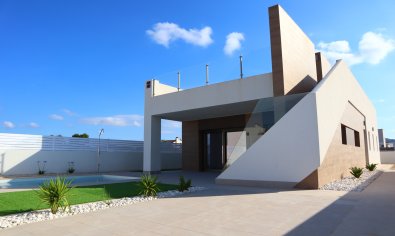
When looking for property, the term ‘Guadalest’ can sometimes refer to the wider valley rather than only El Castell itself.
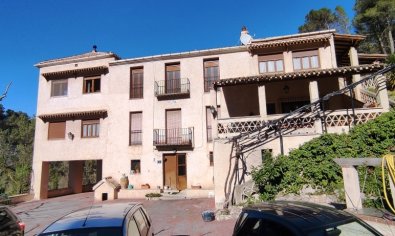
Rural homes may therefore be located near neighbouring villages or among agricultural land.
For country properties, careful checks of land classification, registered buildings, pools and extensions are especially important.
Moving to the Guadalest Valley
This area suits people who deliberately want mountain and village life.
A car is effectively essential and Spanish becomes more important in everyday life than in many international coastal developments.
Yet Benidorm, Altea and the Mediterranean remain within reach, creating a very unusual balance between inland Spain and the Costa Blanca.
Why Guadalest is worth discovering
Arrive early and enter the historic fortress through the tunnel in the rock. Visit Casa Orduña and climb towards San José Castle before stopping to admire the reservoir below.
Choose one or two of the unusual museums, then have a traditional mountain lunch.
On another day, walk around the reservoir or continue deeper into the Guadalest Valley.
Only then do you really see why this tiny village has become one of Alicante's most famous inland destinations.
An Islamic castle on a rocky peak, a village hidden behind a tunnel, turquoise water and mountains in every direction.
Greetings from Guadalest!