


Greetings from Benissa: between an old town, riberers and hidden coves
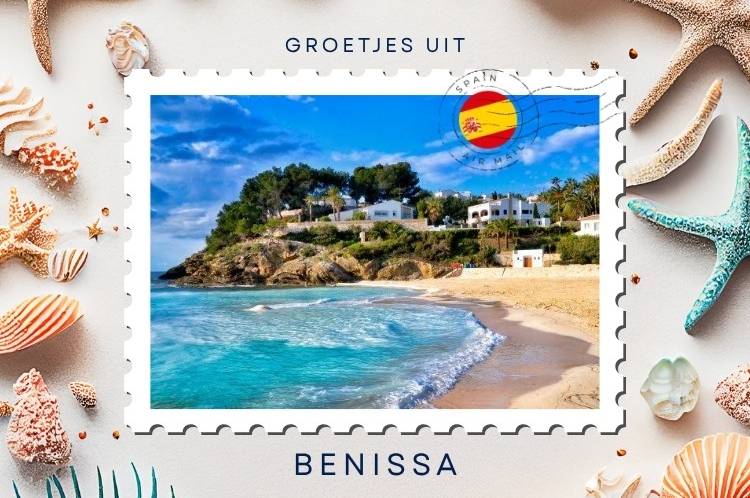
Greetings from Benissa: between an old town, riberers and hidden coves
Benissa is one of those municipalities that can easily be misunderstood on a map. The historic town is not actually on the Mediterranean but several kilometres inland on elevated ground. Yet the same municipality extends all the way to the coast between Calpe and Moraira, where rocky coves, pine trees and hillside villas dominate the landscape. Travel inland instead and you encounter vineyards, almond and olive trees and eventually the Sierra de Bèrnia. This combination of town, countryside, mountains and Mediterranean coastline makes Benissa very different from the better-known resorts of the northern Costa Blanca.
For property buyers, that distinction is fundamental. A traditional home in the old town, a rural finca and a villa near La Fustera can all be advertised as “Benissa”, yet provide completely different lifestyles. Our page about living and buying property in Benissa explores this variety in more detail.
A name with Islamic origins
Human settlement in the area predates modern Benissa by thousands of years. Small Neolithic rock paintings have been discovered and Roman activity is documented through finds including coins and amphorae from the coastline.
The name Benissa itself, however, is associated with the Arabic Banu-Issa. Many names of rural districts around the municipality also retain Arabic origins.
Jaume I reached Benissa in 1248, bringing the territory under Christian Valencian rule. The Muslim and later Morisco population remained important for centuries before the expulsion of the Moriscos in 1609. The area was subsequently repopulated by people from the Pyrenees, Catalonia and Aragón.
The Islamic past does not survive in one spectacular fortress, but it remains visible in place names, the structure of the historic settlement and traces of the former walls.
Benissa was once a walled town
For centuries Benissa was protected by defensive walls. Very little survives physically, but the street pattern of the old town still helps reveal the historic layout.
Plaza del Portal stood near the eastern entrance to the walled settlement. From here, the route towards Plaça de l'Església Vella and Carrer Puríssima passes through some of Benissa's oldest streets.
Cobblestones, white façades, stone details, iron balconies and old town houses create an environment that feels entirely different from the villa districts beside the coast.
For permanent residents, however, historic character brings practical considerations: narrow streets, parking limitations and older buildings that may require more technical investigation.
The old church was also a fortress
The former church of Sant Pere once stood on today's Plaça de l'Església Vella.
It was both a religious building and a fortified refuge capable of protecting local residents during periods when pirate attacks threatened the coast. The original church no longer survives, although a reconstruction of its façade can now be seen in the square.
It is an excellent reminder that living close to the Mediterranean was not always simply an advantage.
The Sala del Consell began as a grain building
The Sala del Consell, dating from the late sixteenth century, is one of the most important civic buildings in the old town.
It was originally used for storing and trading wheat. Over time it served as a town hall, prison, archive, court and market. It is now an interpretation centre explaining the town's history.
Rather than being a ceremonial monument, the building reflects centuries of ordinary municipal life.
Casa dels Abargues
The Casa dels Cabrera-Abargues is an eighteenth- and nineteenth-century mansion preserved as a house museum.
Its kitchen, stable, private rooms, servants' quarters, chapel and courtyard provide a detailed impression of how a prosperous Benissa household operated. Original furniture, documents and household objects remain part of the collection.
The Franciscan convent changed the town's development
Benissa's Franciscan Convent was founded in 1611 and its church inaugurated in 1613.
The complex helped the town expand westwards, while its substantial walls were also useful during a period when attacks from the coast remained a concern.
The convent is currently closed to visitors and regular religious activities are not taking place, so its status is worth checking before visiting.
The “Cathedral of the Marina” is surprisingly modern
The building that now dominates Benissa's skyline is the Minor Basilica of the Puríssima Xiqueta and Sant Pere Apòstol.
Despite its Gothic appearance, it is not medieval. Construction took place between 1902 and 1929, supported by substantial contributions and labour from local residents. Its size led to the popular nickname Cathedral of the Marina.
Remarkably, its original architectural story is still developing. Official tourism information reports that approximately 17-metre pinnacles are being added to the two bell towers to complete an element of architect Vicente Pascual's original design that was never previously built.
The Puríssima Xiqueta and the Juan Vives tradition
According to local religious tradition, two pilgrims stayed at the house of Juan Vives and left behind a small image of the Immaculate Conception in gratitude. Miraculous events were later associated with it.
This should be understood as religious tradition rather than documented historical fact.
The Puríssima Xiqueta became Benissa's patron in 1864 and remains central to the town's largest annual celebrations.
In 2026, the main festival programme ran from 17 April to 4 May.
Who were the riberers?
One of Benissa's most emotionally important monuments commemorates the riberers.
During the nineteenth and part of the twentieth century, men from Benissa and other Marina Alta towns travelled on foot to the Ribera del Júcar to work seasonally in the rice harvest. They could make this difficult journey twice each year in order to earn money for their families. Today's Ruta dels Riberers follows part of their historic route.
The story is particularly relevant in an area that is now attractive to people voluntarily relocating from northern Europe. A century ago, migration from Benissa often meant leaving home temporarily because work could not be found locally.
The riberers still have their own day during the Puríssima celebrations. In 2026 the Día del Riberer took place on 27 April.
Saturday is market day
Benissa's weekly market takes place every Saturday from 8:00 a.m. until 1:30 p.m.
Fresh food is sold around Carrer Sant Josep, while clothing, shoes, plants and other goods occupy nearby streets.
For permanent residents, such ordinary routines are often more revealing than tourist attractions. Benissa's town centre remains a genuine local centre throughout the year.
Fira i Porrat de Sant Antoni
Another traditional event is the Fira i Porrat de Sant Antoni, held in January.
In 2026 the programme ran from 9 to 25 January, combining markets, children's fairground attractions, cultural events and competitions.
It is another indication that Benissa's local calendar does not disappear once the summer visitors leave.
Six small coastal worlds
Benissa's coastline consists of Les Bassetes, La Fustera, Pinets, La Llobella, l'Advocat and Baladrar rather than one long urban beach.
La Fustera offers the widest range of beach services, while several other coves are considerably rockier and quieter. Llobella is described by the local tourism service as the wildest of them.
Anyone wanting broad sandy beaches and a long promenade may find Calpe more suitable. Those preferring small coves and a less urban coastline may strongly favour Benissa.
Walking the Paseo Ecológico
The Paseo Ecológico de Benissa is one of the best ways to understand the coast.
The route is almost four kilometres long and links coves, cliffs and viewpoints, with interpretation panels explaining geology, vegetation, history and local traditions.
It does not remain directly beside the water everywhere. Sections pass inland around Fanadix and through the Llobella ravine.
For residents of the coastal areas, part of this route may become an everyday walk rather than a special excursion.
Posidonia beneath the surface
Benissa Tourism has developed snorkelling itineraries at all six principal coastal locations.
The seabed alternates between rocky areas and extensive Posidonia oceanica meadows, which support a wide range of Mediterranean marine life.
This natural coastline also means that swimming conditions are not the same as on a broad sandy resort beach. Rocks, pebbles and sea grass are part of the environment.
Les Bassetes and the nautical side of Benissa
At Les Bassetes there is a small yacht club as well as sailing and diving facilities.
This end of Benissa lies extremely close to Calpe. Elsewhere on Benissa Costa, Moraira may be more convenient for restaurants or daily services than Benissa town itself.
Property buyers should therefore not assume that the municipal centre will automatically be the place they use most often.
Sierra de Bèrnia
Inland, the landscape rises into the protected Sierra de Bèrnia y Ferrer.
The mountain range extends across several municipalities and reaches approximately 1,129 metres at Bèrnia. Steep limestone slopes, traditional terraces and rural heritage create a dramatic natural barrier between parts of the coast and inland valleys.
The fact that this landscape sits so close to the Mediterranean is one of the characteristics that makes northern Costa Blanca scenery so distinctive.
Vineyards, almonds and rural districts
Benissa's countryside includes vineyards, almond trees, olive groves, dry-stone walls, small hermitages and traditional agricultural landscapes.
Many fincas and country homes are found here.
Such properties require careful legal due diligence. The status of the main house, outbuildings, swimming pool, access, water and electricity should all be confirmed rather than assumed from physical appearance.
Living in Benissa town
Benissa Pueblo is the most practical choice for buyers wanting an everyday Spanish town environment.
Schools, shops, the weekly market, healthcare, cafés and municipal facilities are concentrated here.
The historic centre offers traditional homes and greater character, but older construction and parking limitations are more common. Newer districts are generally easier for cars.
The Mediterranean is not within walking distance. This is genuinely a town near the coast rather than a resort directly on it.
Living on Benissa Costa
The coastal districts are much more dispersed and contain large numbers of detached villas and smaller residential developments.
Names such as La Fustera, Fanadix, Buenavista and San Jaime occur regularly in this part of the municipality. Official tourism information lists facilities and accommodation in several of these areas.
Hillsides are common, so a sea-view villa should be judged on more than the panorama. Check driveway gradients, orientation, winter sunshine, supermarket distances and realistic walking access to the coast.
For most residents here, a car is essential.
Golf at San Jaime
Club de Golf Ifach is located in Urbanización San Jaime.
The nine-hole course was originally designed by Javier Arana in 1974 and restored in 2011.
Golf does not define Benissa in the way it does certain Costa del Sol communities, but it contributes to the green, low-density character of this particular residential area.
Healthcare and year-round services
Benissa has its own health centre on Avenida Ausiàs March. The municipal tourism service identifies the hospital in Dénia for hospital care.
Schools, supermarkets, sport facilities and local services allow the town to function throughout the year.
Depending on where a coastal property is situated, residents may also use facilities in Calpe or Teulada-Moraira.
Road, TRAM and airports
Benissa is connected by the N-332 and has access to the AP-7 at junction 63.
Alicante Airport is approximately 80 kilometres away and Valencia Airport around 110 kilometres, according to the municipal tourism service.
Benissa also has a stop on the narrow-gauge TRAM route connecting Alicante and Dénia, while ALSA coaches provide additional regional connections.
Public transport is useful, but a car remains considerably more important for rural homes and dispersed coastal villas.
Benissa or Calpe?
Calpe is larger, more urban and far more concentrated around beaches, apartments and a seafront lifestyle.
Benissa provides greater variety between old town, countryside and small coves.
Calpe may suit buyers who want everyday facilities within easy walking distance. Benissa often appeals more to those prioritising privacy, land or a quieter residential environment.
Benissa or Moraira?
Moraira is much more clearly organised around its coast, marina, restaurants and beaches.
Benissa has a larger rural hinterland, an inland historic centre and significantly greater variety in property types.
Buyers who enjoy Moraira but want more land, a finca or a more dispersed setting often find Benissa worth considering.
New-build homes in Benissa
Modern development is also available, particularly contemporary villas in elevated and coastal locations. Current projects can be explored through our new-build property on the Costa Blanca.
Sea views can dominate marketing material, but orientation, gradients, road access, future neighbouring construction and realistic distances to daily services are equally important.
Seeing the sea from a terrace does not automatically mean you can walk to it.
Older villas and fincas need careful checks
Many older homes have been extended or altered over the years.
Swimming pools, covered terraces, guest accommodation, garages and other structures should correspond with registry, cadastral and planning information.
Historic-centre homes may also face additional restrictions on alterations.
Character and authenticity can be major advantages, but they do not replace technical and legal due diligence.
Community living or complete independence?
Some apartments and homes form part of an owners' association, while many detached villas are independent.
For community property, check regular fees, reserves and possible extraordinary contributions. An independent villa may avoid such shared costs, but garden, swimming pool and building maintenance then fall entirely to the owner.
Tourist rentals
Benissa's coves and proximity to Calpe and Moraira create clear holiday demand, but tourist letting should never be assumed to be automatically permitted.
Anyone buying for this purpose should have the current Valencian regional requirements, relevant municipal provisions and any owners' association rules checked for the specific property.
Rental projections only become useful once the intended use has been confirmed as legally possible.
The real question is: which Benissa?
That is ultimately what makes the municipality so interesting.
You can live among historic streets and a Saturday market, on a finca between vineyards or in a sea-view villa above a small Mediterranean cove. All three homes may have the same municipal address and provide entirely different daily lives.
Add the history of the riberers, former town walls, a lost fortified church, a neo-Gothic basilica still receiving elements of its original design and a coastal path linking hidden coves, and Benissa becomes much more than simply another name between Calpe and Moraira.
Casas Palmeras therefore looks beyond the property itself and considers how the exact location will work in everyday life. You can read more about this in our working method.
Greetings from Benissa!