

Greetings from Casares Pueblo: a white village between mountains and sea
Greetings from Casares Pueblo: a white village between mountains and sea
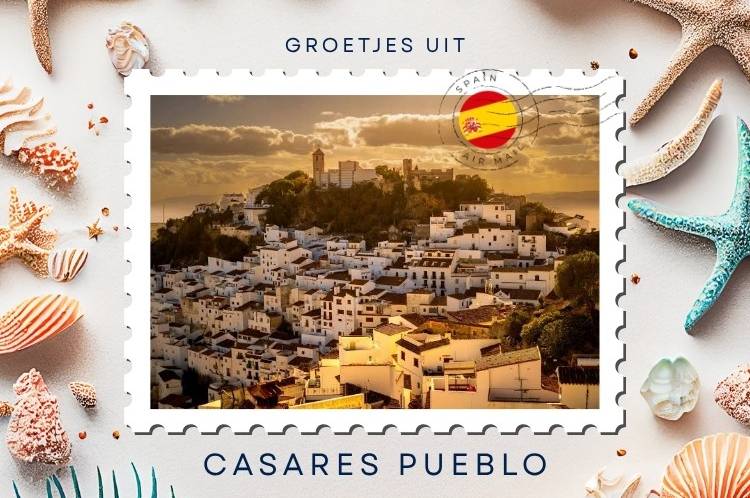
High on a rocky ridge west of Estepona sits Casares Pueblo. White houses cling to the slope beneath the remains of the medieval fortress, creating one of the most distinctive hill-village silhouettes on the western Costa del Sol. Its historic centre has been protected as a Historic Ensemble since 1978.
It is essential, however, to distinguish the village from the wider municipality. Casares covers more than 162 square kilometres, contains three official population centres and extends from mountain country all the way to a small Mediterranean coastline. In 2025 the municipality had 8,984 registered residents, including 3,019 foreign nationals.
Discover the Costa del Sol with Casas Palmeras
A village built around a natural fortress
Casares occupies a rock formation that already provides formidable natural defences.
The medieval castle stood on the upper plateau while the settlement expanded mainly down the eastern slope. The defensive enclosure had a perimeter of around 550 metres.
Modern streets still follow this steep topography.
Narrow lanes, steps, covered passages and abrupt changes in height are therefore not decorative additions; they are fundamental to the historic layout.
Medieval origins
A famous legend connects Casares directly with Julius Caesar, but the origins of the present village are much more securely associated with the Middle Ages.
The clearest early written reference comes from the fourteenth-century Andalusian writer Ibn al-Jatib, who listed Hisn Casxara or Caxara among the settlements of the Nasrid Kingdom of Granada. The fortress probably became particularly important from the late thirteenth century onwards.
Its position on a strategic frontier shaped much of its history.
The Casares Pact of 1361
In 1361, Casares became the setting for a remarkable political alliance.
Peter I of Castile reached an agreement here, or in the immediate area, with the deposed Nasrid ruler Muhammad V, promising support for his attempt to recover the throne of Granada.
That is an unusually important diplomatic episode for a village that today appears so small.
Its military position explains why Casares mattered.
The old mosque and church
Inside the former fortress stands the old Church of the Encarnación, built in the sixteenth century and probably occupying the site of an earlier mosque.
The building now functions as the Blas Infante Cultural Centre. The Veracruz Chapel and local cemetery are also found within the old fortified enclosure.
Visitors should not expect a completely restored castle.
The walls, gateways, ruins and extraordinary location are the real experience.
Roman Lacipo
Only around three kilometres west of Casares are the ruins of Lacipo.
Originally an oppidum, it became an established Roman city after conquest and was important enough to mint its own coins. Its greatest prosperity came during the Republican and Augustan periods.
The site controlled routes through the Guadiaro and Genal valleys and towards the interior.
Walls, water and public architecture
Excavations in 1975 and 1976 uncovered fortified walls, water structures, remains of a substantial public building and a later Hispano-Visigothic cemetery.
Lacipo is now protected archaeological heritage.
Recent research suggests, however, that the city may have been considerably larger than previously imagined.
A theatre and amphitheatre?
Non-invasive surveys carried out in 2025 identified possible monumental structures outside the traditionally known fortified zone.
Researchers have proposed the presence of a Roman theatre, amphitheatre and possible funerary road. The results remain subject to further archaeological confirmation, but they suggest the area excavated in the 1970s may have represented only the fortified acropolis of a much larger city.
Lacipo is therefore once again an active and evolving archaeological story.
The Julius Caesar legend
The famous Baños de la Hedionda come with an irresistible story.
Tradition claims that Julius Caesar suffered from a skin complaint, bathed in the sulphurous waters and recovered. In gratitude, he supposedly ordered the foundation of Casares.
Official Andalusian tourism information explicitly notes, however, that the story has no proven historical foundation.
It is best enjoyed as local legend rather than established Roman history.
Are the baths actually Roman?
That question is more complicated than many tourism descriptions suggest.
Local heritage information can document use of the sulphur spring from the late Middle Ages. Construction of the surviving bath building began in the 17th century, with clearer documentary evidence of use from the 18th century and increasing popularity during the 19th-century spa movement.
Earlier use of the spring remains possible.
What cannot confidently be stated is that the existing structure was a Roman bath built for Julius Caesar.
Sulphurous water in a remarkable landscape
The smell explains the name Hedionda almost immediately.
Sulphur compounds give the water its characteristic odour, while natural pools and historic hydraulic structures sit among the surrounding rock and vegetation.
It feels far more like a historic natural spring than a conventional spa.
Reservations in summer 2026
From 20 June to 6 September 2026, access to the historic bath building is regulated during peak hours.
A maximum of 24 tickets per hour and two tickets per person are issued. Outdoor pools in the surrounding recreational area are subject to separate access arrangements.
Visitors travelling during high season should therefore check availability in advance.
Sierra Crestellina
Immediately above Casares rises Sierra Crestellina.
The protected mountain landscape reaches 942 metres and consists of steep ridges, cliffs and dramatic rocky terrain.
Marked trails and a mountain refuge provide access for walkers.
Views extend over Casares, the Genal and Guadiaro valleys, Gibraltar and, in clear conditions, North Africa.
Griffon vultures above the village
According to Casares tourism information, Sierra Crestellina supports the largest colony of griffon vultures in Málaga province.
These enormous birds can regularly be seen circling above the village.
Watching them from the castle ridge is one of the most memorable natural experiences in Casares.
Birthplace of Blas Infante
Casares is also the birthplace of Blas Infante, a central figure in historic Andalusian regionalism and institutionally recognised as the Father of the Andalusian Homeland.
His birthplace at 51 Calle Carrera is now a museum exploring his life, work and relationship with Casares.
Infante maintained close ties with his home village and took a particular interest in local history and the archaeology of Lacipo.
A newly renovated museum
The birthplace reopened on 15 July 2025 following major restoration, expansion and a new museum project.
The displays now explore not only Infante himself but also modern Andalusian history, identity and culture.
It is one of the most useful places in Casares for understanding the village beyond its attractive architecture.
The Casares fandango
Casares also has its own musical tradition.
The fandango casareño has roots in Málaga's verdial-fandango tradition and historically combined song, dance and communal celebration. Local singer Niño de la Rosa Fina later developed a flamenco form from this tradition and performed it around Spain in the early twentieth century.
Local musicians and dance schools continue to preserve the tradition.
Rosa Fina Festival 2026
On 21 and 22 August 2026, Casares held the ninth Rosa Fina Flamenco Festival.
The programme combined flamenco with other Andalusian roots music and included performers such as Daniel Casares, Rafaela Carrasco and Raúl Rodríguez.
For such a compact village, Casares maintains a surprisingly active cultural calendar.
Casares Fair
The main village fair traditionally takes place around the first weekend of August.
In 2026, the official fair ran from 30 July to 2 August, with music, dancing, traditional activities and a dedicated youth area at El Llano.
The atmosphere bears little resemblance to an ordinary winter weekday.
Anyone seriously considering a home in the centre should experience both.
A village that can become very quiet
Outside major events, Casares Pueblo moves at a very different pace.
This is not a large coastal centre with endless shops and services.
Residents have local facilities and restaurants, but larger supermarkets, hospitals and extensive shopping normally require driving towards the coast.
For some people that is the whole appeal.
For others it may be too quiet.
Casares has a coastline too
Drive down from the village and the municipality changes completely.
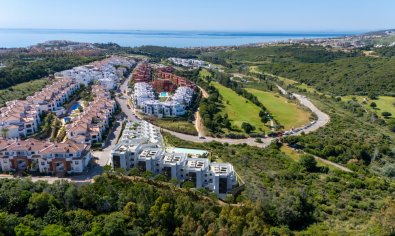
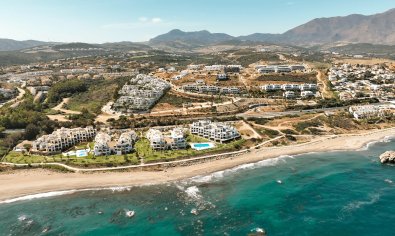
Casares Costa occupies roughly two kilometres of Mediterranean shoreline between Estepona and Manilva.
Modern developments, beaches and a large international residential community dominate the landscape.
It feels almost unrelated to the white mountain village above.
Torre de la Sal
The main historic landmark on the coast is the Torre de la Sal.
Emperor Charles V ordered a defensive tower to be built here in 1528 to protect the coastline from piracy. Its square plan and two-storey construction give it the appearance of a compact fortress beside the sea.
A nearby saltworks later gave the tower its current name.
Four beaches
The municipality officially lists Playa Ancha, Piedra Paloma, Playa Chica and Playa de la Sal.
Playa Ancha is approximately 1.3 kilometres long and 50 metres wide, with a promenade and public services.
Piedra Paloma includes a designated dog beach, while Playa Chica and Playa de la Sal occupy the more rugged coastline around the historic tower.
Three centres, three lifestyles
Casares officially contains three population centres.
Casares Pueblo provides historic village and mountain life.
Casares Costa provides beach, modern residential developments and easy orientation towards Estepona and Manilva.
El Secadero lies inland towards the Guadiaro valley and offers a third, quite different residential environment.
This is why Casares should never be treated as one single property market.
Living in Casares Pueblo
The village is suited to buyers actively seeking a traditional Andalusian environment.
White houses, views, historic streets and mountain scenery become part of everyday life.
So do the gradients.
Parking directly outside the property is not always possible, and some homes can only be reached via steps or pedestrian lanes.
Historic protection matters
Casares historic centre is protected as a Bien de Interés Cultural.
That protects its visual identity but can also affect renovation.
Anyone buying an older house should investigate not only its structural condition but also what changes will actually be permitted.
A renovation bargain is only a bargain if the intended work is legally achievable.
Living on Casares Costa
The coastal market is completely different.
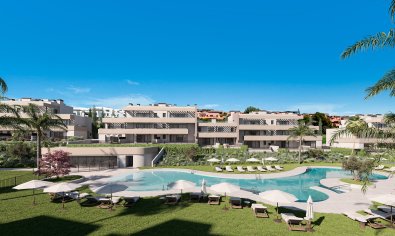
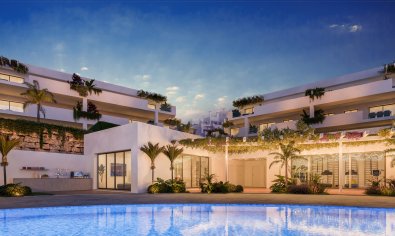
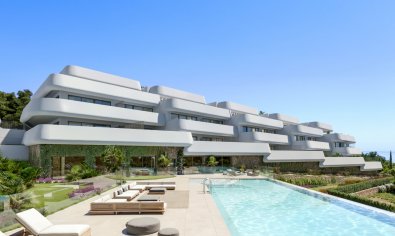
Modern apartments, communal pools, garages and large terraces are far more common.
Daily life tends to be linked with the A-7, Estepona and Manilva rather than the mountain village.
A Casares postal address therefore does not necessarily mean village life.
Casares Pueblo or Estepona?
Estepona offers a complete coastal city with a harbour, beaches, extensive shopping and a large walkable centre.
Casares Pueblo offers a smaller mountain community and a far quieter environment.
For urban convenience, Estepona is the easier choice.
For buyers deliberately seeking a white Andalusian village, Casares offers something completely different.
Buying property in Casares
The first question should always be:
Casares Pueblo, Casares Costa or El Secadero?
Then consider the individual property.
In the village: parking, gradients, condition and historic restrictions.
In rural areas: access, land classification and registration.
On the coast: community fees, garage, pools, A-7 access and true walking distance to the beach.
Why Casares Pueblo is worth discovering
Walk up through the village towards the castle and take time to enjoy the setting.
Visit the Blas Infante Cultural Centre and his birthplace.
Save another day for Sierra Crestellina and the Baños de la Hedionda.
Then drive all the way down to the Mediterranean and Torre de la Sal.
Only then does Casares really make sense.
A medieval fortress, a Roman city that minted its own coins, sulphurous springs, griffon vultures, flamenco, Blas Infante and Mediterranean beaches all within one municipality.
Greetings from Casares Pueblo!