

Greetings from San Pedro de Alcántara: beach, Romans and an unusual beginning
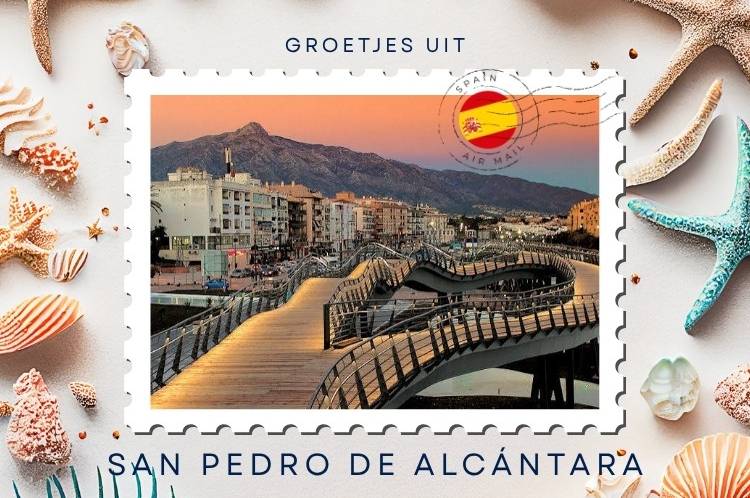
Greetings from San Pedro de Alcántara: beach, Romans and an unusual beginning
Between Marbella and Estepona lies San Pedro de Alcántara. It feels like an independent coastal town, although administratively it belongs to Marbella municipality.
Its modern origins are highly unusual. Rather than developing gradually around a medieval settlement, San Pedro was largely created as a planned agricultural colony from 1860, promoted by Manuel Gutiérrez de la Concha, the first Marquis of Duero.
Discover the Costa del Sol with Casas Palmeras
A town designed around agriculture
The Marquis combined several estates into one enormous agricultural enterprise.
Wetlands were drained, hydraulic infrastructure was built and modern machinery was introduced. Sugar cane became particularly important, alongside crops including cotton.
Homes and services were then constructed for the workers.
San Pedro was therefore simultaneously a settlement, farm and industrial experiment.
Why the streets are so straight
The original colonial plan survives in areas around Plaza de la Iglesia and streets including Lagasca and Pizarro.
The relatively regular grid contrasts strongly with the winding streets of historic Andalusian hill towns.
Efficiency was more important here than medieval defence.
Sugar shaped the early town
Sugar cane required industrial processing, leading to the development of mills and factories.
The modern district name El Ingenio still recalls that sugar industry.
The original agricultural landscape has almost disappeared beneath modern San Pedro, but names and surviving industrial buildings preserve its memory.
The Trapiche de Guadaiza came first
Industrial activity actually began before San Pedro itself.
In 1827, Juan Bautista Lesseps established a sugar factory at Guadaiza.
The site later became part of the Marquis of Duero's much larger agricultural experiment.
A pioneering agricultural school
In 1861, the former industrial site became the Granja Modelo or School for Agricultural Foremen.
Workers received specialist training while new agricultural machinery and techniques were tested. Marbella's heritage service describes the project as pioneering within Spain.
The restored complex now serves a cultural function.
A young town on very ancient ground
The strange thing about San Pedro is that its modern history begins in the nineteenth century while its coastal archaeology reaches back almost two thousand years.
At Guadalmina Baja stand the Roman Baths of Las Bóvedas.
Current municipal dating places the building in the second century AD.
An exceptional Roman building
Las Bóvedas has a remarkably precise geometric design.
Seven high vaulted rooms surround a central octagonal space. Considerable sections of the original structure still stand.
This makes the site far easier to visualise than Roman ruins consisting only of foundations.
Hot, warm and cold baths
Roman bath complexes normally offered different water temperatures.
Historical interpretation of Las Bóvedas includes hot, warm and cold bathing areas together with a hypocaust, the Roman system that moved heat beneath floors and through walls.
The exact wider context of the building is still being studied.
It may have belonged to a substantial settlement or a particularly prestigious private complex.
Was this Cilniana?
Las Bóvedas and other archaeological remains in the area have long been connected with a possible Roman settlement known as Cilniana.
The identification remains a hypothesis rather than an absolute archaeological certainty.
What is certain is that this coastline supported a substantial Roman presence.
Vega del Mar early Christian basilica
Nearby is the Vega del Mar Early Christian Basilica.
The church was used approximately between the fifth and seventh centuries and had three naves with two opposing apses.
Beside one of them is an unusually well-preserved baptismal pool.
Full-immersion baptism
The cross-shaped font is around 1.10 metres deep.
New Christians were therefore probably baptised by immersion.
It provides an unusually direct connection with early Christian ritual on the Iberian Peninsula.
Almost two hundred burials
A substantial cemetery surrounded the church.
Archaeologists have excavated roughly 200 graves, currently dated across a broad period from the third to seventh centuries.
Objects included jewellery, buckles, ritual vessels and funerary inscriptions.
One of the best-known inscriptions commemorates a young girl called Firmana.
Plaza de la Iglesia
The modern centre still revolves around Plaza de la Iglesia.
The square formed part of the original agricultural colony and is now surrounded by cafés, shops and pedestrian streets.
The parish church is dedicated to the saint who gave the new settlement its name.
Who was Saint Peter of Alcántara?
Pedro de Alcántara was born in Extremadura in 1499.
He became an influential Franciscan reformer, spiritual writer and associate of Teresa of Ávila. He died in 1562 and was canonised in 1669.
His feast day falls on 19 October.
The saint's image is carried through central San Pedro during the annual fair.
October Fair
The traditional fair takes place around the patron saint's feast.
A daytime fair fills parts of the centre and Boulevard while evening activity moves to the dedicated fairground, with music, food, concerts and attractions.
Preparations for the 2026 edition are already under way, although the complete programme had not yet been published by late August.
The Boulevard transformed the town
One of San Pedro's biggest modern changes came when through traffic on the coastal road was placed underground.
Above it, the municipality created the San Pedro Boulevard, officially opened in December 2014.
A former traffic barrier effectively became a large public park.
From cars to pedestrians
Green spaces, playgrounds, paths, restaurants and distinctive modern footbridges now fill the Boulevard.
The council reported around 20,000 people attending the opening.
For residents, however, its most important role is practical.
It reconnects neighbourhoods that were previously divided by heavy road traffic.
Nueva Alcántara
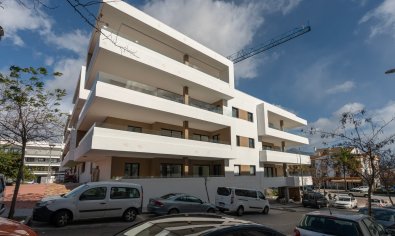
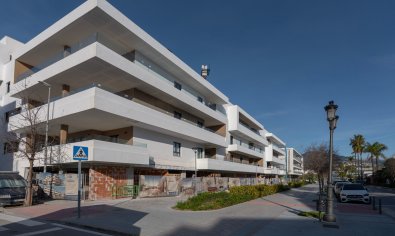
Between the Boulevard and the sea lies Nueva Alcántara.
Modern apartment complexes, gardens, communal pools and underground parking are common.
Its location can be particularly convenient for permanent living.
Depending on the exact street, both the centre and beach can be reached on foot.
The beach is separate from the historic centre
This geographical point is worth understanding.
San Pedro is a coastal town, but Plaza de la Iglesia does not sit directly on the seafront.
A substantial residential zone lies between the commercial centre and Mediterranean promenade.
Buyers wanting both within comfortable walking distance should therefore look carefully at the area between them.
San Pedro promenade
The Paseo Marítimo de San Pedro Alcántara extends for several kilometres.
It connects with other coastal areas towards Puerto Banús and Marbella.
For walkers, runners and cyclists, this is one of San Pedro's strongest lifestyle advantages.
Walking to Puerto Banús
Puerto Banús may feel like a completely different world, but along the coastline it is surprisingly close.
The coastal route passes Cortijo Blanco and continues towards the famous marina.
Residents can therefore use Puerto Banús without necessarily living in its busiest and most expensive immediate surroundings.
Cortijo Blanco
Cortijo Blanco lies east of San Pedro towards Puerto Banús.
Villas, apartments and low-rise developments sit close to its own beach and the coastal promenade.
It often feels quieter and more residential than central San Pedro.
At the same time, both town and marina remain close.
Guadalmina Baja
West of the centre lies Guadalmina.
Guadalmina Baja sits on the Mediterranean side of the A-7 and contains villas, apartments and established higher-end residential areas.
The Roman baths and much of San Pedro's archaeological heritage are also found in this broader coastal district.
Guadalmina Alta
Across the main road, Guadalmina Alta is much more strongly associated with golf.
Apartments, townhouses and villas sit among greener residential surroundings.
The lifestyle is less urban and generally more dependent on a car.
“Guadalmina” should therefore never be treated as one single property location.
Three Gardens Park
San Pedro also has substantial green spaces away from the coast.
The Parque de los Tres Jardines opened in 2012 with approximately 95,000 square metres and more than 10,000 plants.
For families and permanent residents, facilities like this can matter far more than they do during a short holiday visit.
A genuine year-round community
San Pedro does not close when summer ends.
Schools, shops, sports facilities, healthcare, restaurants and local administration support a large permanent population.
That makes it very different from purely seasonal resort developments.
San Pedro or Marbella?
Marbella has a much larger historic centre, marina, shopping areas and a more intense international city atmosphere.
San Pedro is smaller and more residential.
Puerto Banús lies between the two.
It is therefore possible to enjoy Marbella's facilities while returning home to a quieter everyday environment.
San Pedro or Benahavís?
The contrast is considerable.
Benahavís means mountains, golf, nature and greater car dependence.
San Pedro offers flatter terrain, beaches, shops and walkability.
Anyone wanting to walk to the Mediterranean each morning is generally more likely to prefer San Pedro.
San Pedro or Estepona?
Estepona is an independent coastal city with a substantial old centre, harbour and long promenade.
San Pedro is more compact and far more closely connected with Marbella and Puerto Banús.
For someone whose daily life revolves around Marbella, San Pedro can therefore be particularly practical.
Living in central San Pedro
Central San Pedro suits anyone wanting to do much of everyday life on foot.
Shops, supermarkets, schools, cafés and the Boulevard are close together.
Housing is dominated by apartments with some older town properties.
Parking deserves particular attention in older streets.
Living in Nueva Alcántara
Nueva Alcántara offers one of the most practical compromises for permanent residents.
Many buildings are newer and include lifts, garages, pools and landscaped communal areas.
At the right address, both beach and town centre remain within walking distance.
That is a major advantage over hillside golf developments.
Living in Cortijo Blanco
Cortijo Blanco is attractive for buyers wanting a more residential coastal atmosphere.
Villas and low-rise housing are easier to find while Puerto Banús remains close.
Prices naturally reflect the desirable coastal location.
Living in Guadalmina
Always distinguish Alta from Baja.
Baja for beaches, villas and the coastal lifestyle.
Alta for golf and greener inland surroundings.
Two properties with similar floor areas can produce completely different daily lifestyles simply because they sit on opposite sides of the A-7.
Buying property in San Pedro de Alcántara
We would begin with five areas:
central San Pedro, Nueva Alcántara, Cortijo Blanco, Guadalmina Baja and Guadalmina Alta.
Choose the centre or Nueva Alcántara for walkability.
Consider Cortijo Blanco or Guadalmina Baja for villas close to the Mediterranean.
Look towards Guadalmina Alta for golf and a quieter residential setting.
Only then compare individual properties.
Community fees
Many apartments are inside developments with gardens, pools, lifts and underground parking.
Always check community fees, planned works and special assessments.
Older buildings deserve particular attention to façades, lifts, roofs and installations.
Holiday rentals
San Pedro belongs to Marbella municipality.
Anyone buying with tourist rental income in mind must therefore check current Andalusian rules, Marbella's municipal requirements and the rules of the community of owners.
Projected rental figures are meaningless if the particular property cannot legally be used as intended.
Why San Pedro de Alcántara is worth discovering
Start in Plaza de la Iglesia and walk the unusually straight streets of the nineteenth-century colony.
Visit the Trapiche de Guadaiza to understand its industrial origins.
Then head towards the coast for the Vega del Mar Basilica and Las Bóvedas, both of which remain part of Marbella's heritage visitation programme.
Finish on the Mediterranean promenade and simply continue towards Puerto Banús.
The contrast tells the whole story.
A planned 1860 agricultural colony built on land inhabited since Roman times, sugar factories, an early Christian basilica, a modern green Boulevard and a coastline connected on foot with Puerto Banús and Marbella.
Greetings from San Pedro de Alcántara!