

Greetings from Benahavís: food, nature and luxury living
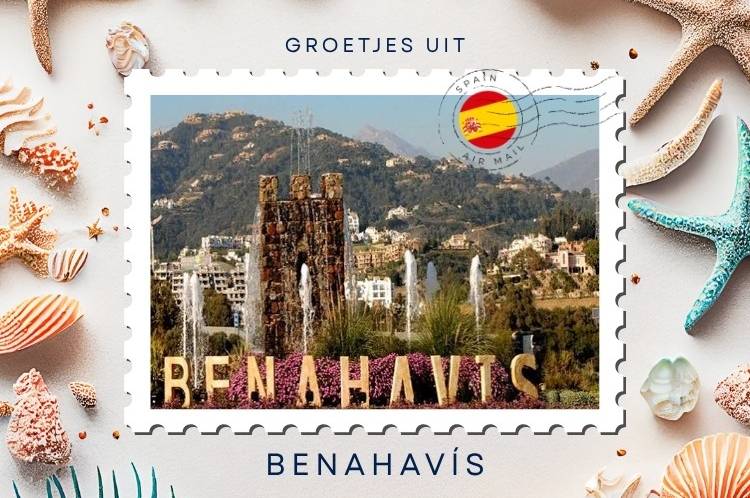
Greetings from Benahavís: food, nature and luxury living
Between Marbella and Estepona, a few kilometres inland from the Mediterranean, lies Benahavís. Its small village centre contains white houses, narrow Andalusian streets and sunny squares, but the municipality surrounding it is surprisingly large and mountainous. Covering around 145 square kilometres, Benahavís extends deep into the foothills of the Serranía de Ronda.
This distinction is essential for property buyers. A Benahavís address can mean a townhouse beside village restaurants, an apartment on a golf course or an enormous villa inside a private gated estate.
Discover the Costa del Sol with Casas Palmeras
A remarkably international municipality
Benahavís had 9,765 registered residents in 2025.
Of these, 6,044 were foreign nationals, with British residents forming the largest international group.
The municipality is therefore extraordinarily international.
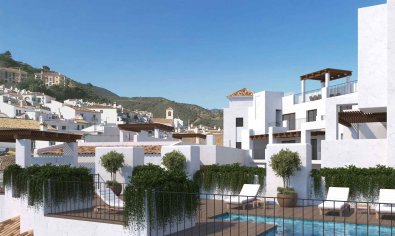
The historic village itself still feels relatively small and Andalusian, while much of the foreign population is dispersed across residential developments.
The origins of Benahavís
The name is generally connected with the Berber Banu Habis tribe.
The settlement developed during the Andalusian period under the protection of a major hilltop fortress. Official tourism information describes Benahavís as having been founded under a 10th-century Arab stronghold.
Its narrow white streets still preserve something of that historical layout.
Montemayor Castle
The great defensive site is Castillo de Montemayor, approximately 579 metres above sea level.
Known historically as Hisn Munt Mayur, the fortress controlled settlements and territory associated with medieval Marbella.
A modern hiking route of roughly 6.5 kilometres climbs from the village towards the ruins.
More than one hundred kilometres of coastline
The strategic view was extraordinary.
Regional tourism information states that more than 100 kilometres of coastline can be seen from the castle area and that the North African coast becomes visible on clear days.
Today this makes an exceptional viewpoint.
During the Middle Ages, it made Montemayor an extremely valuable military position.
Medieval conflict
The fortress became involved in political struggles between Málaga and Algeciras during the eleventh century.
In 1273, Marinid forces occupied Marbella, Montemayor and Málaga while intervening in the affairs of the Kingdom of Granada.
The stronghold remained important until the final Christian advance into the region.
The conquest of 1485
Benahavís and Montemayor surrendered following the fall of Marbella in 1485.
In 1492, Marbella and Benahavís were granted to Juan de Silva, Count of Cifuentes, in recognition of his services during the conquest of Granada.
Benahavís subsequently remained administratively connected with Marbella.
Independence in 1572
King Philip II granted Benahavís independent municipal status in 1572.
The settlement was therefore separated from Marbella.
Considering the enormous area controlled by modern Benahavís, this seemingly small administrative event had lasting significance.
A white mountain village
The charm of the historic centre comes from the overall streetscape rather than one enormous monument.
White façades, flowers, narrow lanes and small squares retain a strongly Andalusian atmosphere.
The rivers and surrounding vegetation also make the area feel significantly greener than many coastal developments.
Rivers through the municipality
The Guadalmina, Guadaiza and Guadalmansa all pass through the wider municipality.
River woodland, reservoirs, ravines and mountain landscapes create excellent habitats for wildlife and extensive outdoor recreation.
The Guadalmina has become particularly closely associated with Benahavís's walking routes.
A thousand-year-old irrigation channel
The Guadalmina Acequia Trail follows an historic irrigation system.
More than ten centuries ago, Andalusian communities channelled part of the river to irrigate farmland and supply rural settlements. The modern acequia follows that historic water route and has been adapted for walkers.
The route is approximately 4.3 kilometres, relatively easy and includes a wooden bridge across the Angosturas canyon.
History here still physically follows the flow of water through the landscape.
The Angosturas gorge
The river becomes far more dramatic in the Angosturas del Río Guadalmina.
Narrow rock walls, natural pools and small waterfalls create a popular aquatic route.
The official route is approximately 4.5 kilometres and graded moderate.
Swimming ability and suitable footwear are essential, while helmets and protective equipment are recommended.
Charco de las Mozas
The well-known Charco de las Mozas lies at the start of the gorge route.
Municipal tourism information identifies it as one of Málaga's most visited freshwater routes.
It becomes especially popular during summer.
Natural conditions can obviously change, so it should be treated as a genuine river environment rather than a managed swimming pool.
Dragonfly Trail
A gentler alternative is the Guadalmina Dragonfly Trail.
This roughly 3.5-kilometre walk follows the river and reservoir through Mediterranean vegetation.
Benahavís supports 32 of the 54 dragonfly species recorded in Málaga province, and up to 28 species can potentially be encountered along the route at different times of year.
It is an unexpectedly rich natural environment so close to the developed Costa del Sol.
Nature beside extreme luxury
That contrast defines modern Benahavís.
Official tourism promotion deliberately combines the white village and its natural landscape with luxury residential developments and golf courses integrated into the foothills of the Serranía de Ronda.
Within a few kilometres you can move from a riverside trail to some of southern Spain's most exclusive residential addresses.
La Zagaleta
The best-known luxury name is probably La Zagaleta.
The private estate contains large properties, extensive facilities and two golf courses. Its first course opened in 1994.
Living here has almost nothing in common with living in the village.
Privacy, large plots and private transport dominate everyday life.
Golf country
Benahavís is one of the major golf municipalities of the western Costa del Sol.
Well-known names include Los Arqueros, La Quinta, El Higueral, Marbella Club Golf Resort and La Zagaleta. Los Arqueros was designed by Severiano Ballesteros and opened in 1991.
Golf has consequently shaped a large part of the modern residential market.
Many properties are organised around courses and gated developments rather than traditional town centres.
Benahavís on the address, Marbella in daily life
This is a crucial property detail.
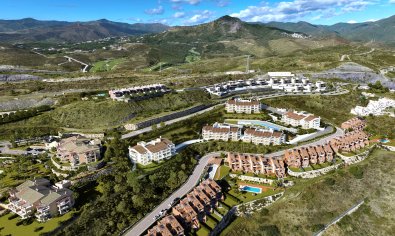
Some developments within Benahavís municipality sit far closer to Marbella and San Pedro de Alcántara than to Benahavís village.
Residents may therefore shop, work, eat and attend school almost entirely around Marbella while technically living in Benahavís.
The municipality alone tells you very little about the actual lifestyle.
Famous for food
Benahavís has built an extraordinary gastronomic reputation.
Its own tourism office promotes the village as “the dining room of Andalusia” and traces the major development of its restaurant scene to the 1970s.
The concentration of restaurants in such a small village centre is striking.
People regularly drive inland from Marbella and Estepona specifically for dinner.
Mountain cuisine
Traditional food reflects the inland landscape.
The tourism authority identifies seasoned pork tenderloin as the most characteristic local dish, alongside lamb, venison, suckling pig, partridge and rabbit.
It is very different from the sardine espetos associated with the Málaga coastline.
The Mediterranean still reaches the menu
The sea is close enough to influence the food too.
Fish and seafood stews, sole and numerous international cuisines sit alongside the mountain dishes.
Modern Benahavís therefore combines Serranía cooking with the Mediterranean and its large international population.
A hospitality school of its own
The municipality has also invested directly in culinary training.
Its Hospitality School trains young kitchen and restaurant professionals.
In April 2026, the school hosted the Andalusian semifinal of the MGA Gastronomic Awards, bringing students together from across the region.
Food is not simply a tourism slogan here; it is part of the local economy and education system.
Benahavís Fair
The 2026 Benahavís Fair and Festivities took place from 13 to 16 August.
The compact village becomes considerably busier during the celebrations.
Anyone considering a permanent home in the centre should experience both this peak period and a quiet winter weekday.
Virgen del Rosario
The parish patron is Nuestra Señora del Rosario, celebrated on 7 October.
The historic parish church dates from the eighteenth century.
Current diocesan information notes building works affecting the church, so anyone specifically wishing to visit should check its latest status.
This is not a beach town
Benahavís itself is inland.
Official tourism information gives distances of around 13 kilometres to Puerto Banús, 22 kilometres to Marbella and 23 kilometres to Estepona from the village.
Anyone wanting to walk from home directly onto a Mediterranean promenade should look elsewhere.
Anyone preferring mountains and privacy with the sea still within driving distance may find Benahavís ideal.
Access to Marbella and Estepona
The A-7175 links the village with the coastal A-7 and AP-7.
From there Marbella, Puerto Banús and Estepona are readily accessible.
Málaga Airport is around 70 kilometres away according to the tourism authority.
For most permanent residents, a car is realistically essential.
Living in Benahavís Pueblo
The village centre suits buyers who value character and walkability.
Restaurants, some shops, sports facilities and nearby trails can all be reached relatively easily.
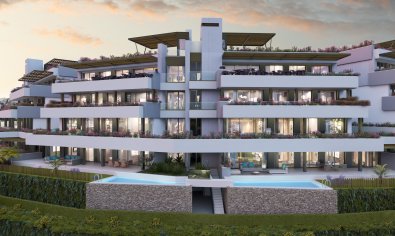
Apartments, townhouses and traditional village homes form much of the local market.
This is the most direct way to experience everyday village life.
Los Arqueros and La Quinta
Areas such as Los Arqueros and La Quinta offer an entirely different environment.
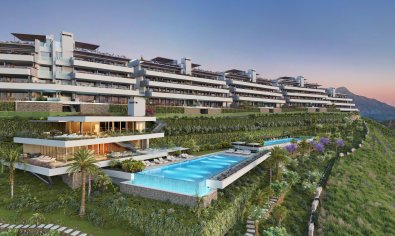
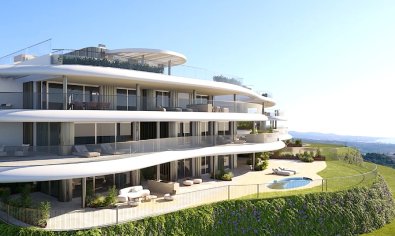
Apartments, townhouses and villas sit around golf courses and hills.
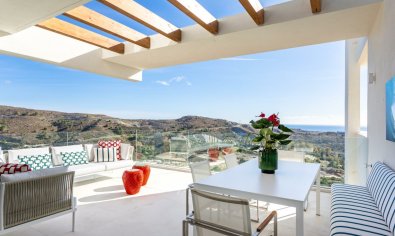
Sea views can be excellent, but car dependence increases considerably.
Daily life may also be far more closely connected with Marbella than with Benahavís village.
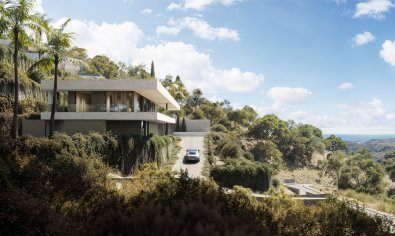
The luxury end of the market
At the highest end sits La Zagaleta.
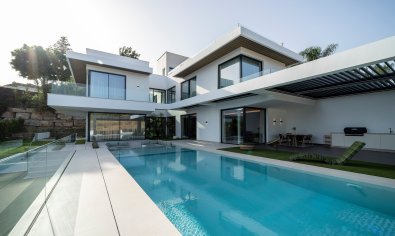
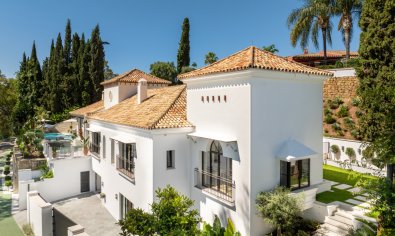
Large detached villas, extensive plots and privacy define the estate.
The contrast with a small village apartment could hardly be greater.
Benahavís should therefore never be treated as one uniform property market.
Benahavís or Marbella?
Marbella offers beaches, city services, shopping and a much larger urban environment.
Benahavís offers mountains, greenery, privacy and space.
In some residential developments, however, the lifestyles overlap so strongly that the municipal boundary is almost irrelevant.
Villa buyers should often explore both before deciding.
Benahavís or Estepona?
Estepona offers a genuine coastal centre, harbour and promenade.
Benahavís offers the mountain environment.
For a walkable apartment lifestyle, Estepona may be the more practical option.
For golf, villas and privacy, Benahavís can be far more attractive.
Buying property in Benahavís
Start by choosing the location, not the house.
Choose the village for restaurants and walkability. Look towards the Marbella side of the municipality for convenient coastal connections. Consider more remote and exclusive developments when privacy and land matter most.
Then compare the individual properties.
In urbanisations, check community fees and precisely what services they cover.
For villas, confirm the legal registration of the house, pool, extensions and outbuildings before completing the purchase.
Why Benahavís is worth discovering
Start in the white village and stay for lunch.
Then walk the Guadalmina Acequia or the easier riverside trail.
Save another morning for the climb to Montemayor Castle.
Finally, drive through several of the residential areas towards Marbella.
Only then does the full scale of Benahavís become obvious.
A 10th-century fortress above the mountains, thousand-year-old irrigation channels, river gorges, remarkable wildlife, a village famous for food and some of the Costa del Sol's most exclusive residential estates.
Greetings from Benahavís!