



Greetings from La Cala de Mijas: beach, fishing heritage and Mediterranean life
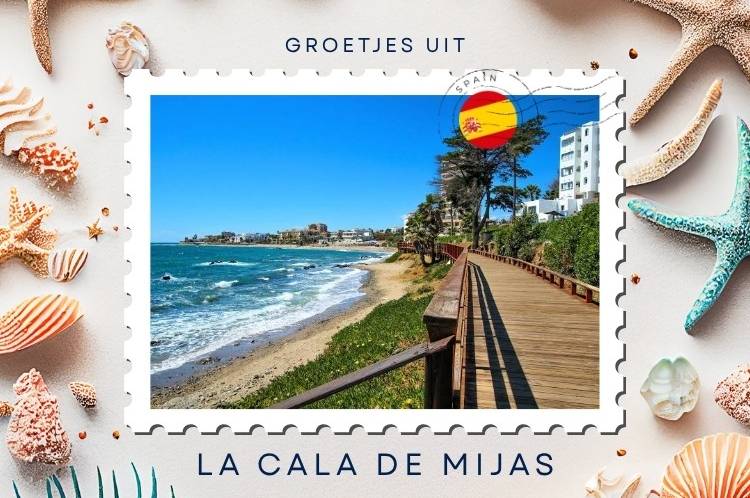
Greetings from La Cala de Mijas: beach, fishing heritage and Mediterranean life
At the centre of Mijas's roughly 12-kilometre coastline lies La Cala de Mijas. Coming directly from Mijas Pueblo, the contrast is striking. Steep white mountain streets are replaced by a relatively level coastal centre with a sandy beach, promenade, shops, restaurants and residential neighbourhoods.
Despite its modern international character, La Cala still has an important fishing heritage.
Discover the Costa del Sol with Casas Palmeras
From fishing community to international coastal town
Modern La Cala expanded dramatically with the growth of Costa del Sol tourism and residential development.
Before that transformation, fishing and agriculture played much more important roles.
The local interpretation centre preserves traditional boats and fishing equipment connected with the former community, including jábegas, traiñas, sardinales and pateras.
The modern town therefore grew around an existing coastal settlement rather than appearing on an empty stretch of beach.
La Cala Tower
The defining historic monument is the Torreón de La Cala, officially the old Cala del Moral battery tower.
The present structure was built in 1773 and was equipped with two heavy cannons shortly afterwards. Its unusual horseshoe form rises more than ten metres and once included an ammunition store, living spaces and a defensive roof terrace.
It belonged to the extensive coastal defence system of the former Kingdom of Granada.
A coast threatened by piracy
Following the Christian conquest, attacks from North African ports made coastal settlement dangerous.
Watchtowers were therefore constructed and strengthened between the sixteenth and eighteenth centuries.
Mijas still has historic examples at La Cala, Calaburras, Calahonda and Torrenueva.
What are now picturesque heritage monuments were once essential military infrastructure.
Soldiers and cannons
A document from 1830 records a garrison at La Cala consisting of a corporal, three tower keepers and six soldiers.
The battery carried artillery at different moments in its history and underwent numerous repairs.
During the twentieth century it was even used as a private home before eventually being restored by Mijas council.
Watchtowers Interpretation Centre
The Torreón normally houses the Watchtowers Interpretation Centre.
Its exhibitions focus on coastal defence, General Torrijos and La Cala's traditional fishing community.
The official tourism website currently marks the centre as temporarily closed, so anyone specifically wishing to go inside should check its status before visiting.
General Torrijos landed on the Mijas coast
In December 1831, liberal general José María de Torrijos landed with his supporters at Playa del Charcón in Mijas.
His aim was to organise an uprising against Ferdinand VII's absolutist government and defend constitutional rule.
The expedition crossed Mijas but was surrounded and captured near Alhaurín de la Torre. Torrijos and his companions were executed without trial on Málaga's San Andrés beach on 11 December 1831.
The Torreón museum preserves the story of this dramatic episode.
Literature remembers Torrijos too
Torrijos subsequently became an important symbol in Spanish liberal history.
The interpretation centre uses documents and illustrations to explain his route and also refers to literary works by Federico García Lorca and José de Espronceda.
It is a surprisingly political story to discover in what now appears to be a relaxed international seaside town.
La Cala Beach
The central beach is approximately 1,258 metres long and 38 metres wide on average.
It has fine sand, straightforward pedestrian, road and bus access and facilities for visitors with reduced mobility.
The town centre sits immediately behind the beach.
For permanent residents, this means the Mediterranean can genuinely become part of everyday life rather than an occasional car journey.
A practical coastline
La Cala does not offer the dramatic cliffs and small coves found around Nerja.
Its strength is different.
Broad accessible beaches, a relatively flat promenade and long walking routes make everyday coastal life easier.
For families, older residents or anyone who dislikes steep gradients, this can be a significant advantage.
The Coastal Path
The Senda Litoral, or Coastal Path, has transformed access along Mijas's shoreline.
The route links beaches, historic watchtowers, natural areas, restaurants and residential developments.
Pedestrians have priority and bicycle access is restricted during certain times.
For residents it functions as much more than a tourist attraction.
New section opened in 2026
In June 2026, a new approximately 700-metre section between La Cala and El Sheriff opened to the public.
The project is part of the wider plan to connect virtually the entire Mijas coastline with the route.
Each missing section that is completed makes coastal walking increasingly practical for local residents.
El Bombo and Torrenueva
East of central La Cala, the coastline continues towards El Bombo and Torrenueva.
The dense town centre gradually gives way to apartment developments and quieter residential areas.
Depending on the exact location, residents can remain within walking distance of La Cala using the Coastal Path.
This can provide an attractive compromise between convenience and peace.
La Cala is not the whole of Mijas Costa
Property descriptions sometimes blur this distinction.
La Cala is the actual town centred on the Torreón and main beach.
Torrenueva, Miraflores, Riviera del Sol and Calahonda are also part of coastal Mijas, but they sit at different distances from La Cala.
A property advertised as “La Cala/Mijas Costa” should therefore always be checked carefully on a map.
Mediterranean life below the surface
The Mijas coastline also contains valuable underwater habitats.
The waters around Calahonda include protected Posidonia oceanica seagrass meadows, gorgonians and numerous Mediterranean species. Cetaceans are also recorded offshore.
This coastline is therefore more ecologically interesting than the urban development above water may initially suggest.
Fishing heritage
Traditional fishing shaped generations of life in La Cala.
The local heritage collection highlights boats including the jábega, traiña and sardinal.
The most visible continuation of that maritime identity takes place each July.
Virgen del Carmen
Every 16 July, La Cala celebrates the patron saint of fishermen and sailors.
In 2026, Mass at Santa Teresa church was followed by a procession through the streets towards the beach.
The most emotional moment came when the bearers carried the statue directly into the Mediterranean.
It remains one of the town's strongest local traditions.
La Cala Fair
Only a few days later comes the Feria de La Cala.
The 2026 fair ran from 21 to 26 July, combining daytime festivities, concerts, children's activities and the fairground.
The opening proclamation took place by the Torreón before the official lighting of the fairground.
Late July is consequently one of the liveliest periods of the year.
Sport is part of the fair too
The traditional fair sports tournament attracted around 900 competitors in 2026.
Football, tennis, golf and footgolf were all included.
This gives the celebrations a strong community element beyond concerts and fairground rides.
Markets every Wednesday and Saturday
La Cala's large open-air market takes place on Wednesday and Saturday mornings, normally from around 9am to 2pm at the fairground.
Clothing, footwear, household goods, flowers, fruit, vegetables, olives and many other products fill the stalls.
For permanent residents it becomes part of the weekly routine rather than merely something to visit on holiday.
Organic market
An organic-produce market is also held on the second and last Sunday of each month on La Cala Boulevard.
Regular events such as these reinforce the town's genuine year-round residential character.
Santa Teresa Church
The Church of Santa Teresa de Jesús serves an extensive parish covering dozens of coastal developments.
Its enormous parish area illustrates just how dramatically the population around the former fishing settlement has expanded.
Sardine espetos
Food naturally maintains a strong connection with the sea.
Sardine espetos, fried fish and anchovies are staples in the beachfront chiringuitos.
After several kilometres on the Coastal Path, few meals feel more appropriate.
International food as well
Modern La Cala is also exceptionally cosmopolitan.
British, Scandinavian, Italian, Asian and other international restaurants sit beside Spanish and Andalusian establishments.
Anyone looking for a completely traditional village may prefer inland Málaga.
Anyone valuing choice and an easy international transition may consider this diversity a major benefit.
A practical year-round town
Supermarkets, shops, pharmacies, restaurants, schools and everyday services allow many residents to manage much of daily life without leaving La Cala.
That is a major advantage over coastal urbanisations where almost every errand requires a car.
A centrally located resident can walk surprisingly often.
Relatively level ground
The central coastline is also far flatter than Mijas Pueblo.
Walking to the beach, shops and restaurants is therefore considerably easier.
Move inland, however, and the land begins to rise quickly.
Newer residential developments may provide excellent views while reintroducing steep roads and car dependence.
The A-7
The major A-7 coastal road makes La Cala easy to reach from Fuengirola and Marbella.
It can also act as a physical barrier between neighbourhoods.
When viewing property, check exactly which side of the A-7 you are on and how pedestrians reach the centre or beach.
Straight-line distance can be misleading.
No railway station
Unlike Fuengirola, La Cala has no Cercanías railway station.
Residents using the train towards Málaga and the airport generally first travel to Fuengirola.
Several bus routes link La Cala with Fuengirola, Marbella and Calahonda, and a new direct M-060 route between Fuengirola, La Cala and Marbella began operating in December 2025.
Anyone planning to live without a car should examine those daily routes carefully.
Golf
The wider municipality of Mijas is heavily associated with golf.
Municipal tourism promotion groups the many courses under the Mijas Sol y Golf brand.
Inland golf resorts have also driven substantial residential development behind the coastline.
La Cala or Mijas Pueblo?
These two centres provide almost opposite lifestyles.
Mijas Pueblo means historic white streets, mountain scenery and panoramic views.
La Cala means beach, flatter terrain, coastal walking and greater everyday practicality on foot.
They belong to the same municipality but should never be treated as interchangeable property locations.
Living in central La Cala
The centre is ideal for anyone prioritising walkability.
Beach, restaurants, shops and the market are close together.
Most housing consists of apartments with some traditional low-rise properties.
Summer activity is naturally much greater, so serious buyers should visit both in high season and during quieter months.
El Bombo and nearby areas
El Bombo and Torrenueva can offer a more residential atmosphere without moving too far from town.
The Coastal Path makes some locations particularly attractive for walking into La Cala.
Always test the actual walk before assuming a property is genuinely convenient without a car.
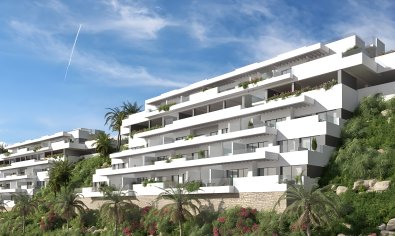
Hillside developments
Move inland and newer apartment and villa developments become more common.
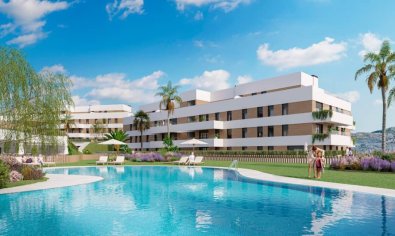
Large terraces, communal pools, underground parking and panoramic sea views are major selling points.
The trade-off is usually car dependence and steeper access.
Sea view and walking distance are not automatically the same thing.
Buying property in La Cala de Mijas
We would first choose between central town, immediate coastline and elevated residential areas.
Apartment buyers should review community fees, lifts, garages, maintenance and planned communal works.
For new developments, everyday access deserves as much attention as the view.
Anyone planning holiday rentals should verify current Andalusian, municipal and community-of-owners regulations before relying on projected rental income.
Why La Cala de Mijas is worth discovering
Start at the Torreón and imagine the soldiers and cannons that once protected this coastline.
Then follow the Coastal Path towards El Bombo.
Return through the centre and, if it is Wednesday or Saturday, visit the open-air market.
On another day, drive up to Mijas Pueblo and experience just how different two parts of the same municipality can be.
And if you can choose one especially meaningful date, visit on 16 July.
When the Virgen del Carmen leaves the church, crosses the modern international town and is finally carried into the Mediterranean, the old fishing identity of La Cala suddenly becomes visible again.
An eighteenth-century cannon tower, traditional fishing boats, a liberal general who landed nearby, an ever-growing coastal path, two weekly markets and a town whose everyday life still faces towards the sea.
Greetings from La Cala de Mijas!