



Greetings from Rincón de la Victoria: caves, sea and history

Greetings from Rincón de la Victoria: caves, sea and history
Around 15 kilometres east of Málaga lies Rincón de la Victoria, one of the principal residential municipalities of the Costa del Sol-Axarquía. At first sight, long beaches, apartment buildings and promenades dominate the landscape. Beneath that modern coastline, however, is a history stretching from Neanderthals and prehistoric cave art to Phoenicians, Romans, medieval Al-Andalus and fishing communities.
The municipality now has well over 50,000 permanent residents. The municipal register recorded 53,059 people in March 2025, making this far more than a seasonal seaside resort.
It is also important to understand that the municipality contains four different settlements: La Cala del Moral, Rincón de la Victoria, Torre de Benagalbón and inland Benagalbón. The three coastal centres have effectively grown into one continuous urban strip, while Benagalbón retains a much more traditional inland character.
Discover the Costa del Sol with Casas Palmeras
History begins underground
The cliffs of El Cantal contain an extraordinary cave system.
The best-known sites are the Treasure Cave and Victoria Cave. Archaeological evidence demonstrates human use from the Middle and Upper Palaeolithic through later Neolithic and Copper Age periods.
Rock art, archaeological remains and evidence of both Neanderthal and Homo sapiens occupation make this coastline one of the municipality's most important historical landscapes.
The Treasure Cave
The Cueva del Tesoro, or Treasure Cave, is the best-known natural attraction.
The local tourism authority describes it as one of only three known caves in the world with a particularly important marine origin, its rock having first been shaped by seawater before later geological uplift placed it above the present coastline.
Underground lakes and water-eroded galleries create a very different environment from conventional limestone caves.
And then there is the treasure story.
Is there actually a treasure?
For centuries, legends have connected the cave with hidden riches.
One popular tradition suggests that the Almoravid ruler Tasufin ibn Ali concealed treasure here during a period of political instability.
Different treasure hunters investigated the cave over the years.
No confirmed treasure has ever been recovered.
The legend nevertheless became inseparable from the site's identity.
Noctiluca
One chamber is known as the Hall of Noctiluca.
Local interpretation connects a distinctive rock formation and archaeological evidence of ritual activity with ancient fertility traditions and a deity later known as Noctiluca.
The precise interpretation of ancient religious practices naturally requires caution, but archaeological evidence clearly shows that these caves were used for much more than simple shelter.
Victoria Cave is a completely different experience
The Cueva de la Victoria offers a much more active archaeological visit.
Opened to the public in 2022, it can only be entered with specialist guidance and in very small groups. Daily access is limited to 20 visitors, and the experience usually lasts between 90 minutes and two hours.
Visitors receive a helmet with a headlamp and appropriate footwear is required.
This is closer to controlled archaeological caving than to a conventional show cave.
Prehistoric art and burial space
The cave preserves both Palaeolithic and Neolithic rock art.
One of its most important spaces is the Sala del Dosel, described by the tourism authority as a prehistoric burial hypogeum thousands of years older than Egypt's great monumental tombs. The cave system also preserves the well-known Upper Palaeolithic deer image.
Strict visitor limits help protect this fragile environment.
More than forty natural cavities
The two visitor caves form part of a much larger system.
Local tourism information identifies more than forty natural cavities within the El Cantal cliffs. The principal systems contain around two kilometres of chambers and galleries and preserve traces connected with both Neanderthal and modern human occupation.
What appears from outside to be a modern residential coastline therefore sits on an extraordinary prehistoric landscape.
Walking through old railway tunnels
Above the caves, El Cantal offers another unusual feature.
A pedestrian and cycling route connects La Cala del Moral with Rincón de la Victoria. Visitors can take the higher path across the cliffs or use a flatter route through three former railway tunnels.
The railway reached the municipality in 1908 and helped stimulate development along the coast.
The trains have disappeared, but the tunnels remain in daily use by walkers and cyclists.
La Cala del Moral
At the western end is La Cala del Moral, the part of the municipality closest to Málaga.
Originally a coastal fishing settlement, it has developed into a substantial residential area with its own beach, shops and restaurants.
For anyone commuting frequently towards Málaga, its position can be particularly practical.
The El Cantal route also provides an attractive traffic-free connection eastwards towards Rincón.
A name connected with silk
According to municipal history, the name La Cala del Moral refers to the abundance of mulberry trees during the Andalusian period.
Mulberries were associated with silk production.
The name of a modern coastal suburb therefore preserves a direct link to medieval agriculture and craftsmanship.
Medieval Bezmiliana
During Al-Andalus, the settlement of Bezmiliana developed below the Cerro del Castillón.
Archaeology documents occupation from roughly the ninth to fifteenth centuries. By the eleventh century the settlement was important enough to have two mosques.
A fortified position above the town controlled both coastal routes and access inland.
Piracy changed everything
Following the Christian conquest, the coastline remained dangerous.
Repeated maritime attacks contributed to Bezmiliana's decline and by 1511 it was recorded as depopulated.
Coastal watchtowers subsequently formed part of a defensive network.
Two survive within the municipality, at Torre de Benagalbón and El Cantal. Smoke signals by day and fires by night warned neighbouring defences of approaching ships.
Bezmiliana Fortress
The most substantial surviving defensive building is the Casa Fuerte de Bezmiliana.
Built in 1766, it was intended to help protect the coast against British and Dutch piracy. Today the restored fortress is a protected historic building used for exhibitions, concerts and cultural activity.
Its change of purpose neatly summarises the transformation of the coastline.
Where did the modern name come from?
As coastal security improved, fishermen gradually settled again.
Municipal history links the modern name with a small coastal “rincón” on land associated with the Minim friars of Málaga's Sanctuary of the Victoria. From this came Rincón de la Victoria.
For many years, however, Benagalbón remained the municipal capital.
Only in 1950 were the municipal name and administrative centre transferred from Benagalbón to Rincón de la Victoria.
Benagalbón
The former municipal centre still has a very different atmosphere from the coast.
Benagalbón lies inland and probably developed from a Berber settlement during the Andalusian period. In 1835 it became the centre of the newly independent municipality after separation from Moclinejo.
Today it retains a smaller-scale Andalusian village character.
For buyers who like Rincón's proximity to Málaga but do not necessarily want an apartment beside the beach, it deserves serious consideration.
Villa Antiopa
At Torre de Benagalbón stands one of the municipality's most remarkable archaeological attractions: Villa Antiopa.
The third-century Roman maritime villa was discovered accidentally during building works in 2003 and received protected cultural status in 2008. The local tourism authority describes it as one of Andalucia's best-preserved Roman coastal villas.
Rather than simply covering the archaeology again, the remains have been integrated into a contemporary museum building.
Thirteen mosaics
The visitor centre contains residential rooms, reception areas and economic spaces.
Its latest museum presentation includes 13 mosaics and 142 archaeological objects. The most famous mosaic portrays Antiopa with a satyr associated with Zeus in classical mythology, giving the villa its modern name.
It is one of those archaeological sites that is almost invisible from the ordinary streets outside.
Roman garum by the Mediterranean
This wealthy villa was also an economic enterprise.
Facilities connected with fish salting and garum production were found alongside baths and service areas.
The owners enjoyed an elegant Mediterranean residence, but the sea was also a source of substantial wealth.
Two thousand years later, fishing and seafood remain central to the local identity.
Almost eight kilometres of coastline
Rincón de la Victoria has approximately 7.7 kilometres of coastline.
Long beaches extend through La Cala del Moral, Rincón and Torre de Benagalbón, while the El Cantal cliffs interrupt the otherwise relatively continuous coastal strip.
Compared with Nerja, the coast is broader and generally easier for long, level walks.
For permanent residents, that can be an important lifestyle difference.
Virgen del Carmen
The great maritime celebration takes place on 16 July.
The Virgen del Carmen is carried to the sea, accompanied by fishermen and numerous boats before continuing through the streets.
In 2026, Rincón's main fair ran from 15 to 19 July, with the traditional sea-and-land procession taking place on the 16th.
Traditional jábega rowing boats also remain closely associated with Málaga's fishing culture.
The Victorian anchovy
September brings Rincón's most important gastronomic event.
The 2026 Fiesta del Boquerón Victoriano runs from 8 to 13 September, combining tastings, cooking demonstrations and restaurant events.
The annual recipe collection demonstrates how versatile this small local anchovy can be, from classic fried or marinated preparations to contemporary combinations with mango, avocado and international flavours.
The festival has become one of the municipality's principal culinary identities.
Noctiluca Flamenco Festival
A newer cultural event also takes place in 2026.
From 28 to 30 August, the third Noctiluca Flamenco Festival brings performances and workshops to Rincón, La Cala del Moral and Benagalbón.
The programme also incorporates local verdiales traditions.
Living in Rincón de la Victoria
Property buyers should treat the four principal settlements as different markets.
La Cala del Moral offers the easiest orientation towards Málaga. Central Rincón provides the greatest concentration of coastal services. Torre de Benagalbón combines beaches with newer residential expansion. Benagalbón gives a much more traditional inland village environment.
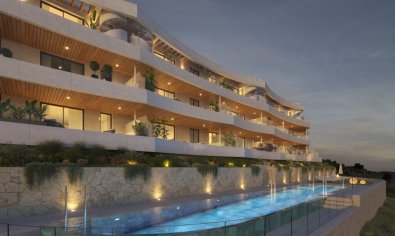
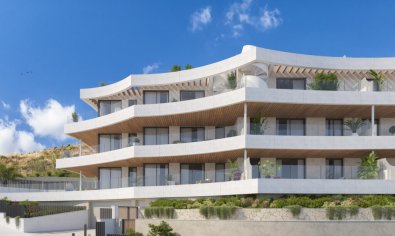
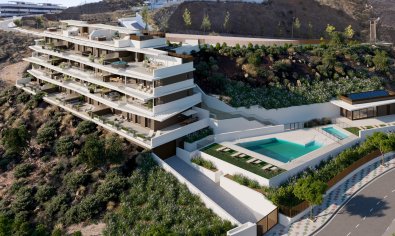
Numerous hillside developments add further options.
Sea views often mean steep roads
This is a very practical consideration.
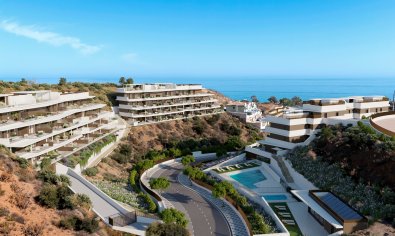
The immediate coastline is relatively level, but much residential growth has taken place on the hills behind it.
Excellent Mediterranean views can therefore come with steep access roads and greater car dependence.
Always test the real journey from a property to the beach, supermarket, school and bus stop rather than relying only on map distance.
Málaga on the doorstep
Rincón's location is one of its greatest residential advantages.
Málaga is only around 15 kilometres away, while the municipality itself now exceeds 50,000 inhabitants.
Major hospitals, the airport, universities, employment and cultural facilities are consequently within relatively easy reach.
Commuting traffic towards Málaga, however, is part of everyday life for many residents and should be considered when choosing an exact location.
Living in La Cala del Moral
La Cala can work particularly well for people who need frequent access to Málaga.
Beach, local shops and restaurants remain close at hand, while apartments and hillside residential developments create a broad range of property styles.
Its western position reduces the distance to the city compared with other parts of the municipality.
Living in central Rincón
Central Rincón de la Victoria is the most convenient area for residents who want to walk to everyday services.
Beach, promenade, restaurants, shops and municipal facilities are all concentrated nearby.
Apartments dominate, although low-rise residential streets and hillside developments appear further inland.
Living in Torre de Benagalbón
Torre de Benagalbón extends eastwards along the Mediterranean.
It offers long beach areas and a growing residential market, including modern developments.
The further inland or uphill you move, the more likely you are to gain views and space while becoming increasingly dependent on a car.
Living in Benagalbón
Benagalbón offers almost the opposite experience.
This is a small inland Andalusian settlement with local streets and countryside immediately nearby.
Housing supply is more limited, but buyers specifically seeking village life may consider that an advantage.
The sea and Málaga remain surprisingly close.
Rincón or Torre del Mar?
This is a useful comparison after exploring the eastern Costa del Sol.
Torre del Mar lies further east and is more closely connected with Vélez-Málaga and the wider Axarquía.
Rincón de la Victoria is much more integrated into the Málaga metropolitan area.
For frequent work, airport or hospital journeys, Rincón may be more practical.
For someone deliberately wanting to move further away from Málaga, Torre del Mar may offer a better fit.
Rincón or Nerja?
The difference is even clearer.
Nerja is smaller, more tourism-oriented and has dramatic cliffs, coves and a historic centre directly above the Mediterranean.
Rincón has a longer urban shoreline and feels more like a permanent residential city.
For white streets and dramatic coastal scenery, Nerja has the advantage.
For Málaga access, long beaches and everyday practicality, Rincón can make more sense.
Buying property in Rincón de la Victoria
We would begin by choosing the settlement and acceptable gradient before comparing individual homes.
Then look at parking, public transport, schools, supermarkets and the real travel time towards Málaga.
Apartment buyers should check community fees, lifts, building condition and planned works.
For hillside properties, road access, orientation and winter sunshine deserve particular attention.
Anyone purchasing with holiday rental income in mind should verify the current Andalusian and municipal regulations before relying on those figures.
Why Rincón de la Victoria is worth discovering
Start in La Cala del Moral and walk through the former railway tunnels across El Cantal.
Visit the Treasure Cave and, if you enjoy archaeology and active experiences, separately book the Victoria Cave.
Continue to the Bezmiliana Fortress before heading east to Villa Antiopa at Torre de Benagalbón.
On another day, visit inland Benagalbón.
And end beside the Mediterranean with local anchovies or sardines.
Only then does Rincón de la Victoria reveal its full story.
Prehistoric caves beneath the cliffs, a vanished Andalusian settlement, pirate defences, Roman mosaics, old railway tunnels and almost eight kilometres of Mediterranean coast just outside Málaga.
Greetings from Rincón de la Victoria!