

Greetings from Valencia: city, beach and Mediterranean living
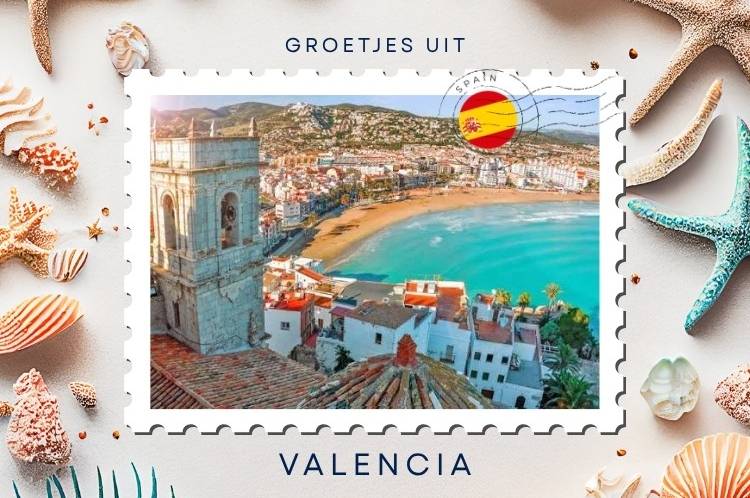
Greetings from Valencia: city, beach and Mediterranean living
Valencia – València in Valencian – is the major urban centre of the Costa Valencia and a city where more than two thousand years of history coexist with futuristic architecture, extensive green spaces and the Mediterranean Sea. The Romans founded Valentia in 138 BC, followed by Visigothic and Islamic periods before Jaume I conquered the city in 1238.
Today, neighbourhoods can offer remarkably different lifestyles. A historic apartment in Ciutat Vella, a colourful house in El Cabanyal and a modern property near the City of Arts and Sciences can all be in Valencia while feeling completely different.
More than two thousand years of history
Roman remains survive beneath the modern city, particularly around the archaeological site at L'Almoina.
Islamic Valencia later developed its own walls and irrigation infrastructure before the Christian conquest transformed the city again. The fifteenth century became an economic golden age fuelled by Mediterranean trade and silk.
Much of that wealth remains visible in the old centre.
Ciutat Vella
The historic centre brings together the Cathedral, Plaza de la Virgen, Plaza de la Reina, Central Market and Silk Exchange.
El Carmen adds narrow medieval streets, cultural spaces and street art, while the Serranos and Quart Towers survive from the city's former defensive system.
Valencia's different historical periods are unusually easy to explore on foot.
Cathedral and Holy Chalice
Valencia Cathedral was developed following the Christian conquest on the site previously occupied by the main mosque.
Centuries of construction have created a building containing Romanesque, Gothic, Baroque and later architectural elements.
Inside is the Holy Chalice, traditionally venerated within Catholicism as the cup used during the Last Supper.
Beside the cathedral stands the famous Micalet bell tower.
The Water Tribunal
Every Thursday at noon, the historic Tribunal de las Aguas meets outside the Cathedral's Apostles Gate.
The court resolves irrigation disputes between farming communities from Valencia's historic huerta. The tradition was recognised by UNESCO as Intangible Cultural Heritage in 2009.
It is an extraordinary survival of Valencia's agricultural heritage in the centre of a modern city.
Silk Exchange
The magnificent Lonja de la Seda was built between 1482 and 1533.
Its spectacular trading hall symbolises the commercial wealth Valencia achieved as a major Mediterranean trading city. UNESCO added the building to its World Heritage List in 1996.
The twisted stone columns inside are among the most recognisable examples of Valencian late Gothic architecture.
Central Market
Across the square stands the enormous Mercado Central.
Covering more than 8,000 square metres, Visit Valencia describes it as Europe's largest fresh-produce market. Fruit and vegetables from the huerta sit beside fish, meat, cheeses and other Mediterranean produce inside one of the city's great Modernist buildings.
It is both a landmark and a genuine everyday food market.
City of Arts and Sciences
Follow the old Turia riverbed and the architectural landscape changes completely.
The City of Arts and Sciences, principally designed by Valencian architect Santiago Calatrava, stretches for more than two kilometres and includes the Hemisfèric, Science Museum, Palau de les Arts, Umbracle and Oceanogràfic.
Its white futuristic structures have become an international symbol of modern Valencia.
Oceanogràfic
The Oceanogràfic is currently Europe's largest aquarium.
Around 45,000 animals from 500 species represent marine environments from around the planet.
Anyone hoping to explore the entire City of Arts and Sciences complex should realistically allow most or all of a day.
The river that became a park
Valencia's extraordinary Turia Garden exists because of a major natural disaster.
Following the devastating flood of 14 October 1957, the Turia River was diverted south of the city. The abandoned riverbed was subsequently transformed into an urban park.
Today more than nine kilometres of gardens run through Valencia from Cabecera Park towards the City of Arts and Sciences.
A green route through the city
The former riverbed passes beneath 18 bridges and contains sports facilities, playgrounds, cycling routes and landscaped gardens.
For residents it functions almost as a green transport corridor as much as a park.
You can cycle across a large part of Valencia without following normal traffic-heavy city streets.
City beaches
Valencia also has genuine urban beaches.
El Cabanyal and La Malvarrosa, together with neighbouring Patacona in Alboraia, provide roughly three and a half kilometres of continuous broad sandy coastline.
Metro, buses and cycle routes make the beaches relatively easy to reach from other parts of the city.
Malvarrosa
Valencia's most famous beach has an unusual name story.
The area was once marshland before being converted into a hollyhock plantation in the nineteenth century. The Spanish word malvarrosa subsequently became the name of the beach.
Today the wide sandy beach is used heavily by both residents and visitors.
El Cabanyal
Immediately behind the coast is El Cabanyal-Canyamelar, Valencia's historic fishermen's district.
Its grid of low-rise streets contains colourful tiled houses in the popular Modernist style. The architectural ensemble is protected as a cultural heritage area.
New restaurants and cultural projects have changed the neighbourhood considerably, but its maritime identity is still obvious.
Natural beaches further south
South of the urban coastline are Pinedo, El Saler, La Devesa and La Garrofera.
Development becomes progressively lighter as the coast merges with the landscape of L'Albufera Natural Park. Valencia's urban and natural coastline together covers almost twenty kilometres.
It is quite remarkable to move so quickly from a major city into dunes, pine forest and wetlands.
L'Albufera
Only around ten kilometres from Valencia lies L'Albufera.
The lagoon is surrounded by rice fields, woodland and wetlands, with traditional boat trips and several marked walking routes available.
Sunset across the lagoon is one of the classic Valencia experiences.
Where paella comes from
Valencian paella is inseparable from this agricultural landscape.
Official Valencia tourism information identifies the rice-growing area around L'Albufera as the birthplace of paella.
Traditional paella valenciana generally includes ingredients such as chicken, rabbit, vegetables and garrofó beans rather than seafood.
The village of El Palmar remains one of the classic places to try local rice dishes.
Fallas
Every March, Valencia changes completely for Las Fallas.
UNESCO inscribed the festival on its Representative List of the Intangible Cultural Heritage of Humanity in 2016.
Hundreds of sculptural monuments fill streets and squares, with the individual figures often satirising politics, celebrities and current affairs.
Nineteen days of gunpowder
The principal Fallas dates are 15 to 19 March, but celebrations build throughout the month.
From 1 to 19 March, the daily mascletà takes place at 2pm in Plaza del Ayuntamiento.
The Flower Offering, fireworks and Nit del Foc add to several days during which normal city routines are dramatically disrupted.
The Cremà
On 19 March, almost all the Fallas monuments are deliberately burned during the Cremà.
Only specially selected figures are saved from the flames.
Months of craftsmanship are therefore created with destruction built into the tradition from the beginning.
Living in Valencia means accepting that every March, large parts of the city temporarily operate according to a completely different rhythm.
Living in Valencia
Choosing the neighbourhood is arguably more important than choosing the city itself.
Ciutat Vella provides historic surroundings and central living. Russafa and L'Eixample are lively and urban. El Cabanyal and Malvarrosa put the Mediterranean much closer. Quatre Carreres includes modern residential areas near the City of Arts and Sciences, while districts further from the centre can offer newer buildings, easier parking and quieter residential streets.
Property hunting should therefore begin with neighbourhood exploration rather than property portals.
City or metropolitan area?
Valencia's surrounding municipalities also deserve consideration.
Alboraia begins immediately north of the city and includes Patacona Beach. Other metropolitan towns can provide larger homes, gardens or quieter residential surroundings while retaining public-transport access to Valencia.
A buyer looking for a city apartment and someone wanting a villa with outdoor space may therefore end up searching in completely different places.
A city that happens to have a beach
This is perhaps Valencia's greatest difference from many Mediterranean resorts.
Valencia is first and foremost a major year-round city with universities, hospitals, businesses, museums, public transport, shopping districts and established residential neighbourhoods.
The beach is an important part of the lifestyle, but it does not define the entire economy or daily rhythm.
For anyone moving to Spain who still wants genuine city life, that distinction matters.
Buying property in Valencia
Before arranging large numbers of viewings, spend time comparing neighbourhoods.
Walk through Cabanyal in the morning, explore the City of Arts and Sciences area in the afternoon and experience Russafa in the evening. Then visit quieter residential districts and test the real journeys by metro, bicycle and car.
For older apartments, pay close attention to lifts, building condition, community fees and planned works. Newer properties may provide parking and communal facilities but place you further from the historic street life that attracts many people to Valencia.
Why Valencia is worth discovering
Start early at the Central Market before visiting the Silk Exchange, Cathedral and El Carmen.
Then enter the Turia Garden and cycle towards the City of Arts and Sciences, continuing eventually to the marina and beach.
Spend another day exploring El Cabanyal and Malvarrosa before heading south towards L'Albufera for a boat ride and a traditional rice dish in El Palmar.
That gives you a far better picture of Valencia than simply visiting its ten most famous monuments.
Roman history, Gothic trading halls, futuristic architecture, nine kilometres of gardens, broad Mediterranean beaches, rice fields and a festival that sets the city alight every March.
Greetings from Valencia!