

Greetings from Biar: castle, history and inland Spanish life
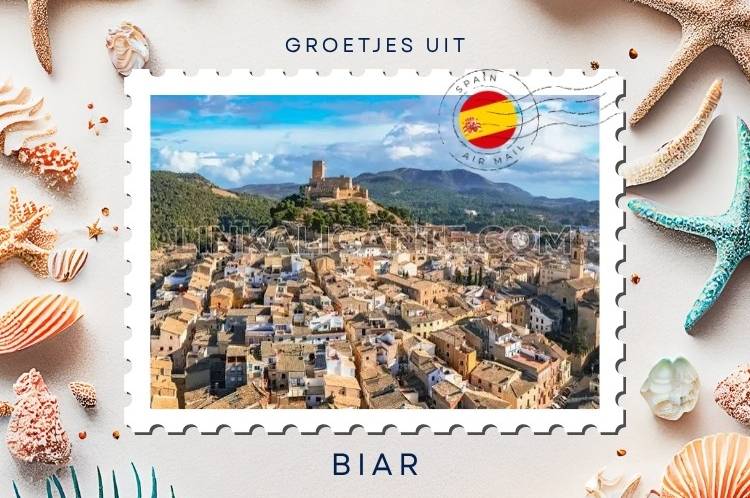
Greetings from Biar: castle, history and inland Spanish life
Biar lies in the Alto Vinalopó in inland Alicante. The town climbs around a hill crowned by an impressive medieval castle and is surrounded by pine forest, olive groves and mountain ranges including Fontanella, Reconco and Sierra del Frare. Around half of the municipality is covered by forest.
It feels remarkably different from the Mediterranean coast: medieval streets, fortified gateways, mountain food and deeply rooted local traditions replace beach promenades and resort developments.
Biar Castle
The Castle of Biar stands on a rocky hill approximately 750 metres above sea level.
It is of Islamic origin and largely dates from the twelfth century. The earliest known written reference appears in the Treaty of Cazorla of 1179.
A double defensive wall surrounds the fortress and the large square keep rises around 19 metres. Inside is an exceptional Almohad cross-ribbed vault.
A new museum presentation opened in 2024, adding models, interpretation panels, historical characters and a panoramic viewing area.
On the border between two kingdoms
Biar once occupied an extremely important frontier position.
The Treaty of Almizra in 1244 established the limits between Aragonese and Castilian expansion. Biar fell on the Aragonese side, while nearby Villena was associated with Castile.
Jaume I began besieging Biar in September 1244. The Muslim commander Muça Almoravit finally surrendered the castle in February 1245.
In 1287 Biar became a royal town with representation in the Aragonese Cortes. Its historic motto, Obri i tanque el regne, still recalls its role as a gateway to the kingdom.
A medieval town below the castle
The old centre preserves its characteristic medieval layout.
Concentric streets follow the contours of the hill while steeper lanes climb towards the fortress. Historic entrances including the San Roque Arch and Torreta gateway survive alongside sections of Muslim and later Christian walls.
This is a town best explored slowly rather than simply walking directly to the castle.
Church of Nuestra Señora de la Asunción
The parish church is Biar's other major architectural landmark.
Its predominantly Gothic structure is complemented by an elaborate Renaissance-Plateresque entrance. Inside, the late-seventeenth-century Communion Chapel features a dome, decorative plasterwork and frescoes.
Together, church and castle define Biar's historic skyline.
A fifteenth-century aqueduct
Outside the centre stands the remarkable Ogival Aqueduct.
Built in 1490, the approximately 70-metre structure carried irrigation water across the Rambla dels Molins. Two of its three arches are pointed and its construction is attributed to architect Pere Compte.
From the aqueduct there is also an excellent view back towards the castle.
A tree more than 350 years old
The Paseo del Plátano takes its name from one extraordinary tree.
Biar's monumental oriental plane is more than 350 years old, approximately 26 metres tall and has a trunk circumference of around six metres.
It has become one of the town's best-known meeting places and a living piece of local history.
Sanctuary of Nuestra Señora de Gracia
Surrounded by pine forest is the Sanctuary of Nuestra Señora de Gracia, dedicated to Biar's patron saint.
Its interior includes Neoclassical decoration, a Rococo doorway and frescoes painted by Tomás Belando in 1757.
Walking routes and a recreational area surround the sanctuary, but its most important local role is closely connected with the May celebrations.
Moors and Christians
Biar's principal festivities run every year from 9 to 13 May in honour of the Mare de Déu de Gràcia.
They commemorate the medieval conflict surrounding Jaume I's conquest and today involve seven Moorish and Christian comparsas, bands, gunpowder and elaborate parades.
Several traditions, however, are particularly distinctive to Biar.
The Virgin descends by firelight
On the night of 10 May, the image of the Virgin is carried from the sanctuary towards Biar.
Hundreds of fires illuminate the route through the landscape during the Bajada de la Virgen.
The combination of darkness, mountains and fire makes it quite different from a conventional religious procession.
Ball dels Espies
The Ball dels Espies takes place the following day.
Folklore and theatre combine as the spies take part in a traditional performance culminating in the arrival of a large figure known as Mahoma at the temporary festival castle.
It is one of the rituals that gives Biar's Moors and Christians celebrations their own identity.
Rei Pàixaro
January brings another unusual tradition: Sant Antoni and Rei Pàixaro.
Held around 17 January, events include torches, dancers, bonfires, the Rei Pàixaro procession and the following day's Cavallà involving horses and other animals.
It is considered one of the Valencian Community's longstanding traditional celebrations.
Pottery and ceramics
Biar has a particularly strong history of pottery and glazed ceramics.
The Miguel Maestre Castelló Ethnographic Museum preserves more than one thousand objects across eleven rooms. Archaeology, furniture, historic trades, school life and festival traditions are displayed alongside the important ceramics collection.
For anyone interested in everyday history rather than only castles and kings, it is well worth visiting.
Mountains and forest
Around half of Biar's municipality is forest and the town is almost completely surrounded by mountains.
The PR-CV 55 Sierra de Fontanella is approximately 21.3 kilometres long and reaches areas above 1,100 metres. Pine forest, ravines and broad inland views dominate the route.
Shorter botanical trails are available around Reconco and Sierra del Frare.
Inland Alicante food
Traditional dishes include gazpacho manchego, soupy rice, rabbit with rice, olleta and puchero con pelotas.
Mountain herbs such as pebrella, local sausages and seasonal produce play an important role.
Biar is also associated with almonds, artisan nougat, rosemary honey and olive oil.
This is hearty inland cooking rather than seaside cuisine.
Living in Biar
Biar functions as a genuine year-round Spanish town, with shops, schools, healthcare, sports and restaurants serving the local population.
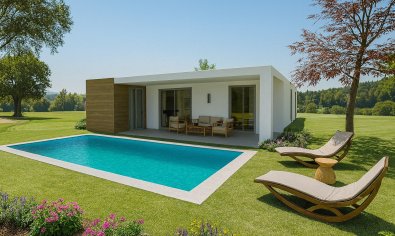
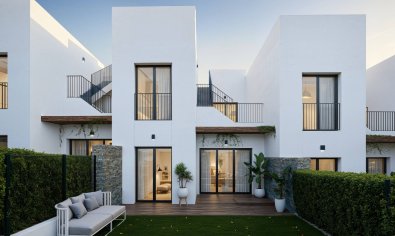
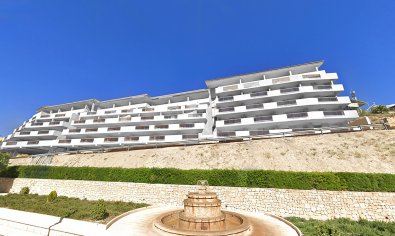
Apartments and traditional townhouses are found in the centre, while detached houses and rural properties become more common outside the built-up area.
The coast is further away, but the trade-off is space, forest, mountain scenery and a much quieter environment.
Buying property in Biar
The first choice is normally between town and countryside.
Central living makes shops and everyday facilities easier to reach on foot. Rural properties can offer larger plots, privacy and views but make a car effectively essential.
For older country homes, careful planning and registry checks of the house, pool, extensions, outbuildings and land classification are particularly important.
Moving to Biar
Biar is particularly suited to anyone who genuinely wants to experience Spanish small-town life.
The international community is much smaller than in the coastal urbanisations, making Spanish far more useful for neighbours, schools, clubs and everyday administration.
In return, local festivals, family life and community associations remain a very visible part of daily life.
Why Biar is worth discovering
Start in the medieval centre and climb slowly towards the castle, stopping at the old gateways and parish church.
Afterwards visit the Ethnographic Museum and enormous plane tree before driving to the aqueduct and Sanctuary of Nuestra Señora de Gracia.
Save another day for the forests around Reconco or Sierra de Fontanella.
And if you arrive between 9 and 13 May, the fires of the Virgin's descent, Moorish and Christian bands and Ball dels Espies transform this peaceful inland town completely.
A twelfth-century castle, medieval streets, centuries-old traditions and pine-covered mountains immediately beyond the town.
Greetings from Biar!