


Greetings from Aspe: vineyards, history and inland Spanish life
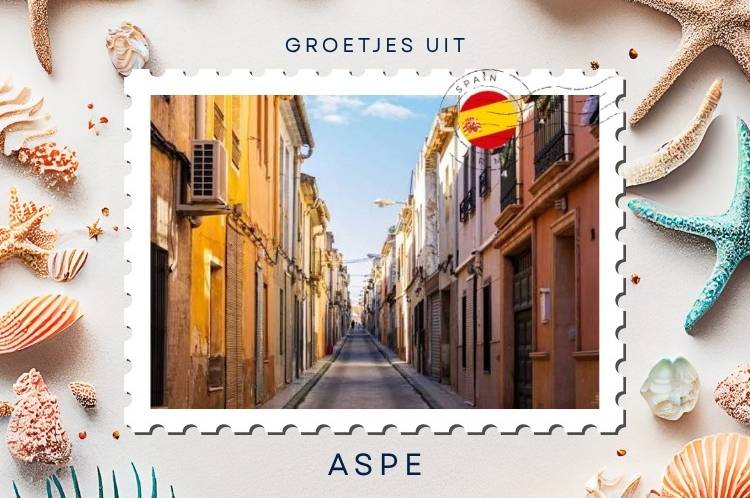
Greetings from Aspe: vineyards, history and inland Spanish life
Aspe lies inland in Alicante province between Elche, Novelda and Hondón de las Nieves. Vineyards, farmland, dry hills and river valleys replace the coastal promenades found further east, yet Elche, Alicante, the airport and Mediterranean beaches all remain within roughly half an hour's drive.
Aspe is considerably less tourism-oriented than many Costa Blanca towns. Everyday life is focused mainly on permanent residents, although detached villas, country homes and modern new-build properties are increasingly attracting international buyers.
Living and buying property in Aspe
Inland rather than seaside
Aspe is not a coastal town.
Elche is around 20-25 minutes away, Alicante approximately 25-30 minutes and Alicante-Elche Airport roughly 25 minutes by car. Beaches are generally around half an hour away depending on the destination.
For buyers who prefer everyday Spanish surroundings and see the coast as somewhere to visit rather than something outside their front door, that location can work particularly well.
From Asf to modern Aspe
Aspe occupies an important position in the natural Vinalopó corridor.
Archaeological evidence stretches from the Palaeolithic and Bronze Age onwards. During the Islamic period, an eleventh-century Arabic source records a settlement called Asf.
The original settlement, however, did not occupy exactly the same location as modern Aspe.
Castillo del Río and Old Aspe
A few kilometres away is Castillo del Río, a twelfth-century Andalusian fortress near the confluence of the Tarafa and Vinalopó rivers.
The location is associated with Aspe el Viejo, or Old Aspe.
Its rammed-earth walls and towers controlled a strategic point in the valley and archaeological excavations have provided valuable information about medieval Islamic life in the area.
The new settlement
The population later shifted towards the flatter site occupied by modern Aspe.
Archaeological remains beside the Tarafa have also been identified as Castillo del Aljau, a fortified site from the second half of the fourteenth century connected with the development of the newer settlement.
Plaza Mayor
Plaza Mayor is the natural starting point for exploring the present town.
The Town Hall stands here beside the large Basilica of Nuestra Señora del Socorro. The municipality itself describes the square as one of the principal centres of local life.
During major festivals, the normally relaxed square becomes one of Aspe's main stages for music, processions and celebrations.
Basilica of Nuestra Señora del Socorro
The Basilica of Nuestra Señora del Socorro is one of Aspe's principal landmarks.
According to the municipality, it is one of only three basilicas in Alicante province, and its architecture represents Valencian Baroque.
Its importance extends far beyond architecture, as many of the town's major religious and cultural traditions revolve around the building.
One patron saint shared by two towns
Perhaps Aspe's most unusual tradition concerns the Virgen de las Nieves.
Nearby Hondón de las Nieves belonged to Aspe until 1839, which explains why the two municipalities still share the same patron saint. During even-numbered years, the statue leaves its sanctuary in Hondón on 3 August and is carried to Aspe in a major pilgrimage.
The principal feast day is 5 August. After spending several weeks in the Basilica, the Virgin returns to Hondón during La Llevada. Following the 2026 celebrations, she returned to the sanctuary and will remain there until 2028.
La Traída
Thousands take part in the Traída during even-numbered years.
On the route between Hondón and Aspe, representatives of both municipalities meet at El Collado for the traditional handover before the procession continues towards Aspe and the Basilica.
It is one of the most emotionally important events in the local calendar.
Moors and Christians
Aspe's Moors and Christians celebrations were introduced in 1978 and now take place every year around the second week of August.
Moorish and Christian groups, bands, parades, embassies and the final Reconquista fill the streets with music and colour.
La Jira
Another particularly local tradition is La Jira, also known as El Último Jueves.
Held on the Thursday before Ash Wednesday, it has been celebrated for more than a century. Groups dress together, parade through town and perform specially written songs before heading to country houses to spend the rest of the day together.
La Jira has Provincial Tourist Interest status.
Holy Week
Aspe's Semana Santa is also recognised as a Festival of Provincial Tourist Interest.
Its documented history reaches back to the seventeenth century and it retains distinctive traditions including the Sermón de las Siete Palabras, locally known as El Monte, together with several unusual roles and customs within its processions.
The indoor market
The Mercado de Abastos was built in 1930.
Its large horseshoe-arched entrances and Neo-Mudéjar-inspired decoration make the market considerably more architecturally interesting than an ordinary food hall. Inside are stalls selling fruit, vegetables, bread, fish and other food products.
For visitors, it is also an easy place to see ordinary town life rather than only heritage sites.
Tuesday and Thursday street markets
Aspe also holds a weekly outdoor market every Tuesday and Thursday, generally from early morning until around 2pm.
Fresh food, clothing and household products make it a normal weekly routine for residents.
Teatro Wagner
The Wagner Theatre dates from 1922.
The eclectic building has modernist references and was extensively restored before reopening in 1995. It now hosts theatre, music, cinema and a broad programme of cultural events.
Next door is the Alfredo Kraus outdoor auditorium, opened by the famous tenor in 1998.
Following the River Tarafa
The River Tarafa runs directly through Aspe.
Official walking route PR-CV 444 covers approximately 14.6 kilometres, passing traditional farmland, river vegetation, old mills, weirs and numerous historic structures connected with water management.
Parts of the route have been further improved and extended in recent years.
The Four and Five Eyes aqueducts
Two of the most interesting structures are the Puente de los Cuatro Ojos and Puente de los Cinco Ojos.
They formed part of an eighteenth-century water system designed to carry spring water from the Aspe area towards Elche. Work from 1785 onwards was directed by Aspe-born engineer Gonzálvez de Coniedo.
The surviving structures now form an important part of Aspe's hydraulic heritage.
Countryside and nature
Ravines, the Sierra de la Ofra and the wider Vinalopó landscape provide plenty of opportunities for walking and cycling.
The shaded side of the Sierra de la Ofra contains one of the municipality's best-preserved woodland areas, while the ravines create important natural corridors.
Vinalopó bagged table grapes
Aspe is officially part of the production zone for Uva de Mesa Embolsada del Vinalopó PDO.
The protected area also includes Agost, Hondón de los Frailes, Hondón de las Nieves, Monforte del Cid, Novelda and La Romana. Each grape bunch is individually covered with a paper bag while ripening.
The technique began around 1920 in Novelda and developed into one of the defining agricultural traditions of the Medio Vinalopó.
Agriculture remains important
The grape industry is still economically significant in Aspe.
The municipality has described the sector as generating thousands of direct jobs locally during the annual campaign.
In summer, vineyards covered with thousands of small white paper bags create one of the area's most distinctive landscapes.
Food in Aspe
Traditional dishes highlighted by the municipality include rice with rabbit and caldo con pelotas.
Aspe has also rather unexpectedly developed a reputation for artisan panettone, with products from local pastry makers receiving international recognition.
It is a good reminder that inland Alicante's food scene is far more varied than paella and seafood.
Living in Aspe
Aspe has supermarkets, local shops, schools, healthcare, sports facilities, restaurants, banking and markets serving residents throughout the year.
The centre contains apartments and traditional town homes, while the surrounding countryside offers detached villas, country properties, fincas, larger plots and modern new-build homes.
For buyers seeking space rather than immediate beach access, that can make Aspe particularly interesting.
Moving to Aspe
For anyone considering moving to Spain, Aspe suits people who actively want to become part of everyday Spanish life.
The international community is far less dominant than in many coastal destinations, while Elche, Alicante, the airport and Mediterranean beaches remain conveniently accessible.
Practical information about moving to Spain
Buying property in Aspe
The first decision is whether you prefer town or countryside.
Central living puts shops, markets, cafés and other facilities closer at hand. Rural living can provide more land, a private pool, views and privacy, but normally makes a car essential.
For country properties, thorough legal checks of land classification, registered buildings, pools, extensions and outbuildings are particularly important.
Current property for sale in Aspe
Why Aspe is worth discovering
Start in Plaza Mayor with the Basilica before visiting the indoor market and Wagner Theatre. Then follow part of the Tarafa River through the town.
Save another visit for the historic aqueducts and Castillo del Río, before driving through vineyards where individual grape bunches hang inside their paper bags.
And if you arrive during August in an even-numbered year, the return of the Virgen de las Nieves reveals an entirely different side of local life.
Vineyards, water, medieval history, deeply rooted traditions and genuine Spanish life away from the tourist coast.
Greetings from Aspe!