

Greetings from Águilas: beaches, carnival and Spanish coastal life
Greetings from Águilas: beaches, carnival and Spanish coastal life
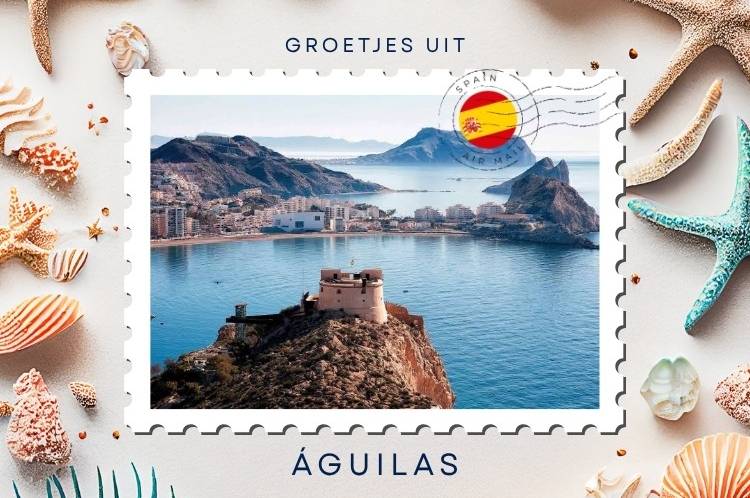
Águilas lies in the far southwest of the Murcia region, close to the border with Andalusia. It is a genuine Mediterranean town with a harbour, an active centre, mountains behind it and no fewer than 36 beaches and coves spread across the municipality. More than 37,000 people live here and the town remains active throughout the year.
The landscape feels very different from the Mar Menor. Águilas faces the open Mediterranean and combines urban beaches with secluded coves surrounded by dry hills and rocky coastline.
More information and current listings can be found on our area page. Living and buying property in Águilas
A town built around the Mediterranean
The sea is never far away in Águilas. The centre, harbour, promenades and several beaches sit close together, making it easy to combine normal everyday life with time beside the water.
This is not a seasonal holiday development either. Shops, restaurants and everyday services remain open throughout the year.
Plaza de España
At the heart of the centre is Plaza de España, commonly known as La Glorieta.
Its garden contains enormous ficus trees, including examples planted around 1915, while some of the araucarias in the square are thought to be even older.
During carnival, this peaceful square becomes the setting for some of the town's most spectacular traditions.
San Juan Castle
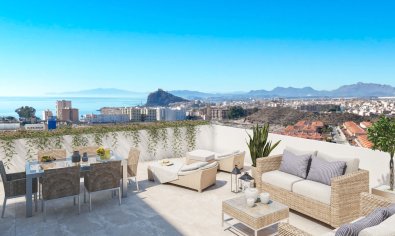
High above Águilas stands the Castillo de San Juan de las Águilas.
Earlier defensive structures occupied the site and a hexagonal tower was built during the sixteenth century. The present fortress largely dates from 1756, when it was strengthened under Fernando VI to defend the coast against Turkish and Barbary pirate attacks.
From its roughly 85-metre-high position there are excellent views over the town, harbour and Mediterranean.
The beginning of modern Águilas
The development of the modern town is closely connected with the castle.
In 1766, Águilas was officially established as an independent municipality following an initiative associated with the Count of Aranda. The port, agriculture and maritime commerce subsequently helped the town grow.
Human history in the area, however, goes back thousands of years further.
Romans and fish processing
Prehistoric remains have been found around Águilas and the area was later inhabited by Iberians, Phoenicians, Greeks and Romans.
Fishing and the production of salted fish were important during Roman times. Archaeological evidence of these activities has been discovered around modern Águilas and on Isla del Fraile.
Isla del Fraile
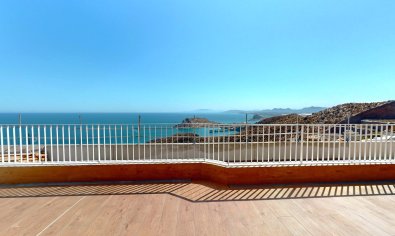
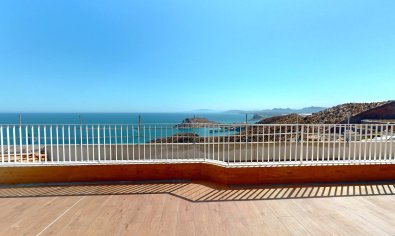
Isla del Fraile lies just offshore to the east of the town.
Roman fish-processing remains have been discovered on the island and the surrounding waters are also well known for their underwater environment.
The viewpoint above El Hornillo provides one of the best views across to the island.
El Hornillo and the British connection
Águilas also has an unexpected industrial past.
The enormous Embarcadero del Hornillo was built by a British railway company and officially opened in 1903. Its innovative system allowed minerals, especially iron ore, to be transferred efficiently from railway wagons directly onto ships.
Mining and railway activity brought British workers and managers to the town, leaving an architectural and industrial legacy that is still visible.
Hornillo Beach
Directly beside this historic structure is Playa del Hornillo, an urban sandy beach approximately 500 metres long and partially sheltered by Isla del Fraile.
Few beaches offer quite the same combination of Mediterranean scenery and nineteenth- and twentieth-century industrial heritage.
Thirty-six beaches and coves
The municipality has 36 beaches and coves, ranging from easily accessible urban beaches to far quieter natural stretches of coastline.
That variety is one of Águilas' greatest strengths. You can live close to the town centre and still spend another day exploring almost undeveloped coastline.
Cuatro Calas
Towards the Andalusian border is the protected landscape of Cuatro Calas, part of the Natura 2000 network.
Calarreona, La Higuerica, La Carolina and Los Cocedores sit among dry hills, ravines, cliffs and unusual Mediterranean vegetation.
Los Cocedores is especially distinctive, with volcanic rock, fossil-bearing formations and caves historically associated with processing esparto grass.
Cabo Cope
East of Águilas lies Cabo Cope, within the Cabo Cope and Puntas de Calnegre Regional Park.
Mountains, cliffs, beaches, fossil dunes and protected wildlife create a much wilder environment than the urban coastline. The sixteenth-century Torre de Cope also survives here.
It is an excellent area for anyone who enjoys walking and natural coastal scenery.
Life outdoors
Hiking, cycling, diving, snorkelling, kayaking and paddleboarding are all easy to combine with everyday life in Águilas.
The municipality has also been expanding walking and cycling infrastructure along parts of the coast, including a new section between La Casica Verde and Calarreona in 2026.
Águilas Carnival
Then there is the famous Carnaval de Águilas, officially recognised as a Festival of International Tourist Interest.
Huge parades, costumes and music fill the streets, but its own unusual traditions are what really distinguish Águilas from other Spanish carnival destinations.
The Mussona
The mysterious Mussona represents a creature somewhere between human and animal.
During one of the carnival's best-known events, the character descends from the castle towards Plaza de España, creating chaos and entertainment along the route.
The Musa, Don Carnal and Doña Cuaresma are the other principal carnival characters.
Confetti-filled eggs
Don Carnal and Doña Cuaresma symbolically represent carnival celebration and Lent.
Their traditional confrontation features cascarones: empty eggshells filled with confetti and smashed during the battle.
It is one of those traditions that makes far more sense once you experience the atmosphere in the square yourself.
Cuerva and paper costumes
Cuerva is the traditional carnival drink, normally made from wine, fruit, soft drinks and spirits, with recipes varying between families and bars.
Águilas is also famous for its elaborate paper costumes. These spectacular creations can take thousands of hours to produce and are celebrated through their own competition and gala.
Carnival here is clearly taken very seriously.
Food in Águilas
The local kitchen naturally makes extensive use of Mediterranean produce.
The regional tourism authority highlights red prawns, red mullet, sea bass and sea bream, together with local tomatoes and capers.
Fresh fish, rice dishes and a long lunch by the sea are therefore very much part of the experience.
Murcia meets Andalusia
Águilas sits at the extreme southern edge of Murcia.
Lorca is around 37 kilometres away, Cartagena roughly 80 kilometres and Murcia city about 103 kilometres, while the province of Almería begins almost immediately beyond the western edge of the municipality.
This also makes places such as Mojácar and the Almería coast easy destinations for a day trip.
Living in Águilas
Águilas offers something many buyers are looking for: a genuine year-round Spanish town directly beside the Mediterranean.
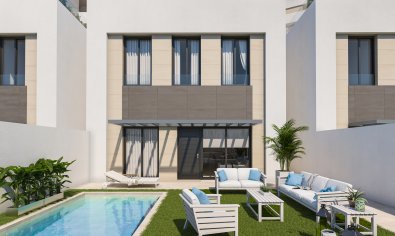
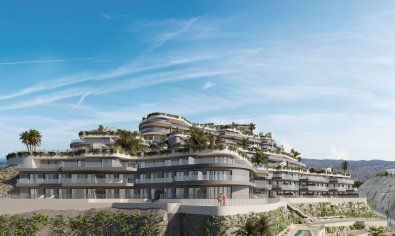
The market includes apartments, penthouses, townhouses, detached villas and modern new-build developments.
Living in the town centre provides a completely different lifestyle from choosing a newer residential area or a home further along the coast, so exact location matters.
Moving to Águilas
For anyone considering moving to Spain, Águilas can be especially attractive if you want the coast without living inside a heavily internationalised resort.
Foreign residents are present, but everyday life remains distinctly Spanish. Learning and using Spanish is therefore likely to become a more natural part of daily life.
In return, you gain local traditions, year-round facilities and the Mediterranean at the same time.
Buying property in Águilas
Before choosing the property, it makes sense to choose the lifestyle.
Do you want to walk into town and to the beach? Would you rather have a modern development with communal facilities? Or do you prefer more peace and natural surroundings away from the centre?
For permanent living, year-round amenities, parking and transport connections should be considered alongside sea views and distance from the beach.
Why Águilas is worth discovering
Begin with coffee beneath the enormous trees of La Glorieta before climbing to San Juan Castle. Walk towards the harbour and then head to El Hornillo to see its remarkable British industrial heritage and views across to Isla del Fraile.
On another day, explore Cuatro Calas or the wild coastline around Cabo Cope.
And if you happen to arrive during carnival, expect the normally relaxed Mediterranean town to become almost unrecognisable.
Thirty-six beaches and coves, rugged nature, Spanish city life, surprising history and one of Spain's most distinctive carnivals.
Greetings from Águilas!