

Greetings from Cartagena: Romans, the harbour and Spanish city life by the sea
Greetings from Cartagena: Romans, the harbour and Spanish city life by the sea
Cartagena is one of those cities where several centuries of history can appear within a single walk. One moment you are standing inside a Roman theatre more than two thousand years old, the next you are surrounded by colourful modernist mansions, and only a few streets further on you reach a harbour that remains central to Spain's maritime and naval history.
Located on Murcia's Costa Cálida, Cartagena has more than 3,000 years of history. It is simultaneously Punic, Roman, military, maritime and modernist, yet it remains a genuine Spanish city where people live and work throughout the year.
Cartagena is much bigger than the city centre
The first thing property buyers should understand is that Cartagena municipality is enormous.
It includes not only the historic city and port but also rural areas and numerous coastal communities. Los Belones, Los Nietos and Los Urrutias fall within the municipality, as do coastal areas towards Cabo de Palos, La Manga and Calblanque.
A home advertised as being in Cartagena can therefore offer anything from urban city living to a completely coastal lifestyle.
More than 3,000 years of history
Carthaginian Cartagena was known as Qart Hadasht and became an important strategic centre under Hasdrubal around 229 BC.
Its natural harbour and the mineral wealth of the surrounding area made the city enormously valuable. After the Roman conquest, Carthago Nova became one of the important Roman cities in Hispania.
Byzantine, Islamic and Castilian periods followed before Cartagena once again gained major importance as a Spanish naval centre on the Mediterranean.
Few cities on this part of Spain's coast contain so many visible historical layers.
The Roman Theatre
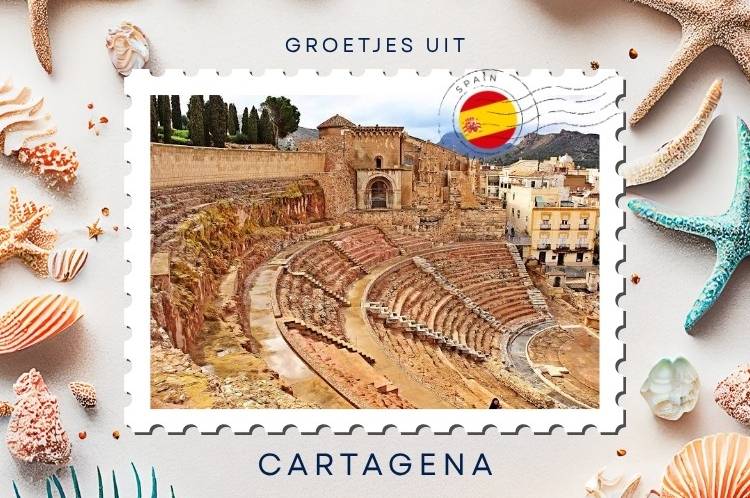
The Roman Theatre is Cartagena's best-known monument.
Built towards the end of the first century BC during the reign of Augustus, it could accommodate around 6,000 spectators.
Remarkably, the theatre eventually disappeared beneath centuries of later construction. A commercial complex, Byzantine structures, Islamic buildings, homes and the Old Cathedral were all built over the same site.
Today visitors enter through the museum designed by Rafael Moneo and gradually move through the city's archaeological layers before finally stepping into the theatre itself.
Even if archaeology is not normally high on your holiday list, this one is difficult to skip.
The Punic Wall
The Punic Wall takes visitors back even further, to the conflict between Carthage and Rome.
Cartagena was a key Carthaginian base during the Second Punic War. Hannibal's world and the Roman conquest by Scipio in 209 BC form an important part of the site's story.
Combined with the Roman remains, it helps explain why ancient Cartagena was so important within the western Mediterranean.
Roman Cartagena around Molinete
The archaeology continues around Molinete Hill, where large parts of Roman Carthago Nova have been uncovered.
The Roman Forum district, Casa de la Fortuna and other archaeological sites offer an insight into ordinary urban life two thousand years ago.
The best part is that these sites are woven directly into the modern city.
You can leave a shopping street and find yourself walking through Roman history within minutes.
Concepción Castle
Concepción Castle is an excellent place to begin exploring Cartagena.
The hill has served many purposes over the centuries and has contained a Roman temple, a Muslim fortress and a medieval castle. Today it houses an interpretation centre covering thousands of years of local history.
The elevated position also provides an excellent overview of the city and harbour.
Once you have seen Cartagena from above, its geography makes much more sense.
Modernist Cartagena
Jump forward another two thousand years and Cartagena changes completely again.
Mining wealth and commerce created a prosperous bourgeois class during the nineteenth and early twentieth centuries. Wealthy families commissioned elaborate urban residences, leaving the centre with an impressive collection of modernist architecture.
An official route passes buildings including Casa Cervantes, the Casino, Gran Hotel, Casa Maestre and Palacio Aguirre.
Calle Mayor is especially enjoyable for a slow walk. Remember to look above the shopfronts at the balconies and façades.
The City Hall
Cartagena's monumental Palacio Consistorial stands on Plaza del Ayuntamiento.
The Roman Theatre Museum, Calle Mayor and waterfront are all close by, making the square a particularly convenient starting point for exploring the historic centre on foot.
This compact layout is one of Cartagena's biggest advantages for visitors.
A city built around its harbour
Cartagena's history cannot be separated from its harbour.
The protected natural bay has been used for trade, military defence and navigation for centuries. Naval, commercial, leisure and cruise activities still exist alongside one another today.
The harbour promenade is also one of the city's most pleasant walking areas and provides a wide, open contrast with the historic streets behind it.
ARQVA: archaeology beneath the sea
Beside the port is the National Museum of Underwater Archaeology – ARQVA.
It is Spain's national institution dedicated to studying, conserving and presenting underwater cultural heritage.
Its collections cover maritime archaeology from antiquity onwards and include material from Phoenician and later shipwrecks.
A particularly famous collection comes from the frigate Nuestra Señora de las Mercedes, including nearly 600,000 silver eight-real coins recovered by the Spanish State.
There could hardly be a more appropriate location for such a museum than Cartagena.
Isaac Peral and the submarine
Cartagena is also connected with one of the important chapters in submarine development.
Local naval officer and inventor Isaac Peral designed an experimental electrically powered submarine during the nineteenth century.
The Peral Submarine has since become one of Cartagena's city symbols and features on the official maritime and modernist route.
Once again, the city's relationship with the Spanish Navy is never far away.
Military Cartagena
Cartagena's eighteenth-century development as a major Spanish naval centre left forts, military buildings and defensive installations around the harbour.
Its natural bay needed extensive protection and the city's strategic role shaped both its architecture and urban development.
Anyone interested in military history could easily spend considerably more than one day exploring Cartagena.
Holy Week with remarkable precision
Another side of Cartagena emerges during Semana Santa.
Cartagena's Holy Week has International Tourist Interest status. Its processions are famous for their organisation, lighting, flowers and almost military precision. The principal brotherhoods include the Marrajos, Californios, Resucitado and Socorro.
The entire historic centre changes atmosphere during these days.
Even Spain visitors who have previously seen Easter processions elsewhere may find Cartagena's style noticeably different.
Carthaginians and Romans take over the city
September brings an even more dramatic transformation during Carthagineses y Romanos.
The festival has International Tourist Interest status and recreates events connected with the Second Punic War through ceremonies, camps, performances and enormous parades.
Hannibal, Qart Hadasht and Scipio all return symbolically to the streets.
In 2026, the festivities are scheduled for 19–27 September.
It is probably the best time of year to see just how seriously Cartagena takes its history.
Eating in Cartagena
History is not the only reason to explore the city.
Traditional Cartagena cuisine includes grilled and baked fish, caldero, michirones and ensalada cantonal, combining Mediterranean seafood with the flavours of Murcia.
A long lunch in the historic centre or around the waterfront is therefore very easy to justify.
And afterwards there is one particularly local drink to try.
Café asiático
The asiático is Cartagena's signature coffee.
It traditionally combines coffee, condensed milk and Licor 43 with flavours including cinnamon and lemon peel. Even its distinctive glass has become something of a city symbol.
It is much sweeter than an ordinary Spanish coffee.
But you really should try one at least once while you are here.
Cala Cortina
Cartagena city has a harbour rather than a huge urban sandy beach, but swimming is still close by.
Cala Cortina is around four kilometres from the city. The small bay has golden sand, a promenade, leisure facilities and a restaurant.
This makes it easy to spend the morning seeing Roman monuments and the afternoon beside the Mediterranean.
Wild coastline at Calblanque
For something completely different, head towards Calblanque Regional Park.
Golden and ochre beaches, secluded coves, dunes, fossil dunes, salt areas, cliffs and mountains make this one of Murcia's best-preserved natural coastal landscapes.
Vehicle access is regulated during busy summer periods to protect the area, so always check current arrangements before travelling.
Anyone who thinks Cartagena municipality is mainly urban and industrial will get a completely different impression here.
Cabo de Palos
Continue east and the municipality also reaches towards Cabo de Palos.
Its coves and surrounding seabed form one of the Mediterranean's important marine environments and the area is particularly well known for diving and snorkelling.
Again, this illustrates just how varied one Cartagena address can be from another.
A genuine year-round city
Cartagena has supermarkets, major shopping areas, hospitals, schools, restaurants, sports facilities, museums, theatres, public transport and a railway station.
It does not close when summer ends.
That can be a major advantage for people who want to make Spain their permanent home rather than only spend holidays here.
Living in Cartagena
Living in Cartagena can mean very different things.
The urban area contains apartments, traditional neighbourhood homes and family properties. Further out you can find detached houses and rural homes, while coastal areas offer apartments, villas and new-build developments.
The important question is therefore not simply whether you like Cartagena, but which Cartagena suits you.
City centre or coast?
For some buyers the historic city itself is the attraction.
Living centrally means cafés, restaurants, shops and culture can all be part of everyday life.
Others mainly want beaches, water sports and sea views and should look more closely at the municipality's coastal communities.
Those seeking land and privacy may prefer rural areas away from both.
Few municipalities offer such dramatically different choices under one name.
Moving to Cartagena
For anyone considering moving to Spain, Cartagena offers the advantages of a full-sized year-round city.
Healthcare, education, sport, shopping and cultural facilities are all readily available and the Mediterranean remains close.
The environment is also considerably more Spanish than many highly international residential developments along the coast. Learning and using Spanish therefore becomes a more natural part of everyday life.
Buying property in Cartagena
When buying property in Cartagena, the map should be one of the first things you check.
Is the property actually in Cartagena city? A suburban neighbourhood? Beside the Mar Menor? Near Cabo de Palos? Or in a smaller coastal settlement that happens to belong administratively to Cartagena?
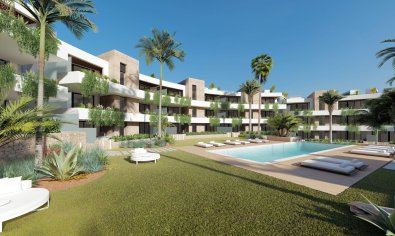
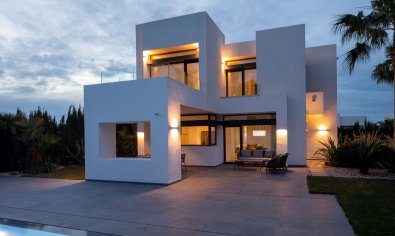
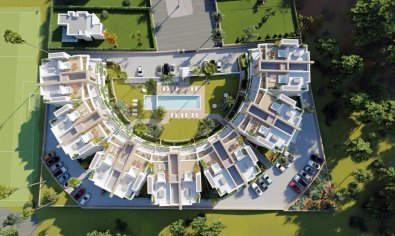
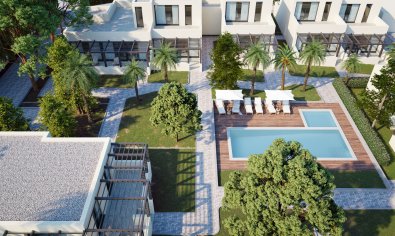
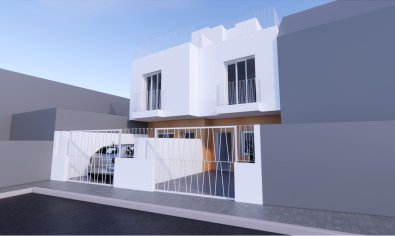
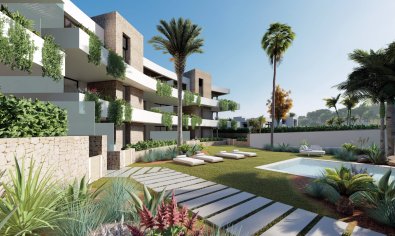
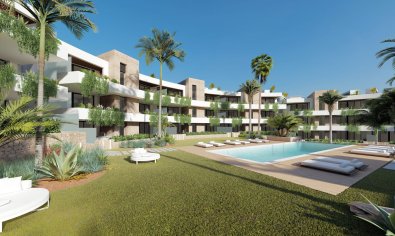
The current Casas Palmeras area page shows just how diverse the housing stock can be.
Choosing the right environment comes before choosing the right house.
Why Cartagena is worth discovering
Cartagena is almost impossible to fit into a single day.
If we had to try, we would start at Concepción Castle, walk down to the Roman Theatre and continue along Calle Mayor towards the harbour. Visit ARQVA, have lunch in the city and finish with an asiático.
On another visit, explore the Punic Wall and Roman Forum before heading towards Calblanque or Cabo de Palos.
There is always another layer left to discover.
Romans, Carthaginians, modernist architecture, naval history, beaches and the everyday energy of a real Spanish city beside the Mediterranean.
Greetings from Cartagena!