

Greetings from Almoradí: markets, countryside and authentic Spanish life
Greetings from Almoradí: markets, countryside and authentic Spanish life
Almoradí lies in the heart of the Vega Baja, surrounded by farmland, citrus groves and the traditional agricultural landscape of southern Alicante. This is not a town built primarily for beach tourism, but a lively Spanish community where people live, work, shop and socialise throughout the year.
The coast is surprisingly close, however. Guardamar del Segura's beaches are roughly fifteen to twenty minutes away, while Rojales, Ciudad Quesada, Orihuela and Torrevieja are also within easy reach. Almoradí therefore combines genuine Spanish daily life with a convenient position on the Costa Blanca.
Plaza de la Constitución
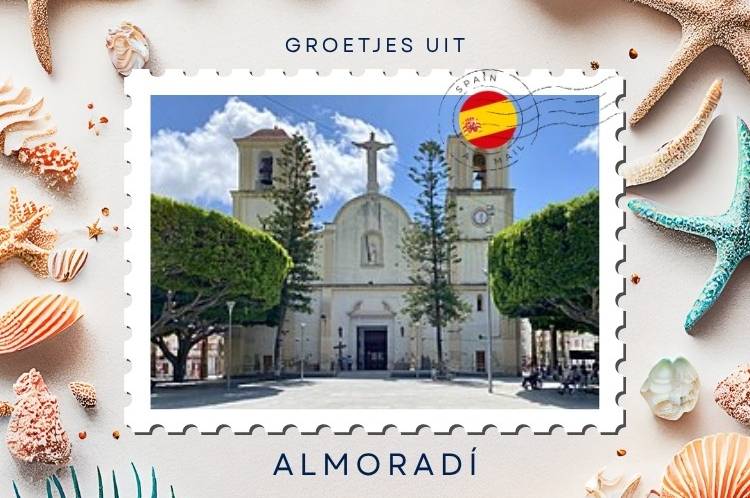
The Plaza de la Constitución forms the heart of Almoradí. The town hall, terraces and Church of San Andrés surround the square, while large trees provide shade and make it a popular meeting place.
The Church of San Andrés is one of the town's most important buildings and contains a historic organ dating from 1780 which is still used for concerts.
The square immediately gives you a sense of what makes Almoradí different from many international developments nearby: this is first and foremost a Spanish town created around the everyday lives of its residents.
Saturday means market day
If you choose just one day to visit Almoradí, make it Saturday. Every week, the streets around the centre fill with one of the best-known markets in the Vega Baja.
The market stretches for more than a kilometre and sells everything from fruit and vegetables to plants, clothes, shoes, household goods and local produce. Its importance was officially recognised in 2011 when it received provincial tourist-interest status.
The atmosphere around the market is just as enjoyable as the shopping. Many visitors finish their morning with coffee, tapas or a long lunch in town.
The artichoke is a local celebrity
Agriculture is central to Almoradí and one crop receives particularly special treatment: the artichoke.
The town hosts an annual National Artichoke Congress, bringing together growers, chefs, restaurants and visitors for a major gastronomic event. It has been recognised as a Festival of Tourist Interest of the Valencian Community.
It quickly becomes clear that there are considerably more ways to prepare an artichoke than most people would ever imagine.
The Almoradí huerta
Leave the centre and the surroundings change almost immediately. Almoradí is encircled by the fertile huerta of the Vega Baja.
Irrigation channels, citrus groves, vegetable fields and quiet rural lanes form a landscape shaped by agriculture over many generations. Today the municipality actively promotes this heritage through its Ecomuseum, guided routes and activities connected with traditional farming.
It is a side of the Costa Blanca that many visitors never see.
The Water Route
A particularly enjoyable way to explore the area is the Ruta del Agua, or Water Route. This circular route is around 18 kilometres long and can be walked or cycled, either in full or in shorter sections.
It follows historic irrigation infrastructure and passes places including the Azud de Alfeitamí. The route also incorporates parts of Almoradí's urban heritage, including the main square, Church of San Andrés and Teatro Cortés.
It helps explain how an intricate water system transformed this part of Alicante into such productive agricultural land.
The earthquake that changed Almoradí
The relatively straight streets of Almoradí have a dramatic explanation.
On 21 March 1829, a major earthquake devastated Almoradí and several other communities in the Vega Baja. During reconstruction, engineer José Agustín de Larramendi designed a new rectangular urban plan with straighter, wider streets.
That rebuilding still determines the appearance of the town centre today.
The Earthquake Museum
Since 2025, visitors have also been able to discover this story at the Museo del Terremoto, housed inside an original property reconstructed after the 1829 earthquake.
Rooms recreate family life following the disaster using period settings, audiovisual material, sound and other interpretative effects.
It is a very accessible way to understand an event that shaped not only Almoradí but much of the surrounding Vega Baja.
Teatro Cortés
Another important landmark is Teatro Cortés, one of Almoradí's main cultural venues.
The theatre remains active for stage productions and cinema and hosts plays, concerts and other cultural events. Almoradí also holds a long-established national theatre programme attracting professional companies and well-known Spanish performers.
For a medium-sized inland town, the cultural programme is surprisingly active.
Moros y Cristianos and local traditions
Summer brings the traditional Feria y Fiestas in honour of San Abdón and San Senén, known locally as the Santicos de la Piedra.
Agricultural traditions remain visible in the celebrations, particularly during the Bando de la Huerta. The programme also includes music, local activities and the colourful Moros y Cristianos parades.
Festivals like these provide a completely different perspective on Spanish town life for anyone accustomed to visiting only outside the main fiesta season.
Eating out in Almoradí
The surrounding farmland inevitably influences the food. Fresh Vega Baja vegetables, rice dishes, meat, fish and, of course, artichokes all feature strongly.
There is a surprisingly broad selection of restaurants for a town away from the main tourist coastline, and long weekend lunches remain an important part of social life.
Our suggestion is simple: visit the market on Saturday morning and stay for lunch afterwards.
Close to the coast without being coastal
Almoradí is inland, so you cannot walk from home to the Mediterranean. Guardamar is, however, close enough for a spontaneous afternoon at the beach.
Ciudad Quesada, Rojales and Benijófar are also nearby. Within a relatively small area, you can therefore choose between traditional Spanish town life, international amenities, golf, nature and long sandy beaches.
For many residents, that variety is one of the greatest advantages of living here.
Everyday amenities
Almoradí provides virtually everything needed for year-round living, including supermarkets, local shops, schools, secondary schools, healthcare, pharmacies, banks and extensive sports facilities.
Orihuela, Elche, Torrevieja and Alicante are available when you need larger shopping centres, specialist services or a day in a bigger city.
Living in Almoradí
Living in Almoradí is primarily about choosing a genuinely Spanish environment.
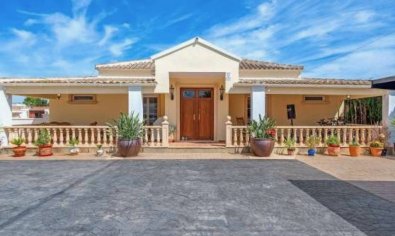
Apartments and traditional urban homes are common in the centre, while detached properties and villas with larger plots can be found around the outskirts and countryside.
For buyers who do not need the Mediterranean within walking distance, Almoradí can offer an attractive balance of space, services and location.
Moving to Almoradí
For anyone considering moving to Spain, Almoradí can be particularly interesting if becoming part of Spanish daily life is important.
There are international residents, but the atmosphere is considerably more Spanish than in places such as Ciudad Quesada or Orihuela Costa. Wanting to learn and use Spanish therefore certainly helps.
At the same time, you are far from isolated. Beaches, international residential areas, larger cities and Alicante-Elche Airport remain easily accessible.
Buying property in Almoradí
Anyone looking to buy property in Almoradí can choose from apartments, traditional town properties, townhouses and detached country homes.
If being able to walk everywhere matters, the centre is the logical place to start. Buyers looking for more land, a private swimming pool and greater privacy may prefer properties outside town.
Almoradí is therefore well worth considering if you want to live on the Costa Blanca without automatically choosing a seaside resort.
Why Almoradí is worth discovering
Almoradí has no seafront promenade, marina or beach. And that is exactly what makes it an interesting addition to the Costa Blanca.
Come on Saturday for the market, have coffee beneath the trees in Plaza de la Constitución, try a dish made with locally grown artichokes and then cycle through the huerta. Visit the Earthquake Museum and you will understand why the streets look so different from those in many surrounding historic towns.
It may not be the first place you see in a Costa Blanca holiday brochure, but it is an excellent place to discover how everyday life in this part of Spain really works.
And for anyone planning not simply to holiday in Spain but actually to live here, that can be precisely what makes Almoradí attractive.
Greetings from Almoradí!